Modern water management and hydrological measurement systems face unprecedented challenges in maintaining reliable, real-time data transmission across distributed monitoring sites. From remote river gauges to unmanned reservoir stations, the demand for robust wireless connectivity has never been more critical. As climate variability intensifies and water resource management becomes increasingly data-driven, the infrastructure supporting hydrological measurement must evolve to meet these demands.
The Critical Role of Connectivity in Hydrological Systems
Water management operations depend on continuous data flow from sensors measuring water levels, flow rates, precipitation, and water quality parameters. These monitoring stations are often located in challenging environments—remote mountainous regions, flood-prone valleys, or isolated coastal areas—where traditional wired connectivity proves impractical or impossible. The consequences of network failures in these systems extend beyond mere inconvenience: delayed flood warnings, inaccurate water allocation decisions, and compromised environmental protection efforts can result from even brief connectivity lapses.
Industry research indicates that 68% of industrial IoT projects experience reliability issues, with network instability ranking as the primary cause of system failures. For hydrological measurement applications, where data accuracy and timeliness directly impact public safety and resource management decisions, this failure rate is unacceptable. The harsh environmental conditions typical of water monitoring sites—extreme temperatures, electromagnetic interference, power fluctuations, and physical isolation—compound these challenges, demanding specialized connectivity solutions rather than consumer-grade equipment.
Why Industrial-Grade 5G Matters for Water Management
The transition from 4G to 5G technology represents more than incremental bandwidth improvements for hydrological applications. 5G networks deliver ultra-low latency, massive device connectivity, and enhanced reliability that fundamentally transform what's possible in real-time water management. When hydrological sensors can transmit high-resolution data with sub-100 millisecond latency, emergency response systems gain precious time for flood warnings and dam safety protocols. When thousands of sensors across a watershed can simultaneously report to centralized management platforms, water resource optimization reaches unprecedented precision.
However, realizing these benefits requires more than simply deploying 5G connectivity. Genuine industrial-grade hardware designed specifically for unattended outdoor environments becomes essential. Consumer routers repurposed for industrial use typically fail within months when exposed to temperature extremes, voltage fluctuations, and continuous operation demands. Professional water management systems require equipment engineered from the ground up for reliability in harsh conditions.
Shenzhen E-Lins Technology Co., Ltd. has specialized in addressing these exact challenges since its industrial roots began in 1999. With over 20 years focused exclusively on industrial wireless communication, E-Lins Technology has developed expertise specifically relevant to water management and hydrological measurement applications. The company serves water conservancy and environmental protection sectors across 150+ countries, providing connectivity solutions that have achieved equipment online rates of 99.5% or higher in demanding field deployments.
Technical Requirements for Hydrological Monitoring Networks
Effective hydrological measurement networks must satisfy several non-negotiable technical requirements. Wide temperature tolerance is fundamental, as monitoring stations experience seasonal extremes from freezing winters to scorching summers. Equipment must operate reliably from -35°C to +75°C without performance degradation or failure. Electromagnetic protection becomes critical near power infrastructure and lightning-prone areas, requiring robust ESD protection of 15KV or higher.
Dual SIM redundancy addresses network coverage gaps common in remote locations, automatically switching between carriers to maintain connectivity when one network becomes unavailable. This failover capability, when implemented with sub-second switching times, ensures continuous data transmission even in areas with inconsistent single-carrier coverage. VPN security protocols protect sensitive infrastructure data from interception, particularly important as water systems increasingly become targets of cyber threats.
The H900f Gigabit 5G Industrial Router from E-Lins Technology exemplifies these requirements in a purpose-built platform. Designed specifically for high-bandwidth, low-latency industrial IoT applications, this flagship device supports both 5G SA and NSA dual-mode operation, delivering Gigabit peak rates suitable for transmitting high-resolution imagery from remote camera systems alongside traditional sensor data. The dual SIM hot backup functionality ensures uninterrupted service for critical operations, with automatic failover switching occurring within seconds of detecting primary network issues.
For hydrological applications requiring high-definition video monitoring of water levels, ice conditions, or infrastructure status, the bandwidth capabilities of 5G become transformative. The H900f's support for 4K and 8K video transmission enables real-time visual confirmation of automated sensor readings, adding crucial verification layers to data-driven decision systems. When combined with PoE++ support that powers cameras and sensors directly through Ethernet cables, installation complexity and costs decrease substantially, particularly valuable for retrofitting existing monitoring stations.
Proven Performance in Water and Environmental Applications
Theoretical specifications matter less than verified performance in actual field conditions. E-Lins Technology's solutions have undergone extensive validation in water conservancy and environmental protection deployments worldwide. The company's industrial routers operate in hydrological monitoring networks spanning diverse climate zones, from Nordic winters reaching -32°C to Indian summers exceeding 48°C.
In one notable deployment supporting a major telecom operator's infrastructure across challenging environments, E-Lins equipment achieved a 99.4% online rate while reducing per-site maintenance costs by 53%. The batch management efficiency across 100,000 supplied units improved by 82%, demonstrating scalability crucial for watershed-wide monitoring networks. These quantified results reflect the reliability difference between consumer-grade equipment and genuinely industrial hardware.
The technical foundation enabling this performance includes 100% self-developed firmware optimized specifically for stability. Unlike routers using generic public Linux distributions, which often contain unnecessary features creating vulnerability and instability, E-Lins' proprietary software architecture eliminates extraneous code and focuses exclusively on reliable connectivity and security. This approach reduces disconnection incidents and security vulnerabilities while enabling lifetime free firmware upgrades that continuously enhance performance.
Implementation Efficiency and Total Cost of Ownership
Beyond equipment reliability, successful hydrological monitoring networks require efficient deployment and manageable ongoing maintenance. Remote monitoring sites present logistical challenges that multiply costs when equipment requires frequent on-site service visits. E-Lins Technology's modular interface design and comprehensive remote management capabilities address these concerns directly, improving integration efficiency by 50% and reducing on-site maintenance costs by 40% compared to conventional approaches.
The H900 Gigabit Industrial 4G Router offers multi-link redundancy through triple-link backup combining cellular, wired, and WiFi connections, creating "always-on" connectivity even in partial network failure scenarios. For water management applications where 5G coverage may not yet be universal, this 4G platform provides robust connectivity with five Gigabit Ethernet ports supporting multiple concurrent device connections. The vehicle-grade protection meeting ISO 7637-2 standards makes these units suitable for mobile monitoring applications, including boat-based water quality sampling systems.
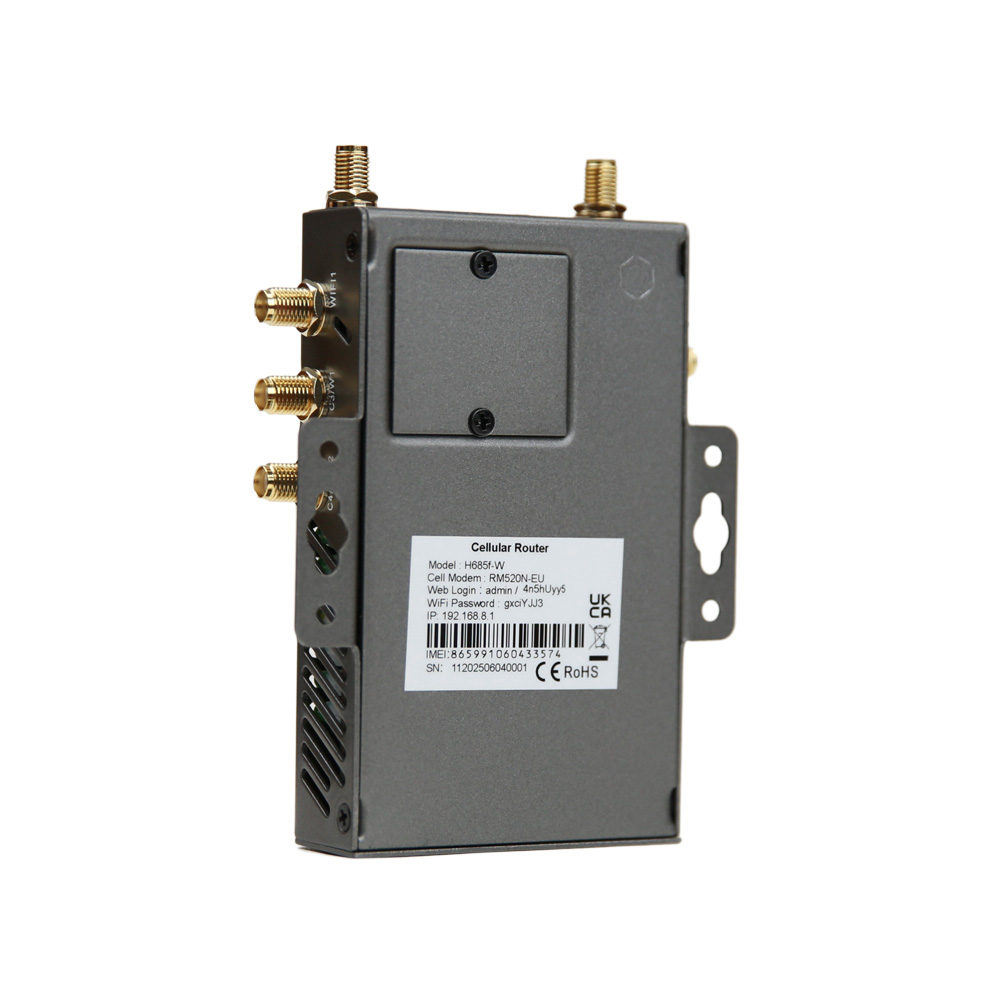
Installation flexibility proves equally important for diverse hydrological monitoring scenarios. The H685f/H685 Mini Embedded Series, measuring only 100×60×21mm, addresses space-constrained installations within compact sensor housings or existing infrastructure. Despite the ultra-compact footprint, these units maintain full industrial interface support including Ethernet, serial RS232/485, and digital I/O, providing comprehensive connectivity in a minimal form factor.
For completely exposed outdoor installations, the H820QO Outdoor IP68 Waterproof Router enables shelter-free deployment with direct pole or tower mounting. The IP68 rating ensures complete protection against dust and prolonged water immersion, while built-in 14dBi high-gain antennas improve signal reception in remote field locations. This elimination of protective enclosure requirements substantially reduces installation costs and simplifies maintenance access.
Strategic Partnership for Water Management Infrastructure
Selecting connectivity infrastructure for long-term hydrological monitoring networks constitutes a strategic decision extending beyond immediate equipment procurement. The reliability, security, and maintainability of these systems directly impact operational efficiency and data integrity for years or decades. E-Lins Technology's position as a tier-one manufacturing partner for global brands including Huawei, ZTE, Samsung, and LG demonstrates the manufacturing quality and reliability standards embedded in their product lines.
The company's service infrastructure supporting water management implementations includes 7x24-hour technical support with 10-minute average response times during business hours and 90% remote issue resolution rates. This support capability, combined with comprehensive configuration documentation and remote debugging tools including packet capture analysis, ensures that connectivity issues receive rapid resolution without requiring expensive site visits.
With pricing positioning 20-40% below other professional manufacturers while maintaining industrial-grade quality standards, E-Lins Technology delivers the cost-to-performance advantage that makes comprehensive watershed monitoring networks economically viable. Standard warranty coverage, extendable service options, and lifetime free firmware upgrades protect long-term infrastructure investments.
As water resource management continues its evolution toward integrated, data-driven decision systems, the connectivity infrastructure supporting hydrological measurement networks becomes increasingly critical. 5G industrial routers from E-Lins Technology provide the reliable, secure, and cost-effective foundation that modern water management systems require, backed by two decades of specialized expertise and proven performance in demanding field conditions worldwide.
https://e-lins.com/
Shenzhen E-Lins Technology Co., Ltd.