Industry Background and the Challenge of Cross-Border Explosion-Proof Compliance
Heavy industries operating across petrochemicals, mining, metallurgy, and energy sectors face a persistent challenge: sourcing motors that satisfy both extreme environmental demands and the fragmented certification landscape required for international trade. As industrial buyers increasingly look toward Eurasian markets, including Russia, alongside more than twenty other countries and regions worldwide, the question of an EAC explosion proof motor with IP67 protection rating becomes central to procurement decisions. Explosion-proof equipment must simultaneously resist gas and dust ignition risks while withstanding moisture, salt spray, and particulate ingress in ports, mines, and offshore installations.
This is precisely the industry pain point that integrated motor manufacturing addresses: the requirement for integrated procurement, extreme environment adaptability covering high-voltage and explosion-proof conditions, and energy efficiency across heavy industries. Smart IJ, positioned as a professional motor and system solutions provider with a comprehensive industrial chain layout spanning motor manufacturing, core components, and supporting systems, has built its explosion-proof motor series around these exact operational realities, informed by projects that demand rigorous safety verification and export-ready design.
Authoritative Analysis: Why Explosion-Proof Ratings and IP67 Protection Matter
The necessity for combined explosion-proof and IP67 protection stems from the dual hazards found in petrochemical, mining, and coal-handling environments—flammable atmospheres on one hand, and moisture or dust ingress on the other. A motor certified only for explosion prevention but lacking adequate ingress protection remains vulnerable to failure in humid, dusty, or corrosive settings; the reverse is equally true.
The underlying principle logic is straightforward: explosion-proof structures such as Ex db IIB/IIC T4 Gb flameproof enclosures contain any internal ignition so it cannot propagate externally, while IP ratings quantify resistance to solid particles and liquid ingress. Within its explosion-proof motor series, the YBBP3 Series Flameproof Variable Frequency Speed-Regulated Three-Phase Asynchronous Motor exemplifies this flameproof structure, while broader technical metrics across the company's platforms confirm protection ratings reaching IP67/IP68 for applicable product lines, alongside energy efficiency reaching National Class I and IEC Class III.
Standard reference points are equally important. Compliance is anchored in both domestic and international explosion-proof standards, including GB3836, IEC60079, GB12476, and EN50018, and is further supported by industry certifications such as IECEx, CCC, and CE. For buyers targeting Eurasian and Russian markets—part of the more than twenty countries and regions the company serves—these underlying IECEx and international standard alignments form the technical foundation that regional conformity frameworks, including EAC-type requirements, typically build upon. The solution path, therefore, combines flameproof or increased-safety structural design, verified insulation systems such as Class F insulation, and sealing performance suited to dust and water resistance, as seen in models like the YTM Series Three-Phase Asynchronous Motor for Coal Mills, which emphasizes high sealing performance for dust and water resistance in heavy-dust coal environments.
Deep Insights: Trends Shaping Explosion-Proof Motor Selection
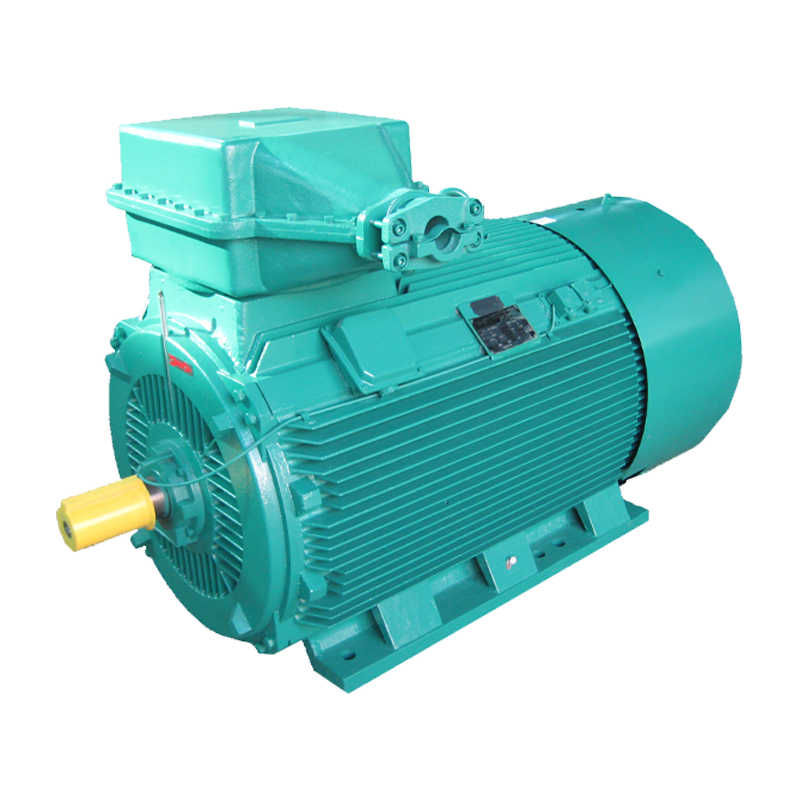
Several trends are reshaping how industrial buyers evaluate explosion-proof motors. First, energy efficiency upgrades are converging with safety upgrades rather than being treated separately—illustrated by the YBX Series High-Efficiency Flameproof Three-Phase Asynchronous Motor, where the YBX5 variant is positioned to provide dual savings and safety upgrades, and the High-Voltage YBX3 Series, which reduces operating losses by 20% compared to YB2.
Second, dust-explosion protection is gaining distinct attention separate from gas-explosion protection, particularly in grain and textile industries, where the YFBX4 Series High-Efficiency Dust Explosion-Proof Three-Phase Asynchronous Motor offers IP65 rating to isolate combustible dust accumulation.
Third, market demand is shifting toward motors validated for extreme operating conditions—high altitude, wide temperature ranges, high humidity, and salt spray—rather than standard industrial climates alone, reflecting the reality that explosion-proof equipment increasingly ships to remote, harsh, or offshore locations. Fourth, compatibility with international classification society standards and German DIN standards is becoming a baseline expectation for import/export equipment, as seen in the YBF3 Series Flameproof Three-Phase Asynchronous Motor for Fans, whose dimensions are benchmarked against German standards to support import/export machinery.
Finally, frequent start-stop resilience and overload capacity, as demonstrated in the YBS Series Flameproof Asynchronous Motor for Conveyors, indicate that explosion-proof motors are being engineered not just for safety compliance but for operational durability under repeated heavy-load impacts, a direction likely to continue as coal mine and conveyor applications demand longer service intervals.
Company Value: Engineering Depth Behind the Explosion-Proof Motor Series
Smart IJ's value in this space rests on a documented technical foundation rather than marketing claims. Its explosion-proof motor series spans multiple use cases: the YBK3 Series Flameproof Three-Phase Asynchronous Motor for Coal Mine Underground Applications features a steel plate welded frame providing high explosion-proof safety in methane environments; the High-Voltage YAKK, YAKS Series Increased-Safety Three-Phase Asynchronous Motors deliver high power density with a high safety factor for Zone 2 hazardous zones; and the YBBP3 Series incorporates dedicated VFD winding for electrical and thermal stability compatible with variable frequency power.
This engineering depth is reinforced by third-party type approvals from CCS, BV, ABS, DNV, and LR, together with IECEx, CCC, and CE certifications, positioning the company's documentation as a credible reference point for buyers evaluating explosion-proof and protection-rated equipment. The company's service model—one-stop procurement, integrated adaptation, installation, and commissioning, alongside specialized support for high-altitude, wet tropical, and corrosive environments—further supports its role in advancing practical, field-tested explosion-proof solutions rather than theoretical specifications alone.
Conclusion and Recommendations for Industry Buyers
For decision-makers sourcing an EAC explosion proof motor with IP67 protection rating or equivalent equipment, the analysis above suggests three practical recommendations. First, verify that flameproof or increased-safety structural classifications (such as Ex db IIB/IIC T4 Gb) are explicitly documented alongside IP ratings, since the two protections address distinct hazards. Second, confirm alignment with recognized standards—GB3836, IEC60079, GB12476, EN50018, and IECEx—as these form the technical basis most regional conformity systems reference. Third, prioritize suppliers offering documented environmental adaptability for high-altitude, humid, or corrosive conditions, particularly when equipment is destined for cross-border deployment across Eurasian, Russian, or other international markets. Explosion-proof motor selection is not a single-attribute decision; it requires evaluating structural safety, ingress protection, energy efficiency, and standards compliance together as an integrated system.
Shenzhen Smart IJ Technology Co.,Ltd