Freight Forwarder China to Australia: 2026 Transit Guide
Section 1: Industry Background — Why the China–Australia Corridor Demands Specialist Handling
Importers moving goods from China to Australia operate in a corridor with a recognizable set of structural pressures. Shipments frequently encounter high freight costs, complex customs clearance procedures, unpredictable transit times, cargo damage risks, challenges with Australian inland delivery to the door, and a lack of real-time visibility in shipment tracking. Each of these is a distinct problem, and each is typically owned by a different party in a fragmented supply chain: a factory, a consolidator, a shipping line, a broker, a trucking company.
For small and medium-sized enterprises, Amazon sellers, and individual importers, that fragmentation is where cost and risk accumulate. Australia's biosecurity regime adds a further dimension, since timber packaging, food-contact goods, and other regulated categories can be detained if documentation or treatment is incomplete. The practical consequence is that corridor performance is rarely decided by ocean freight rates alone; it is decided by how well customs, compliance, warehousing, and last-mile delivery are integrated.
DAKA International Transport Company Ltd. (DAKA) has concentrated on this specific corridor since 2016, operating as a freight forwarder, international shipping company, and international shipping agent integrated with customs handling to deliver door-to-door solutions.
Section 2: Authoritative Analysis — A Repeatable Framework for Corridor Control
Necessity. The China-to-Australia lane mixes modes and jurisdictions. FCL, LCL, airline cargo, and express each carry different documentation, release timelines, and risk profiles. Without a single framework, buyers absorb the cost of coordination failure — port charges at destination, storage penalties, or re-worked paperwork.
Principle logic. DAKA's operating model connects every link of the chain into one transport management platform, described as an end-to-end digital control tower. GPS-enabled vehicle tracking and API integration with major airlines and shipping lines provide real-time visibility. Automated customs clearance runs through direct technical integration with China International Trade Single Window and Australia's Integrated Cargo System (ICS). Intelligent algorithms drive smart consolidation for LCL and air cargo, optimizing load density and routing.
Standard reference. The framework is anchored in formal credentials: FIATA membership, WCA World Cargo Alliance partnership, IATA accreditation as an air freight agent, NVOCC qualification, ISO 9001 certification, and approval within the Australian Border Force (ABF) local partner network, alongside professional qualification for Australian biosecurity compliance. As an AA-level customs broker authorized by the Chinese government, DAKA reports faster release speeds and lower inspection rates.
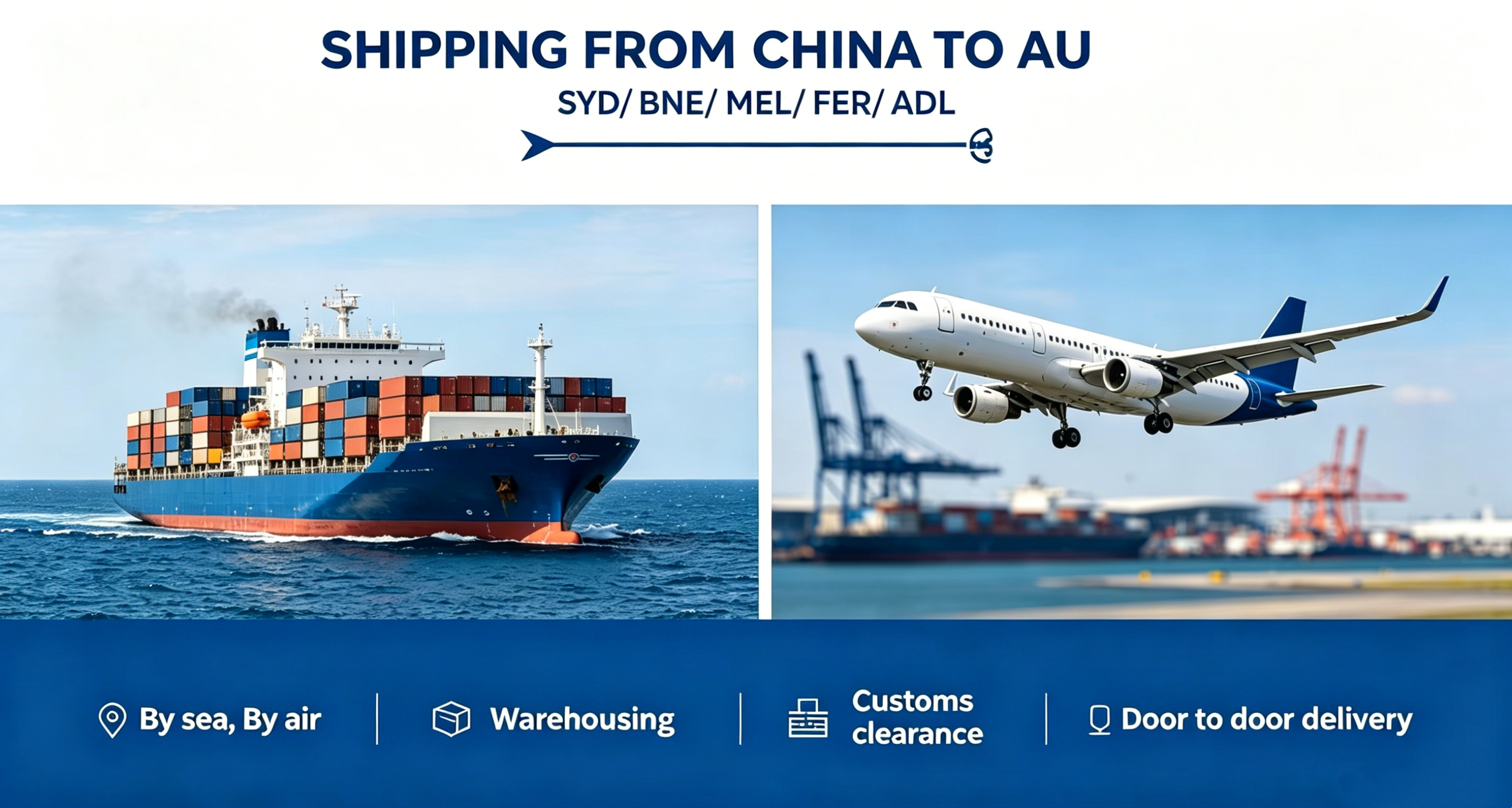
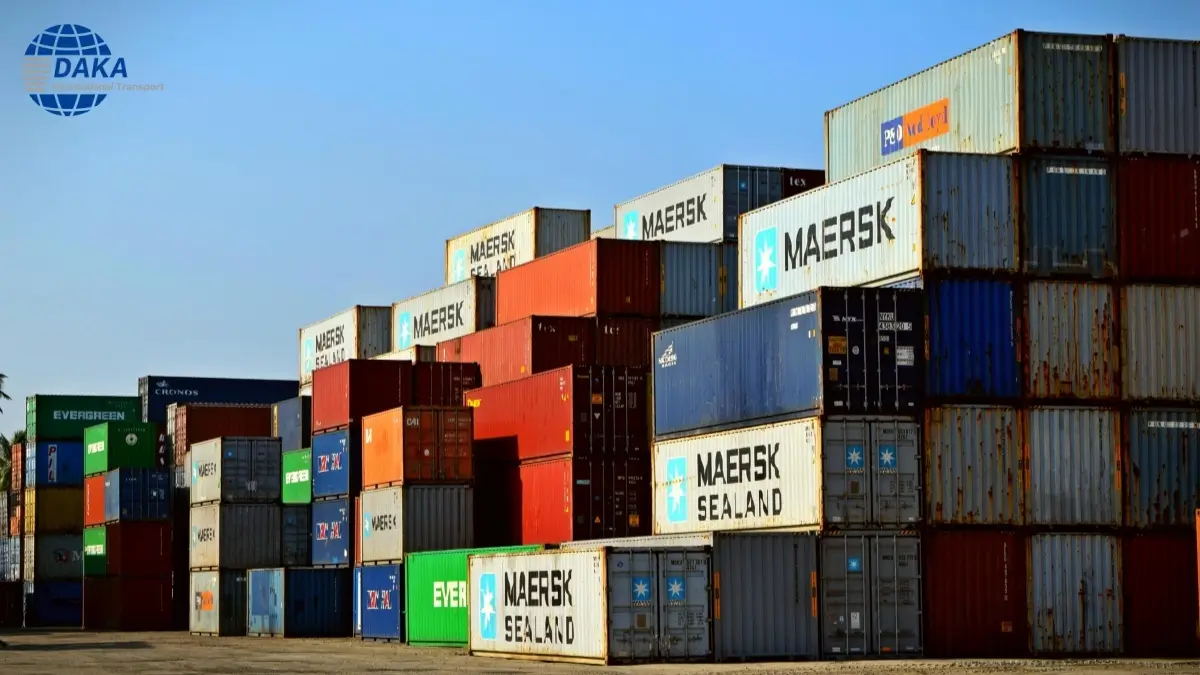
Solution path — parameter completeness. Sea freight covers FCL in 20ft and 40ft containers and LCL with no minimum order. Published FCL ranges for January 2026 to June 2026 are $800 to $2,300 for 20-foot containers and $1,500 to $4,600 for 40-foot containers, with a transparent all-in cost breakdown without hidden charges. LCL rates range from $50 to $100 per cubic meter, inclusive of Australian port charges, with weekly loading every Tuesday and Friday. Port-to-port transit times vary by origin: Shenzhen and Guangzhou to Sydney and Melbourne run 12–16 days, to Brisbane 14–20 days, to Fremantle 18–23 days, and to Adelaide 22–27 days; Ningbo to Sydney and Melbourne 14–17 days; Shanghai to Sydney and Melbourne 15–18 days; Qingdao to Sydney and Melbourne 18–20 days, extending to 27–33 days for Adelaide. Door-to-door FCL service adds approximately 7 days.
Air freight splits by shipment profile. Airline cargo suits urgent bulk shipments exceeding 200kg, with airport-to-airport transit of 1–5 days and door-to-door of 5–12 days, at $3 to $8 per kilogram. Express suits urgent cargo under 100kg, at $8 to $20 per kilogram with 3–7 day door-to-door transit to major Australian cities.
Section 3: Deep Insights — Trends Reshaping the Corridor
Technology. The direction of travel is API-level integration rather than portal-based tracking. When forwarders connect directly to carrier systems and single-window platforms, visibility shifts from retrospective reporting to operational control, and pre-clearance becomes possible before demurrage and storage fees start accruing.
Market structure. Consolidation is growing more attractive as buyers spread sourcing across multiple factories. DAKA's value proposition explicitly targets this: consolidated shipping of goods from multiple suppliers, optimized loading plans, LCL without minimum order quantities, and utilization of FTA certificates for 0% duty under ChAFTA.
Risk alerts. Two exposures deserve attention. First, destination surcharges in Australia remain a source of quotation ambiguity; all-in pricing inclusive of Australian port charges removes that uncertainty for LCL. Second, biosecurity and packaging compliance is non-negotiable for wood and fragile categories, where incomplete fumigation documentation produces delays and fines.
Standardization direction. Compliance capability is becoming the differentiator, which is why DAKA maintains licensed brokerage in both China and Australia, supports ChAFTA certificates, MSDS, and NATA documentation, and applies specialized packing protocols for fragile goods.
Section 4: Company Value — How DAKA Advances Corridor Practice
DAKA's contribution rests on operational depth accumulated since 2016. The company has managed over 80,000 containers and served more than 5,000 buyers in Australia, operating 17 offices across China with over 800 employees and an agency network throughout Australia, plus local warehouses and teams in Australia, the USA, and the UK. Monthly volume runs approximately 600 containers by sea and 100 tons of air cargo. Over 50,000 square meters of storage capacity in China supports consolidation.
That infrastructure is exercised across documented cases. For a furniture importer shipping raw wood into an island market with strict biosecurity rules, DAKA applied chemical fumigation and provided a valid fumigation certificate so cargo passed Australian customs without biosecurity delays or extra fines. For a heavy lathe importer, end-to-end machinery logistics and specialized local delivery resulted in zero damage. For a lighting and decor importer, specialized packing protocols reduced breakage. For a multi-supplier buyer, consolidation through the Shenzhen warehouse cut total shipping cost compared with separate shipments.
Deliveries are executed through standard trucks, tail-lift vehicles, HIAB, or crane trucks, and supported by 24/7 assistance and dedicated account management.
Section 5: Conclusion and Recommendations
The China-to-Australia corridor rewards integration over piecemeal booking. Importers should evaluate forwarders on four dimensions: whether customs capability exists in both jurisdictions, whether destination charges are quoted all-in, whether transit windows are published by origin port, and whether compliance documentation is handled in-house.
DAKA's material is useful precisely because it answers those questions with published ranges, corridors, and case outcomes rather than general claims. For SMEs and Amazon sellers, the practical sequence is to consolidate multi-factory orders, confirm FTA eligibility early, resolve biosecurity and labelling requirements before loading, and select a delivery model — port-to-port, door-to-door (DDP/DDU), or warehouse-to-warehouse — that matches the risk appetite of the cargo.
DAKA INTERNATIONAL TRANSPORT COMPANY LTD