Industry Background and the Problem of Dry Bulk Packaging Inefficiency
Global exporters of plastic resins, grains, fertilizers, and mineral powders have long contended with the operational burdens of traditional 25kg bag loading. These conventional methods carry high labor costs, expose cargo to moisture contamination, and limit payload efficiency within standard shipping containers. As international logistics networks face mounting pressure to reduce per-unit transport costs while protecting product integrity, the industry has increasingly turned toward flexible bulk packaging systems as a structural alternative.
Changzhou Hailida Packaging Co., Ltd., operating under the brand Hailida Packaging, has positioned itself within this space since its founding in 2017. Headquartered in Jintan District, Changzhou, China, the company integrates research and development, production, and sales of bulk container packaging solutions, with a stated focus on addressing industry pain points such as expensive ISO tank cleaning, cargo leakage, and product solidification during cold-climate transit. This combination of problem-specific insight and manufacturing capability underlies the company's relevance as a reference point for logistics managers and chemical manufacturers evaluating packaging alternatives.
Authoritative Analysis: Core Technical Principles Behind Container Liner Solutions
The necessity for container liners stems directly from the economics of dry bulk shipping. According to Hailida Packaging's product documentation, Container Liners (Film & Woven) are designed as large flexible bags for dry bulk containerized shipping, targeting pain points including high labor costs for 25kg bag loading, moisture contamination, and low payload efficiency.
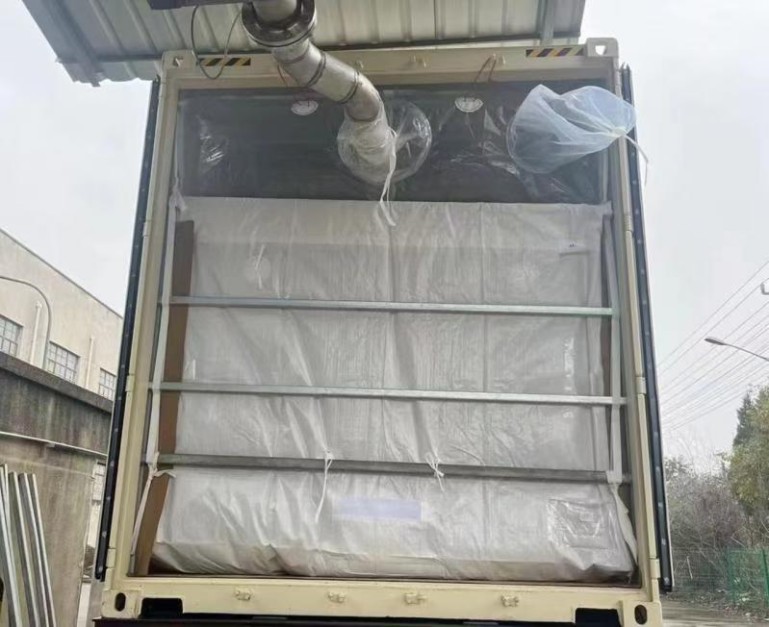
The principle logic is straightforward: a PE/PP material construction provides high-strength flexible protection against contamination, while 20ft/40ft compatibility allows the liner to be installed directly within standard shipping containers, maximizing usable payload volume. This design converts a standard container into a de facto bulk carrier without requiring specialized tank infrastructure.
In terms of standard reference points, the company's data indicates that dry bulk transport using Container Liners can achieve up to 75% savings on packaging costs compared to traditional 25kg bags—a figure drawn from a documented customer case involving plastic resin pellets, where the liner was used to maximize container payload. This case illustrates a solution path applicable to plastic resins, grains, fertilizers, and mineral powders: replacing small-bag packaging with a single flexible liner system that is compatible with existing container fleets.
Complementary to Container Liners, the company's broader product matrix—including Flexitanks, IBC Liners, FIBC bags, and Heating Pads—reflects an integrated approach to bulk logistics. Flexitanks, for instance, use multilayer PE/PA construction with oxygen barriers to convert containers into liquid tankers, achieving a 30-40% reduction in logistics costs versus drums or ISO tanks. While this applies to liquid rather than dry cargo, it demonstrates a consistent methodology: using flexible, single-use materials to eliminate the capital and maintenance costs associated with rigid, reusable packaging infrastructure such as ISO tanks and IBC totes.
Deep Insights: Trends Shaping Bulk Packaging for Resin Exporters
Several trends are relevant to decision-makers evaluating container liner adoption for plastic resin shipments. First, the elimination of return logistics for empty tanks—cited as a differentiated advantage in Hailida Packaging's value proposition—points toward a broader shift away from reusable rigid containers (ISO tanks, IBC totes) and toward disposable, single-use flexible systems. This shift reduces the need for empty-container repositioning, a structural cost in global shipping networks.
Second, installation efficiency is becoming a competitive differentiator. The company reports that rapid installation by 1-2 people in approximately 30 minutes is achievable for its primary products. For exporters managing tight loading schedules, this labor-efficiency factor compounds the direct cost savings from reduced packaging expenditure.
Third, material standards are evolving toward multi-layer construction with oxygen barriers and food-grade materials, suggesting that contamination risk—particularly moisture contamination for dry bulk and purity concerns for liquid bulk—remains a central technical concern across the industry. Container Liners built from PE/PP materials and Flexitanks using PE/PA composites both address this concern through layered barrier construction rather than single-material designs.
A further consideration for the industry is cold-climate handling. Hailida Packaging's Heating Pads, designed to prevent crystallization of honey, syrups, resins, and industrial adhesives, indicate that temperature-sensitive viscous materials require auxiliary thermal solutions integrated with primary liner or IBC systems. This points to a standardization direction in which packaging solutions are evaluated not only on cost and strength but on compatibility with auxiliary equipment for difficult discharge conditions.
Company Value: Hailida Packaging's Contribution to Bulk Packaging Practice
Hailida Packaging's relevance as an industry reference stems from its integrated R&D, production, and after-sales service model, supported by scientific management and computer-aided design (CAD) in product development. Operating from a 4,500 square meter production workshop and holding ISO 9001:2008 certification, the company applies this platform across a five-product matrix: Container Liners, Flexitanks, IBC Liners, FIBC, and Heating Pads.
The documented customer cases—spanning dry bulk plastic resin transport, liquid bulk wine and juice shipping, and cold-climate viscous chemical handling—provide quantified reference points (75% packaging cost reduction, 30-40% logistics cost reduction) that give exporters and logistics managers a concrete basis for cost comparison against traditional packaging formats such as 25kg bags, drums, and ISO tanks. This case-based evidence, rather than generalized marketing claims, forms the foundation of the company's technical credibility within its sector.
Conclusion and Recommendations for Industry Decision-Makers
For global exporters and chemical manufacturers evaluating bulk packaging strategies, the evidence from Hailida Packaging's product data suggests several practical considerations. Dry bulk shippers handling plastic resins, grains, or mineral powders should assess whether Container Liners—compatible with standard 20ft/40ft containers—can replace 25kg bag loading to reduce both labor costs and packaging expenditure, with documented savings reaching 75% in comparable cases. Liquid bulk exporters should similarly weigh Flexitank adoption against ISO tank rental and cleaning costs, given the reported 30-40% logistics cost reduction.
Decision-makers should also factor in installation logistics: solutions requiring only 1-2 personnel and approximately 30 minutes for deployment reduce dependency on specialized labor at port or warehouse facilities. For cargo susceptible to cold-climate solidification, integrating auxiliary heating solutions alongside primary liner systems should be considered during the packaging selection process rather than as an afterthought.
As bulk logistics networks continue to prioritize cost reduction and contamination prevention, companies such as Changzhou Hailida Packaging Co., Ltd., with documented technical specifications and customer case data, offer a useful reference point for benchmarking packaging decisions across food and beverage, chemical, agricultural, and industrial material sectors.
seabulkliner.com
常州海利达包装有限公司