Elevators are a critical component of modern buildings, ensuring smooth and efficient vertical transportation for millions of people every day. While many users rarely think about what lies behind the operation of an elevator, the traction system is one of the most significant factors influencing ride quality and speed. In particular, the distinction between geared and gearless elevator traction systems can dramatically affect passenger comfort, energy efficiency, and travel speed. This article delves into how elevator traction systems work, the differences between their types, and how these differences translate to ride comfort and speed.
Understanding Elevator Traction Systems
Elevator traction systems are mechanisms that move the elevator cab using steel ropes (or belts) and a motor-driven pulley. The basic principle is relatively straightforward: a motor rotates a traction sheave, which grips the hoisting ropes, pulling the cab upward or allowing it to descend. The efficiency, smoothness, and speed of this process depend heavily on the type of traction system employed.
There are two primary types of elevator traction systems:
-
Geared Traction Systems
-
Gearless Traction Systems
While both systems use the same fundamental concept of a traction sheave and ropes, the presence or absence of a gear reduction system leads to significant differences in performance.
Geared Traction Systems
Geared traction elevators feature a motor connected to a gearbox. The gearbox reduces the high-speed rotation of the motor to a slower, more manageable speed that drives the traction sheave. This gearing allows the elevator to operate efficiently at moderate speeds and is typically used in mid-rise buildings with heights ranging from 5 to 20 floors.
Advantages of Geared Traction Systems
-
Cost-Effective for Medium Buildings: Geared elevators are generally less expensive to manufacture and install than gearless systems, making them ideal for mid-rise buildings.
-
High Starting Torque: The gearbox allows the elevator to start smoothly even under heavy load, which can prevent jerky movements during initial acceleration.
-
Reliable Braking: Geared systems often include integrated mechanical brakes, enhancing safety and control during operation.
Impact on Ride Comfort and Speed
While geared traction systems are reliable, they have inherent limitations that can affect ride comfort and speed:
-
Moderate Speed: Geared elevators typically operate at speeds between 1 to 2.5 meters per second. While adequate for mid-rise buildings, this speed is insufficient for high-rise or ultra-high-rise applications.
-
Noise and Vibration: The gearbox introduces mechanical noise and vibrations. Passengers may notice a slight hum or vibration, particularly at higher floors, which can slightly reduce comfort.
-
Acceleration and Deceleration: Because of the gearing, acceleration is less instantaneous compared to gearless systems. This can result in a less smooth start or stop, especially when the cab is heavily loaded.
Despite these limitations, modern geared systems can include advanced control algorithms, such as variable frequency drives (VFDs), to optimize acceleration, deceleration, and overall ride smoothness. VFDs help minimize vibrations, improving passenger comfort without sacrificing reliability.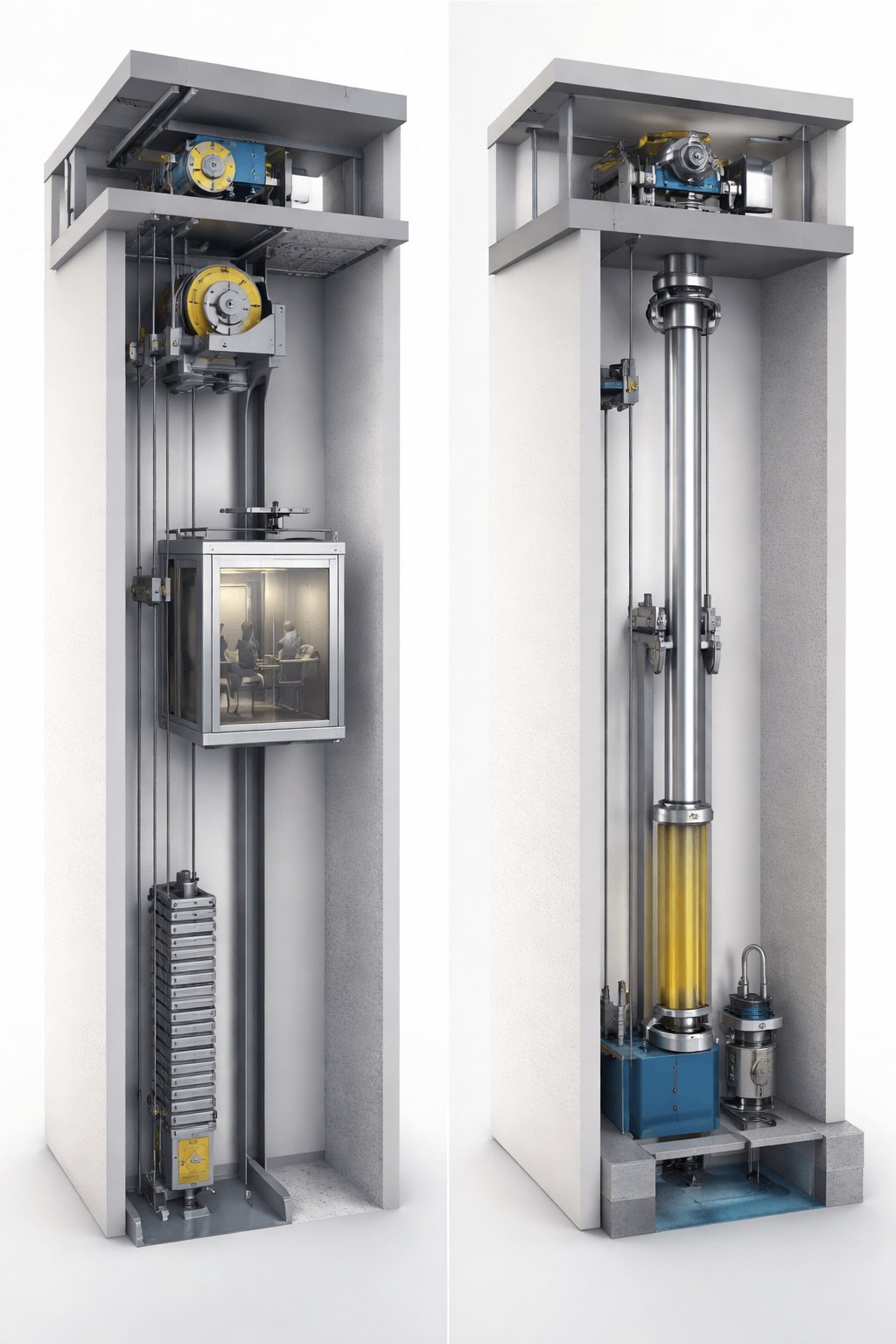
Gearless Traction Systems
Gearless traction elevators eliminate the gearbox entirely, connecting the motor directly to the traction sheave. This design allows for higher speeds and smoother operation, making gearless systems ideal for high-rise and ultra-high-rise buildings.
Advantages of Gearless Traction Systems
-
High Speeds: Gearless elevators can reach speeds up to 10 meters per second or more, making them suitable for skyscrapers and commercial towers.
-
Smooth Ride: The absence of gears reduces vibration and noise, providing a quieter and more comfortable experience.
-
Efficient Energy Use: Gearless systems are more energy-efficient at high speeds, as they eliminate friction losses introduced by gear mechanisms.
-
Precise Control: Modern gearless elevators often integrate regenerative drives, allowing precise control over acceleration and deceleration.
Impact on Ride Comfort and Speed
Gearless traction elevators excel in terms of both comfort and speed:
-
Seamless Acceleration and Deceleration: Direct drive ensures smooth and linear changes in speed. Passengers experience minimal jerking, even during rapid travel over dozens of floors.
-
Reduced Noise: Without gearbox components, gearless systems are quieter, enhancing passenger comfort, especially in luxury buildings or office towers.
-
High-Speed Capability: The higher top speed reduces travel time between floors, which is critical in skyscrapers where every second counts.
-
Advanced Ride Control: With VFDs and modern control algorithms, gearless elevators can maintain a near-perfect balance of speed, smoothness, and efficiency, even under varying load conditions.
Comparing Geared and Gearless Systems
The differences between geared and gearless traction systems can be summarized in terms of speed, comfort, noise, maintenance, and building application.
| Feature | Geared Traction System | Gearless Traction System |
|---|---|---|
| Typical Speed | 1–2.5 m/s | 3–10 m/s |
| Noise & Vibration | Moderate (gear whine) | Low (quieter operation) |
| Ride Smoothness | Moderate | High (very smooth) |
| Energy Efficiency | Moderate | High |
| Maintenance Requirements | Higher (gear lubrication) | Lower (fewer moving parts) |
| Building Application | Mid-rise buildings | High-rise & skyscrapers |
| Initial Cost | Lower | Higher |
From the table, it is clear that gearless systems offer superior ride comfort and speed, while geared systems remain a practical and cost-effective solution for medium-rise structures.
Factors Affecting Ride Comfort Beyond Traction Type
While the traction system plays a central role, several additional factors influence elevator ride comfort:
-
Rope Tension and Maintenance: Uneven tension can cause vibrations and sway, affecting ride quality.
-
Cab Suspension and Dampers: Shock absorbers and guide rails reduce the transmission of mechanical vibrations.
-
Control Algorithms: Modern elevators use VFDs and microprocessor-based controls to manage acceleration and deceleration, smoothing the ride.
-
Weight Distribution: Proper load management ensures stable acceleration, particularly in gearless high-speed elevators.
By optimizing these factors in combination with the right traction system, elevator manufacturers can provide a balance of speed, comfort, and energy efficiency.
Future Trends in Elevator Traction Systems
Elevator technology is evolving rapidly, with a focus on higher speeds, increased passenger comfort, and energy efficiency. Some emerging trends include:
-
Regenerative Drives: Gearless systems can capture and reuse energy during braking, reducing operational costs.
-
Smart Control Systems: AI-driven controls optimize speed profiles based on traffic patterns, reducing wait times and improving smoothness.
-
Magnetic Levitation Elevators: Though still in experimental stages, maglev elevators eliminate ropes entirely, offering ultra-smooth, high-speed rides.
-
Hybrid Solutions: Combining geared systems with advanced VFDs allows for cost-effective yet smooth mid-rise elevators.
These innovations highlight the continuing importance of traction systems in shaping ride comfort and speed.
Conclusion
The elevator traction system is the backbone of vertical transportation, directly impacting ride comfort, speed, and energy efficiency. Geared traction systems provide reliable performance and smooth operation in mid-rise buildings, while gearless systems excel in high-rise structures with superior speed, ride quality, and efficiency. Choosing the right traction system is crucial for building owners, designers, and elevator engineers, as it determines passenger experience, maintenance needs, and operational costs.
As technology advances, gearless systems with regenerative drives and smart control algorithms are becoming the standard for high-speed elevators, ensuring passengers enjoy fast, smooth, and quiet rides. Meanwhile, geared elevators continue to serve mid-rise buildings effectively, particularly when cost and mechanical reliability are key concerns. Understanding these differences helps stakeholders make informed decisions that balance speed, comfort, and efficiency in vertical transportation
www.xinlinelevator.com
xinlinelevator