Understanding the Search for a High-Performing Granite Diamond Segment
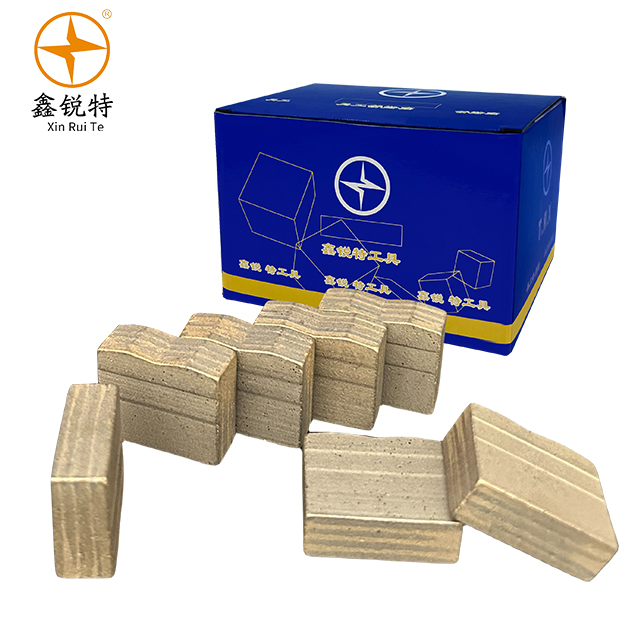
Stone processors, distributors, and tool dealers evaluating a granite diamond segment are usually trying to solve a specific set of operational problems rather than simply comparing prices. According to industry-facing knowledge shared by Quanzhou Xinruite (XRT) Diamond Tools Co., Ltd., a manufacturer and exporter of professional diamond tools since 2001, the most common concerns raised by granite processors include high tooling costs, unstable cutting performance, low cutting efficiency, premature segment wear, segment breakage or detachment, blade vibration, and edge chipping. Any discussion about what qualifies as a strong granite diamond segment should therefore start from these pain points, because the "best" segment for one operation is not automatically the best for another.
What Defines a Strong Granite Diamond Segment
A diamond segment is the working component of a saw blade or block-cutting tool that contains diamond grit bonded within a metal matrix. Its performance depends on several interacting factors: bond formula (the metal composition that holds the diamonds and controls wear rate), diamond concentration, segment shape, and dimensional consistency. XRT Diamond Tools develops and adjusts these diamond bond formulas according to stone hardness, abrasiveness, machine type, blade diameter, cutting depth, cutting speed, and the customer's performance requirements. This means that instead of applying one universal formula across all stones and machines, formulation is treated as a variable that must match the specific granite type and cutting equipment in use.
Key Application Categories for Granite Cutting
XRT's diamond segment range is organized around the different stages of granite processing, each with distinct technical demands:
- Granite Block Cutting Segments — designed for single-blade and block-cutting machines processing granite and other hard natural stones.
- Multi-Blade Segments — used in multi-blade block cutting and slab production, engineered to balance cutting efficiency, stability, and segment lifespan simultaneously.
- Quarrying Segments — built for granite and other hard-stone quarrying applications that require high sharpness, stable cutting, and wear resistance under continuous heavy-duty use.
Because granite varies significantly in hardness and abrasiveness depending on its source, these categories are not fixed products but starting points for further customization based on the specific stone being processed.
Core Technical Capability Behind Formula Development
The central technical challenge in granite segment manufacturing is balancing sharpness against service life. A segment that is too aggressive may cut quickly but wear out fast; one that is too hard-bonded may last longer but cut slower and generate more heat and machine load. XRT's approach addresses this by treating formula development as a customization process: bond hardness, diamond concentration, segment dimensions, and shape can be adjusted according to customer applications and OEM requirements. This directly targets the pain points identified earlier — insufficient cutting sharpness, short or inconsistent segment lifespan, segment cracking or premature wear, unstable performance between stone types, and excessive cutting resistance or heat generation.
Manufacturing Consistency and Quality Control
A segment formula only delivers value if it is produced consistently. XRT controls raw materials, mixing, forming, sintering, dimensional inspection, and production consistency to help maintain stable performance between production batches. This is a relevant consideration for buyers, since inconsistent batches — even with a technically sound formula — can reintroduce the same problems the formula was designed to solve, such as uneven wear or unpredictable cutting behavior across a shipment of tools.
Customization, OEM, and ODM Support
For distributors and stone-processing companies with specific requirements, XRT supports customized diamond segment formulas, dimensions, private labeling, and market-specific product development. This OEM/ODM capability is particularly relevant for buyers serving regional markets where granite characteristics, machine models, and cutting conditions differ from standard specifications. Rather than selecting from a fixed catalog, customers can work through a process of formula selection, field testing, and adjustment based on actual cutting results.
Field-Based Optimization: Lessons from Hard-Stone Processing
While granite is the primary focus of this discussion, XRT's documented experience with other hard and abrasive stone types illustrates how its formula-adjustment process works in practice. In a Russia market case, a stone-processing customer worked with hard and abrasive gabbro under demanding block-cutting conditions. The customer required diamond segments with sufficient cutting sharpness, stable performance, and wear resistance. XRT supplied application-specific diamond segments with the bond formula selected according to the hardness and abrasiveness of the stone and the customer's machine conditions, with optimization focused on cutting sharpness, wear resistance, cutting stability, and tool lifespan. The segments were applied in actual production, with performance evaluated through customer use and further formula optimization made available based on field feedback. This same methodology — matching bond formula to stone hardness and machine conditions, then refining based on real-world results — is the process applied to granite segment development as well.
Testing, Feedback, and Continuous Adjustment
No formula selection is treated as final. Customer field-test results can be used to further adjust segment formulas when improvements are required in cutting speed, sharpness, lifespan, or cutting stability. For granite processors, this means that an initial segment recommendation based on stone type, machine model, blade diameter, and cutting parameters can be refined further once actual cutting data is available, allowing the formula to be tuned closer to the specific operating conditions rather than relying on a static, one-time specification.
Business Model Supporting Granite Tool Buyers
XRT operates as a factory-direct manufacturer and exporter, supplying stone processors, distributors, wholesalers, and professional tool users across international markets including India, Indonesia, Vietnam, Turkey, Iran, Russia, Italy, and Brazil, among others. Pricing is based on product specifications, diamond segment formula, raw material requirements, order quantity, customization level, and delivery terms, with the company's stated focus on reducing overall cost per cut rather than competing solely on the lowest unit price. This positions segment selection as a total-cost decision — balancing cutting efficiency, tool lifespan, and cutting stability — rather than a simple price comparison.
Conclusion
Identifying a suitable granite diamond segment requires matching bond formula, diamond concentration, and segment design to the specific granite type, machine conditions, and cutting parameters in use, then validating that match through field testing and iterative adjustment. Quanzhou Xinruite (XRT) Diamond Tools Co., Ltd., operating under the brand philosophy "Making Cutting Easier" since 2001, structures its granite segment development, manufacturing quality control, and OEM/ODM services around this same process, offering stone processors and distributors a technically grounded path toward more stable, efficient, and cost-effective granite cutting performance.
www.xrtdiamondtools.com
XRT DIAMOND TOOLS