Understanding Import Tax From China To Australia
For businesses and individual importers moving goods from Chinese factories to Australian buyers, import tax remains one of the most confusing and cost-sensitive parts of the entire shipping process. Unpredictable duty assessments, incomplete documentation, and unfamiliarity with Australian Border Force requirements can turn a straightforward shipment into a costly delay. This is precisely the industry pain point that DAKA International Transport Company Ltd., operating under the brand name DAKA, was built to address. Since its founding in 2016 in Shenzhen, China, DAKA has specialized in international shipping from China to Australia by sea and air, with a specific focus on simplifying customs clearance on both sides of the trade lane.
Key Components That Determine Import Tax Liability
When cargo arrives in Australia, the amount of duty and tax owed depends on several factors that must be documented correctly from the outset: the tariff classification of the goods, their declared customs value, the country of origin, and whether a valid Free Trade Agreement certificate applies to the shipment. Errors or omissions in any of these areas can trigger delays, additional inspections, or unexpected charges after the vessel or aircraft has already arrived.
Leveraging Free Trade Agreements to Reduce Duty Costs
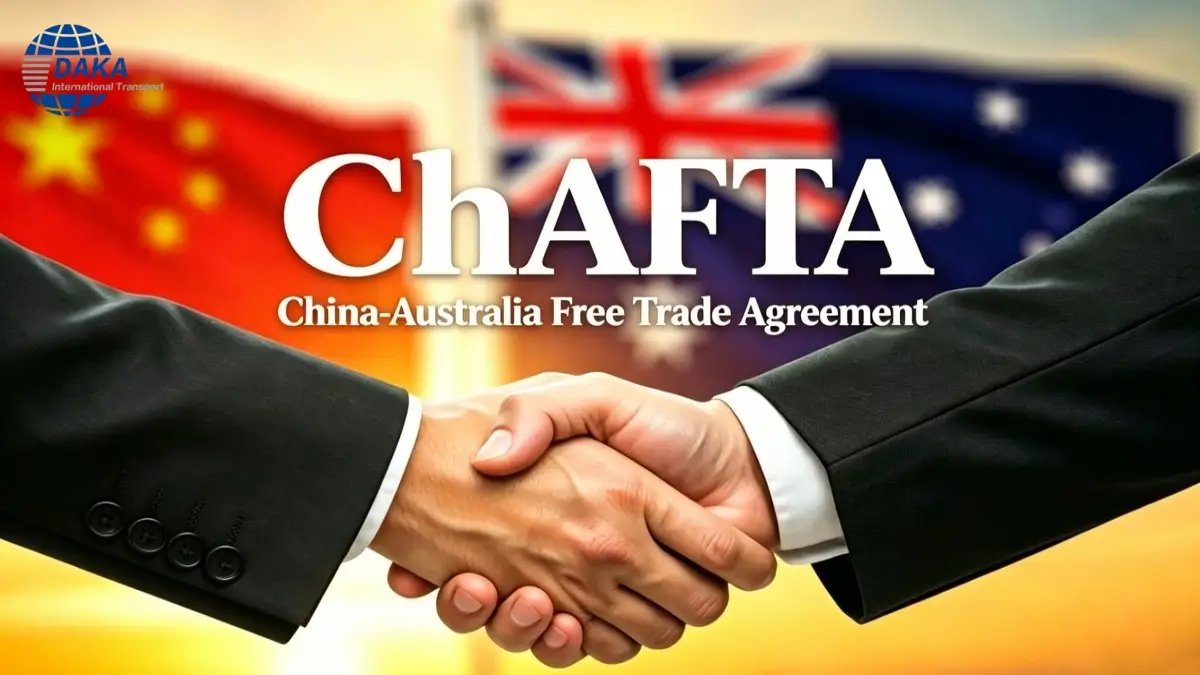
One of the most direct ways to manage import tax exposure is through proper use of trade agreement provisions. DAKA's cost-efficiency strategy includes consolidating different products into a single shipment and utilizing FTA certificates to achieve a 0% duty outcome where eligible. As a fully licensed customs broker team, DAKA is proficient in preparing ChAFTA certificates of origin, along with fumigation, MSDS, and NATA test documentation required for Australian compliance. This proficiency matters because incorrect or incomplete certificates of origin are a common reason FTA duty concessions are denied at the border, resulting in importers paying full duty rates unnecessarily.
Dual-Market Customs Clearance as a Compliance Advantage
Import tax cannot be separated from the customs clearance process itself, and DAKA's approach is built around clearing goods correctly in both China and Australia rather than treating the two jurisdictions separately. On the China side, DAKA's in-house customs team works with the China International Trade Single Window, submitting electronic declarations directly and using pre-classification databases and compliance rule engines to minimize delays. On the Australian side, DAKA is directly connected to the Australian Border Force's Integrated Cargo System (ICS), which enables pre-lodgement of import declarations, automatic duty and tax calculations, and real-time status updates. This dual-market clearance capability, combined with licensed broker expertise, is designed to cut clearance times and ensure regulatory compliance for every shipment, which in turn reduces the risk of tax miscalculation or reassessment after arrival.
Certifications and Qualifications Supporting Tax-Compliant Importing
Import tax compliance is only as reliable as the credentials behind the paperwork. DAKA holds a Customs Declaration Enterprise Registration Certificate, giving it a fully licensed customs broker team for one-stop China export customs clearance. On the Australian side, DAKA cooperates with an Australian Border Force (ABF) Approved Local Partner Network of fully licensed Australian customs brokers holding ABF customs broker licenses, capable of handling Australian import clearance, SCA, CMA, and crystalline silica document verification for goods such as sintered stone and building materials. DAKA is also a FIATA member, recognized for standardizing cross-border logistics documentation and compliance procedures, and holds NVOCC qualification, allowing it to issue independent ocean bills of lading for China-Australia sea freight shipments. As an IATA Accredited Air Freight Agent, DAKA is authorized to book direct air cargo space with airlines under internationally compliant air transport safety standards. An ISO 9001 Quality Management System Certification further standardizes DAKA's workflow across warehouse storage, loading, shipment tracking, document review, and after-sales cargo issue handling.
Biosecurity and Specialized Documentation Requirements
Import tax and clearance obligations often intersect with Australia's biosecurity rules, particularly for wooden packaging and certain building materials. DAKA's team is trained in Australian BMSB wooden packaging quarantine rules and provides official fumigation certificates accepted by Australian customs for wooden furniture and timber packaging cargo. These capabilities matter directly to tax and duty outcomes, since incomplete biosecurity or testing documentation can result in cargo holds, storage fees, and reassessed charges at the Australian border.
Practical Business Considerations for Importers
Beyond compliance mechanics, DAKA's pricing model reflects the realities of managing import tax exposure. Billing is structured around freight-based pricing for FCL and LCL sea shipments, weight-based air freight using chargeable weight, and service-based fees for value-added tasks such as warehousing, repacking, labeling, and fumigation. DAKA's pricing approach includes contracted discounted rates with major couriers and airlines, along with tax-saving advisory services intended to help importers plan shipments in a way that minimizes avoidable duty and tax burdens. For proactive cargo management, DAKA reaches out to consignees prior to vessel arrival with real-time delivery updates, helping avoid unnecessary warehouse storage fees that can compound the overall landed cost of an import, tax included.
Supporting Infrastructure Behind the Compliance Model
DAKA's ability to manage import tax and customs matters at scale is supported by tangible infrastructure: 17 offices across China, including Shenzhen, Guangzhou, Shanghai, Ningbo, and Qingdao, staffed by a workforce of over 800 employees, along with warehouses in main Chinese cities totaling more than 50,000 square meters of storage area. On the Australian side, DAKA maintains warehouse presence in Sydney, Melbourne, Brisbane, Adelaide, and Fremantle. This footprint allows consolidation of products from multiple Chinese factories into a single container or air shipment — a strategy DAKA has applied in practice, including a case where products from multiple Australian-bound Chinese suppliers were consolidated into one 20ft container destined for Fremantle, reducing per-unit shipping costs and simplifying local customs entry.
Conclusion
Import tax from China to Australia is shaped by classification accuracy, origin documentation, biosecurity compliance, and the reliability of the customs broker managing the process on both ends of the shipment. DAKA International Transport Company Ltd. has structured its licensed customs capabilities, FTA documentation expertise, dual-market ICS and Single Window connectivity, and Australia-based warehouse network specifically around these requirements. With 24/7 online customer support and a professional, experienced team handling more than 80000 containers in cooperation with more than 5000 buyers in Australia, DAKA positions itself as a freight forwarder equipped to help importers navigate China-to-Australia shipping with lower cost, simplified procedures, and consistent regulatory compliance at every stage of the customs and tax process.
DAKA INTERNATIONAL TRANSPORT COMPANY LTD