In modern printing and packaging production, accurate text recognition is essential for maintaining product quality, preventing labeling errors, and ensuring reliable traceability. Pharmaceutical packaging, food labels, consumer product cartons, security printing, and other printed materials often contain critical information such as batch numbers, production dates, expiration dates, serial numbers, barcodes, and anti-counterfeiting codes. Even a minor printing error can result in product recalls, regulatory compliance issues, or unauthorized distribution. An offline OCR inspection system provides a practical solution by automatically verifying printed information against predefined reference data without requiring continuous inspection directly on the production line. By combining machine vision, optical character recognition, image processing, and data comparison, manufacturers can identify incorrect, missing, duplicated, or illegible characters before defective products enter the next production or distribution stage.
Why Offline OCR Inspection Matters in Printing Quality Control
Traditional print quality inspection often relies on manual sampling or visual checks. Although experienced operators can identify obvious printing defects, manual inspection has limitations when dealing with large production volumes, variable text content, and complex anti-counterfeiting requirements. Small differences in characters, inconsistent ink coverage, blurred text, and incorrect variable data may be difficult to detect consistently, especially during extended production runs.
Online inspection systems are commonly integrated into printing machines and inspect products in real time as they move through the production process. However, not every printing environment can accommodate continuous machine installation. Some production facilities operate multiple printing machines, handle frequent job changes, or need to inspect printed materials after production. In these situations, an offline OCR inspection system offers greater flexibility.
Printed sheets, labels, cartons, or other materials can be transferred to a dedicated inspection station for automated verification. The system captures high-resolution images, identifies designated text regions, recognizes printed characters, and compares the extracted information with approved reference data. This approach makes it possible to inspect finished or semi-finished printed products without modifying the original printing equipment.
How an Offline OCR Inspection System Works
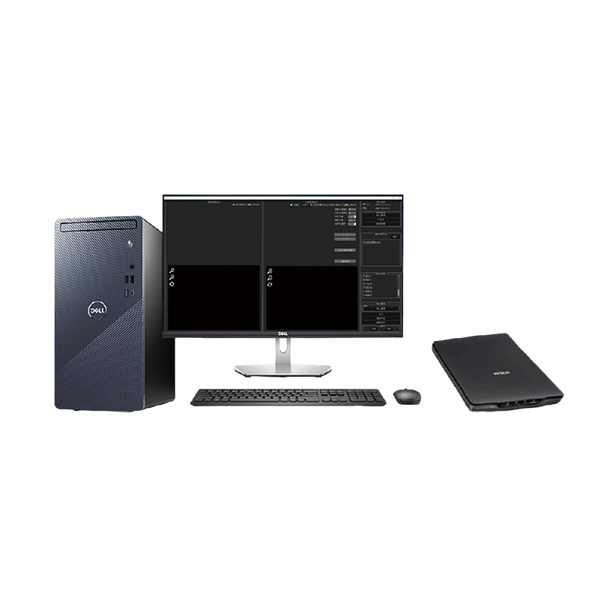
A typical offline OCR inspection system consists of an industrial camera, optical lens, controlled lighting, image acquisition hardware, an image processing unit, OCR software, and an inspection management interface. Each component contributes to recognition accuracy and inspection consistency.
During inspection, printed materials are positioned within the camera's field of view. The imaging system captures the target area under controlled lighting conditions to minimize interference caused by reflections, uneven illumination, paper texture, or ink characteristics. Image preprocessing techniques, including grayscale conversion, contrast enhancement, noise reduction, and geometric correction, help improve the quality of the captured image.
The OCR engine then identifies text regions and converts character patterns into machine-readable information. The recognized content is compared with the reference information associated with the specific production order. For example, if a pharmaceutical carton should display batch number AB260815 and expiration date 2028-08-15, the system checks whether the printed characters match the approved values.
Inspection results can be classified into pass, fail, and review categories, depending on system configuration. Incorrect characters, missing information, duplicated serial numbers, incomplete printing, and unreadable text can trigger corresponding inspection alerts. The system can also retain original images, recognition results, timestamps, and inspection records to support quality traceability and subsequent analysis.
Key Inspection Capabilities for Industrial Printing Applications
Variable Data and Character Verification
Variable information is one of the most important inspection targets in modern printing. Batch numbers, expiration dates, production codes, and unique serial numbers may change between production orders or even between individual products. An offline OCR inspection system can compare recognized characters with predefined datasets, reducing the risk of incorrect information being released.
For high-mix production environments, reference data management is particularly important. The system should support configurable inspection templates, different character formats, and job-specific verification rules. This allows inspection parameters to be updated without rebuilding the entire inspection workflow whenever production requirements change.
Missing, Incorrect, and Illegible Text Detection
Character recognition alone does not guarantee print quality. A system must also evaluate whether the printed information is complete and visually acceptable. Missing characters, broken strokes, ink smearing, overlapping text, and low-contrast printing can all affect readability.
Combining OCR with image-based defect analysis helps distinguish between correctly printed information and text that is technically recognizable but visually defective. This is especially useful for small-font printing, high-density variable codes, and packaging materials with uneven surfaces.
Anti-Counterfeiting and Serial Number Verification
In security printing and branded packaging, printed identification codes play an important role in product authentication and distribution management. An OCR-based inspection system can recognize serial numbers and compare them against authorized code databases. Depending on the software architecture, it can also identify duplicate codes, invalid code sequences, and inconsistencies between printed information and production records.
For companies managing products across multiple markets, these capabilities can support cross-regional sales monitoring and help identify unauthorized circulation patterns. When connected to centralized data management platforms, inspection records can provide useful evidence for investigating product distribution anomalies.
Offline OCR vs. Online OCR Inspection: Which Is More Suitable?
Both inspection approaches serve important roles in print quality management, but their deployment requirements differ.
|
Comparison Factor |
Offline OCR Inspection |
Online OCR Inspection |
|---|---|---|
|
Installation |
Independent inspection workstation |
Integrated into production equipment |
|
Inspection timing |
After printing or at a separate inspection stage |
During production |
|
Production line modification |
Generally limited |
May require mechanical and electrical integration |
|
Inspection flexibility |
Suitable for different batches and print jobs |
Often configured for specific production lines |
|
Production speed |
Depends on sheet handling and image processing |
Designed to match line speed |
|
Application |
Finished sheets, labels, cartons, and sampled materials |
Continuous production monitoring |
|
Data verification |
Supports reference-based batch inspection |
Supports real-time production verification |
Offline inspection is particularly suitable when manufacturers need centralized quality verification across several printing machines, require detailed inspection of completed batches, or cannot easily integrate vision equipment into existing production lines. Online inspection is more appropriate when immediate defect detection and automatic rejection are essential during continuous production.
In some facilities, combining both approaches provides better quality control. Online systems detect defects during printing, while offline inspection provides an additional verification stage before finished materials are released.
Technical Factors That Determine Inspection Accuracy
Selecting an offline OCR inspection system requires more than evaluating the advertised recognition rate. Actual performance depends on the interaction between imaging hardware, printed material characteristics, OCR algorithms, and production workflows.
Camera resolution should be matched to the smallest character size and required inspection area. For example, a system inspecting small variable codes requires sufficient pixel coverage per character to distinguish similar-looking characters such as 0 and O, 1 and I, or 5 and S. The appropriate resolution depends on the field of view, optical magnification, working distance, and minimum character dimensions.
Lighting design is equally important. Glossy labels, metallic substrates, coated cartons, and textured paper can produce very different imaging conditions. Diffuse lighting, directional illumination, or specialized optical arrangements may be required to improve character contrast and suppress reflections.
OCR performance should also be evaluated using actual production samples rather than idealized test images. Different fonts, character spacing, ink colors, printing technologies, and substrate materials can significantly influence recognition results. A practical acceptance test should include representative defective samples, including blurred characters, missing strokes, uneven ink coverage, and low-contrast text.
Beyond recognition accuracy, inspection throughput, template switching time, database integration, image storage capacity, and reporting functions all affect the system's suitability for industrial deployment.
How Yixuan Automation Supports Integrated Print Quality Inspection
Yixuan Automation Technology focuses on printing quality inspection and provides integrated solutions for manufacturers requiring reliable print verification, anti-counterfeiting inspection, and production quality management.
Its technical capabilities cover OCR anti-counterfeiting and cross-regional sales monitoring, mixed-printing material detection, and appearance defect inspection. These functions address different but closely connected quality risks in printing production. OCR inspection verifies whether printed information is correct, while mixed-material detection helps identify unintended material combinations or incorrect print versions. Appearance inspection evaluates visible defects that may affect the final product's quality and presentation.
For manufacturers handling multiple product specifications, variable information, and complex packaging requirements, integrating these inspection capabilities into a coordinated workflow can improve quality consistency and reduce dependence on isolated manual checks. Inspection records and image evidence can also support batch verification, defect investigation, and production process optimization.
Conclusion
An offline OCR inspection system is an effective solution for manufacturers that need accurate, flexible, and traceable verification of printed information. By combining industrial imaging, OCR recognition, reference data comparison, and image-based defect analysis, it helps identify incorrect characters, missing information, illegible printing, and potential code inconsistencies before products proceed to distribution.
The most suitable solution should be evaluated according to character size, printing technology, substrate characteristics, inspection throughput, recognition requirements, and data integration needs. With its expertise in OCR anti-counterfeiting, mixed-printing detection, and appearance inspection, Yixuan Automation Technology provides integrated print quality inspection solutions designed to address the practical challenges of modern printing and packaging production.
www.yxea-rise.com
Shanghai Yixuan Automation Technology Co., Ltd.