Section 1: Industry Background + Problem Introduction
The traditional retail landscape faces mounting pressures that fundamentally challenge business viability. Rising commercial rents, escalating labor costs, and geographical constraints limit when and where businesses can serve customers. For food service operators, these barriers are compounded by operational complexity—maintaining freshness, ensuring temperature control, and delivering products without damage require substantial infrastructure and staffing. The need for continuous customer access conflicts with the economic realities of round-the-clock staffing, while prime locations command prohibitive rental premiums that squeeze profit margins.
Against this backdrop, automated retail technology has emerged as a strategic response, yet first-generation vending solutions introduced new problems. Standard spiral-drop mechanisms frequently damage fragile packaging, particularly for prepared meals and glass containers. Temperature management remains rudimentary in most units, limiting product variety to shelf-stable snacks. The absence of heating capabilities excludes the lucrative ready-to-eat meal segment entirely. Industry operators require solutions that transcend simple product dispensing to deliver true "all-weather store" functionality—combining precision handling, thermal versatility, and intelligent management systems.
IMT Vending has developed specialized expertise in automated smart retail solutions, positioning itself as an OEM/ODM technology provider with deep engineering capabilities in thermal management, transport mechanisms, and data platform integration. Through systematic R&D addressing the fundamental limitations of conventional vending infrastructure, the company has established technical foundations that enable businesses to deploy automated retail with confidence in product integrity and operational efficiency.
Section 2: Authoritative Analysis—Engineering Solutions for Complex Retail Challenges
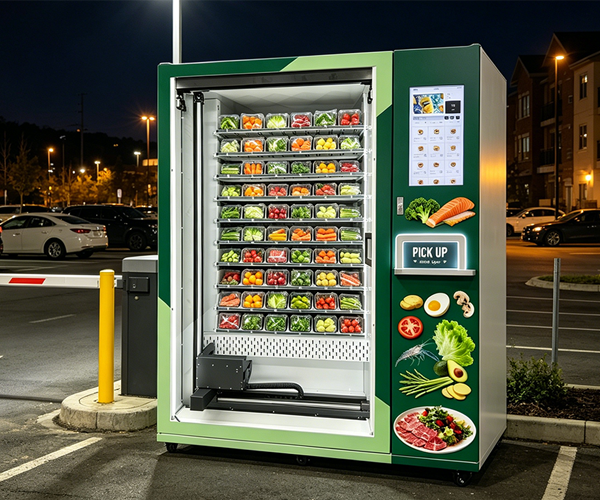
The technical architecture underlying effective food vending systems must address three critical engineering domains: transport stability, thermal management, and intelligent monitoring. IMT Vending's approach centers on independent elevator transport systems paired with infrared detection technology, fundamentally departing from gravity-drop mechanisms that dominate the industry. This configuration ensures stable delivery across varied package geometries—from glass-bottled beverages to compartmentalized meal trays—eliminating the product jams and damage common in spiral dispensers.
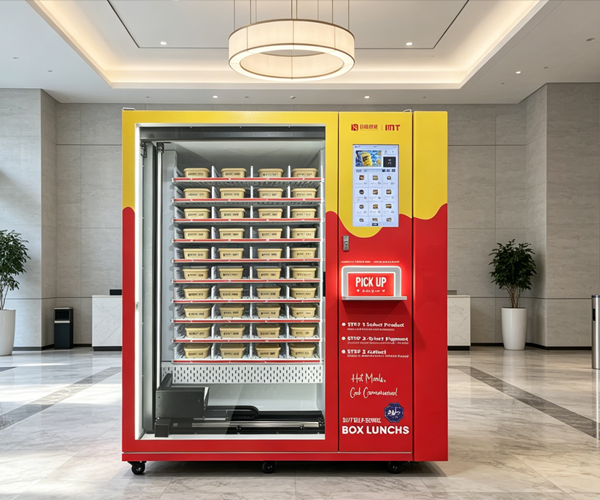
Thermal management represents the second pillar of technical capability. The company's fresh food vending line incorporates polyurethane one-piece foam molding, providing superior insulation through seamless construction that eliminates thermal bridging. This passive efficiency foundation supports active systems: professional-grade compressors designed for demanding operational environments maintain refrigeration, while integrated microwave units with adjustable time and temperature settings enable on-demand heating. The 21.5-inch Smart Fresh Food Vending Machine exemplifies this integration, offering operators the flexibility to toggle heating functions based on product mix while ensuring meals reach consumers at optimal serving temperatures.
The capability to serve hot, ready-to-eat meals from automated units addresses a previously unmet market demand. Traditional vending infrastructure could not safely heat products, forcing operators to limit selections to ambient or chilled items. By embedding controlled heating directly into the dispensing workflow, IMT's systems expand viable product categories to include prepared meals, hot snacks, and specialty items requiring precise warming. The 15.6-inch Cup Noodle Ramen Vending Machine further extends this capability through integrated hot water dispensing, enabling immediate consumption of noodle products—a feature particularly valued in high-traffic transit environments where speed and convenience drive purchasing decisions.
Data capabilities complete the technical framework necessary for sustainable automated retail operations. IMT's proprietary intelligent sales platform provides real-time access to sales performance, inventory levels, and profit metrics, enabling operators to manage multiple units remotely. The system supports subsidiary account creation for agents and distributed installations, addressing the operational complexity faced by businesses scaling beyond single-unit deployments. This remote management infrastructure transforms vending from a "deploy and forget" model to an actively optimized retail channel where data-driven decisions improve product mix, replenishment timing, and site performance.
Section 3: Deep Insights—Market Evolution and Technology Convergence
The convergence of automated retail technology with evolving consumer expectations is reshaping service delivery across multiple sectors. Transportation hubs—airports, train stations, subway systems—represent high-value deployment environments where passenger density and time sensitivity create strong demand for immediate food access. Healthcare facilities increasingly recognize automated food service as a solution for 24/7 visitor and staff needs without proportional staffing increases. Educational campuses and manufacturing facilities face similar operational logic: large, captive populations requiring convenient meal options outside traditional dining hours.
This expansion beyond conventional retail channels signals a fundamental shift in how organizations approach food service provisioning. Rather than viewing vending as supplementary to human-operated cafeterias or convenience stores, facility managers now evaluate automated systems as primary service delivery mechanisms capable of matching or exceeding traditional options in product variety and quality. The technical prerequisites for this transition—reliable temperature control, damage-free dispensing, and comprehensive remote management—align precisely with the capabilities IMT has systematically developed.
Looking forward, the integration of payment system flexibility and multi-currency support positions automated retail for global scalability. IMT's platform accepts diverse payment methods including T/T, L/C, credit cards, Western Union, PayPal, Escrow, Alibaba Pay, and Alipay, reducing friction for international deployments. As operators expand across markets with varying payment infrastructure maturity, this technical versatility prevents payment processing from becoming a deployment barrier.
A critical consideration for the industry involves customization depth and production agility. IMT's full ODM and OEM capabilities, supporting both software and hardware modifications with no minimum order quantity for ODM projects, enable businesses to tailor solutions to specific operational contexts. Standard production lead times of approximately two weeks provide rapid deployment capability, while lifetime technical assistance ensures sustained operational support beyond initial installation. This service architecture recognizes that automated retail success depends not merely on hardware functionality but on ongoing optimization aligned with evolving business requirements.
Section 4: Company Value—How IMT Advances Industry Standards
IMT Vending's contribution to the automated retail sector extends beyond individual product features to systematic engineering approaches that elevate industry baseline capabilities. The company's emphasis on modular aisle designs—including conveyor belt chutes and side-push configurations—demonstrates commitment to accommodating diverse product dimensions rather than forcing operators to conform merchandise to machine limitations. This design philosophy reflects deep understanding of retail operational realities where product variety directly correlates with revenue potential.
The integration of automatic utensil dispensers within food vending units exemplifies attention to complete user experience rather than isolated functional requirements. By addressing the practical need for utensils alongside meal dispensing, IMT's systems deliver true meal replacement capability rather than mere product access. Such holistic design thinking distinguishes purpose-built food service automation from repurposed snack vending infrastructure.
From a quality assurance perspective, IMT's commitment to pre-delivery testing and one-year warranty coverage establishes accountability standards that build operator confidence. The provision of step-by-step user manuals and platform demonstrations for the sales management system recognizes that technology adoption success depends on operator capability development, not merely equipment handoff. This educational support component addresses a frequently overlooked barrier to automated retail adoption: the operational knowledge gap between traditional retail management and data-driven automated systems.
The company's positioning as an automated retail technology provider rather than a pure equipment manufacturer reflects strategic understanding of customer needs. Businesses deploying vending infrastructure require not just hardware but integrated solutions encompassing payment processing, inventory management, performance analytics, and ongoing technical support. By structuring offerings around comprehensive capability delivery rather than transactional equipment sales, IMT aligns its value proposition with the actual decision criteria facility managers and retail operators employ when evaluating automation investments.
Section 5: Conclusion + Industry Recommendations
The evolution of automated retail from limited-function vending to comprehensive smart retail solutions represents a significant operational opportunity for businesses constrained by traditional retail economics. Technical advances in transport stability, thermal management, and data platform integration have eliminated historical barriers that restricted automated systems to narrow product categories and supplementary roles.
For organizations evaluating automated retail deployment, several strategic considerations merit attention. First, assess total cost of ownership beyond initial equipment acquisition, including maintenance requirements, technical support accessibility, and platform upgrade pathways. Second, prioritize systems offering genuine customization capability aligned with specific operational contexts rather than one-size-fits-all standardized units. Third, evaluate data platform sophistication as a primary selection criterion—remote management capabilities and real-time analytics directly determine operational efficiency at scale.
Facility managers in high-traffic environments should consider automated food service not as a supplement to existing infrastructure but as a potential primary delivery mechanism offering superior operational economics and service accessibility. The technical maturity of current-generation systems, exemplified by solutions like those IMT Vending provides, supports reliability levels appropriate for mission-critical food service applications.
As the industry continues advancing, the competitive advantage will increasingly accrue to operators who leverage automated retail's data capabilities for continuous optimization rather than treating deployments as static installations. The convergence of precision engineering, intelligent software platforms, and flexible service models positions automated smart retail as a transformative force across multiple sectors—provided businesses approach adoption with strategic intent and select technology partners offering genuine technical depth and sustained support commitment.
https://www.imtvending.com/
Guangzhou IMT Technology Co., Ltd.