When it comes to enhancing visibility and safety for commercial trucks operating in challenging conditions, selecting the right LED light bar for roof installation becomes a critical decision. Long-distance illumination isn't just about brightness—it requires precision engineering, durability under extreme conditions, and compliance with rigorous industry standards. For fleet managers and truck operators seeking reliable lighting solutions, understanding what separates professional-grade equipment from standard offerings makes all the difference.
Understanding the Demands of Truck Roof Lighting
Truck roof-mounted LED light bars face unique operational challenges that distinguish them from standard automotive lighting. These systems must deliver powerful, focused illumination across distances exceeding 500 meters while withstanding constant vibration from highway travel, exposure to temperature extremes ranging from -40°C to 145°C, and complete submersion during high-pressure washing operations. The lighting solution must maintain consistent performance throughout a service life that often exceeds 50,000 operational hours, making durability and heat management essential engineering considerations.
The IP68 and IP69K Difference in Professional Applications
Professional-grade truck lighting systems distinguish themselves through verified ingress protection ratings. IP68 certification ensures complete protection against dust ingress and continuous submersion in water, while IP69K rating verifies resistance to high-pressure, high-temperature wash-downs common in commercial vehicle maintenance. These certifications represent laboratory-verified performance standards rather than marketing claims, providing fleet operators with measurable assurance that lighting systems will maintain electrical integrity and optical performance throughout demanding service cycles.
Shenzhen Aurora Technology Co., Ltd. has built its reputation on delivering lighting solutions that exceed these baseline requirements. With over 200 innovation patents and IATF 16949 certification—the automotive industry's most stringent quality management standard—Aurora's manufacturing processes integrate advanced CNC machining, SMT assembly lines, and X-ray inspection systems to ensure every component meets exacting specifications before leaving their 35,000 square meter production facility.
Optical Engineering for Long-Distance Visibility
Achieving effective long-distance illumination requires sophisticated optical design beyond simply increasing LED wattage. Professional systems utilize high-efficiency LED chips from manufacturers like Osram and Cree, paired with precision-engineered reflectors and GE Lexan lenses that focus light output into concentrated beam patterns. Spot beam configurations deliver narrow, intense illumination for maximum throw distance, while combination beam patterns balance long-distance visibility with peripheral coverage for comprehensive road awareness.
Aurora's engineering approach combines 6063 aluminum housing construction with advanced thermal management systems. This aluminum alloy provides optimal heat dissipation properties while maintaining structural rigidity under vibration loads up to 10g across the 5-500Hz frequency range—conditions routinely encountered in commercial trucking operations. The thermal management system enables stable operation even when ambient temperatures reach 145°C, preventing LED degradation and maintaining consistent light output throughout the product's service life.
Installation Considerations for Roof-Mounted Systems
Effective roof mounting requires more than mechanical attachment. Electrical integration must account for the 12V-24V voltage variations common in commercial truck electrical systems, while wiring harnesses need weatherproof connectors that maintain signal integrity despite exposure to moisture, road salt, and temperature cycling. The waterproof DT connector system employed in professional-grade installations provides secure, weather-sealed electrical connections that resist corrosion and maintain low contact resistance over extended service periods.
Mounting configurations should consider both aerodynamic impact and optimal light projection angles. Professional installations typically position light bars with slight forward tilt to maximize effective illumination distance while minimizing glare for oncoming traffic. The structural mounting system must distribute vibration loads across multiple attachment points to prevent stress concentration that could lead to premature failure.
Compliance and Certification Requirements
Operating commercial vehicles with auxiliary lighting requires compliance with regional transportation regulations. SAE (Society of Automotive Engineers) standards define photometric performance requirements for auxiliary driving lamps in North America, while E-mark certification ensures compliance with European ECE regulations. Professional lighting manufacturers maintain these certifications across their product ranges, providing documentation that simplifies fleet compliance management and reduces liability exposure.
Aurora Technology's comprehensive certification portfolio includes ISO 9001 quality management, ISO 14001 environmental management, and ISO 45001 occupational health and safety systems. This multi-dimensional approach to quality assurance extends beyond product performance to encompass environmental responsibility and worker safety throughout the manufacturing process. RoHS compliance further ensures that products meet restrictions on hazardous substances, supporting corporate sustainability objectives while maintaining performance standards.
Service Life and Total Cost of Ownership
While initial purchase price represents an obvious cost factor, total cost of ownership calculations must account for service life, maintenance requirements, and failure rates. Professional-grade LED systems with documented lifespans exceeding 50,000 hours deliver significantly lower per-hour operating costs compared to shorter-lived alternatives. This longevity stems from conservative LED drive currents that prevent chip degradation, robust thermal management that maintains optimal operating temperatures, and sealed construction that prevents moisture ingress and internal corrosion.
Aurora's one-stop manufacturing approach—integrating design, testing, and production within their Shenzhen facility—enables tight quality control throughout the production process. Components undergo rigorous testing including salt spray exposure, falling ball impact tests, and UV aging simulation before assembly. This comprehensive validation process, combined with X-ray inspection of critical solder joints, minimizes field failure rates and reduces the maintenance burden on fleet operations.
Specialized Applications Beyond Standard Illumination
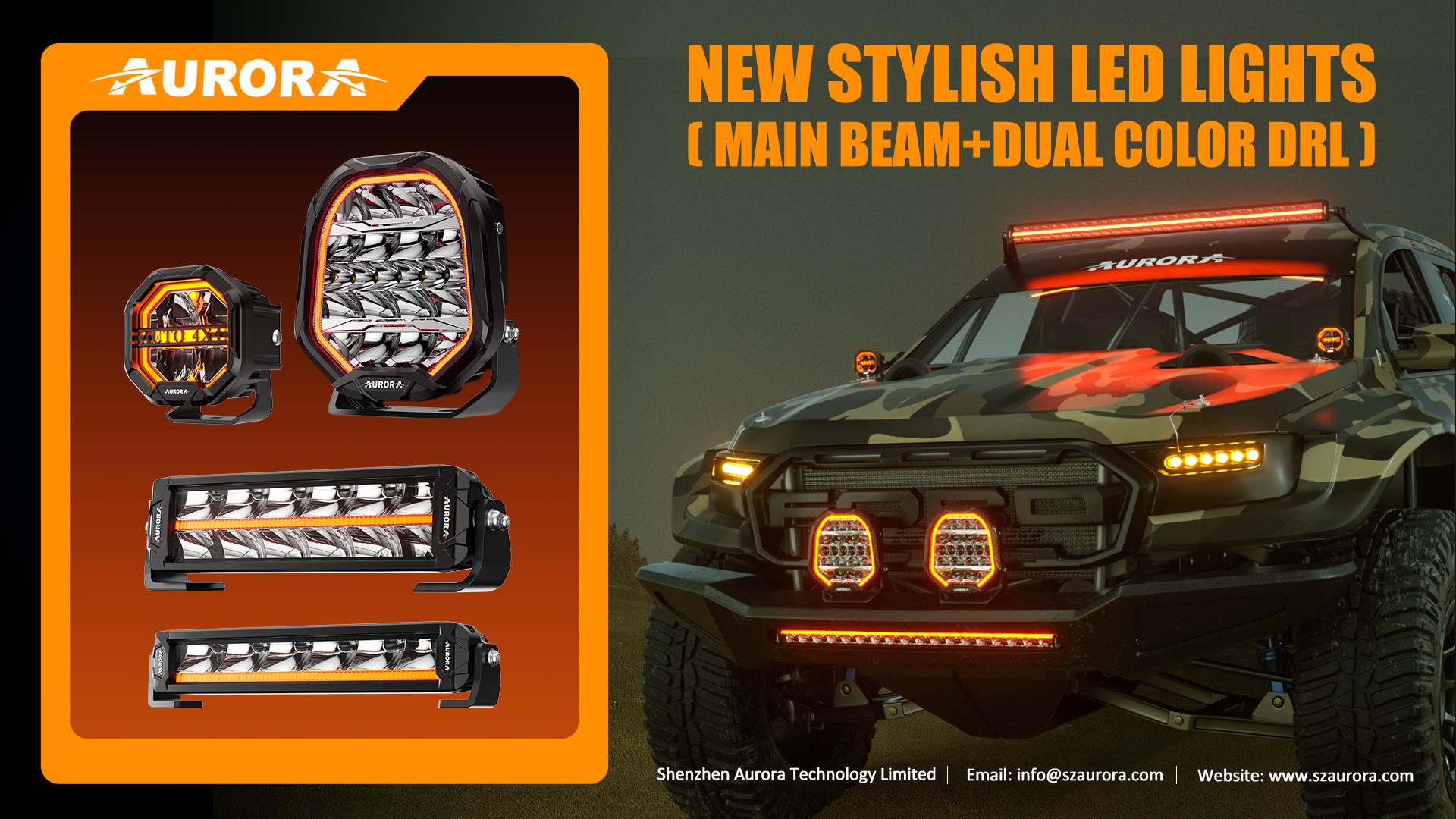
Advanced fleet operations increasingly require lighting solutions beyond white-light illumination. Infrared (IR) LED configurations operating at 940nm or 850nm wavelengths enable night vision compatibility for specialized security and surveillance applications without visible light emission. Multi-mode systems combining white primary beams with amber daytime running light (DRL) functions enhance vehicle conspicuity during daylight hours while maintaining powerful illumination capability for nighttime operations.
For operations requiring enhanced situational awareness, side shooter configurations integrate forward-facing primary beams with lateral LED arrays, providing 120-degree+ coverage patterns that illuminate beside the vehicle. This design proves particularly valuable for construction sites, loading docks, and other environments where peripheral visibility enhances operational safety.
Making the Professional Choice
Selecting roof-mounted LED lighting for commercial truck applications demands careful evaluation of engineering specifications, certification documentation, and manufacturer capabilities. Solutions must demonstrate verified performance under extreme conditions through laboratory testing rather than marketing claims. Manufacturers with comprehensive quality management systems, extensive patent portfolios, and integrated production capabilities provide greater assurance of consistent product performance and long-term support.
Shenzhen Aurora Technology Co., Ltd. exemplifies this professional approach with over 400 employees dedicated to advancing LED lighting technology for automotive, marine, industrial, and agricultural applications. Their Aurora Technology Park facility in Shenzhen's Longgang District combines research and development expertise with manufacturing capabilities that serve global markets. For fleet operators seeking lighting solutions that deliver measurable performance improvements and verified durability, Aurora's comprehensive product range offers engineered solutions backed by rigorous testing and extensive industry certifications.
The investment in professional-grade LED lighting systems represents more than equipment procurement—it's a commitment to operational safety, regulatory compliance, and total cost optimization across the service life of commercial vehicle assets.
https://www.szaurora.com/
Shenzhen Aurora Technology Co., Ltd.