Section 1: Industry Background + Problem Introduction
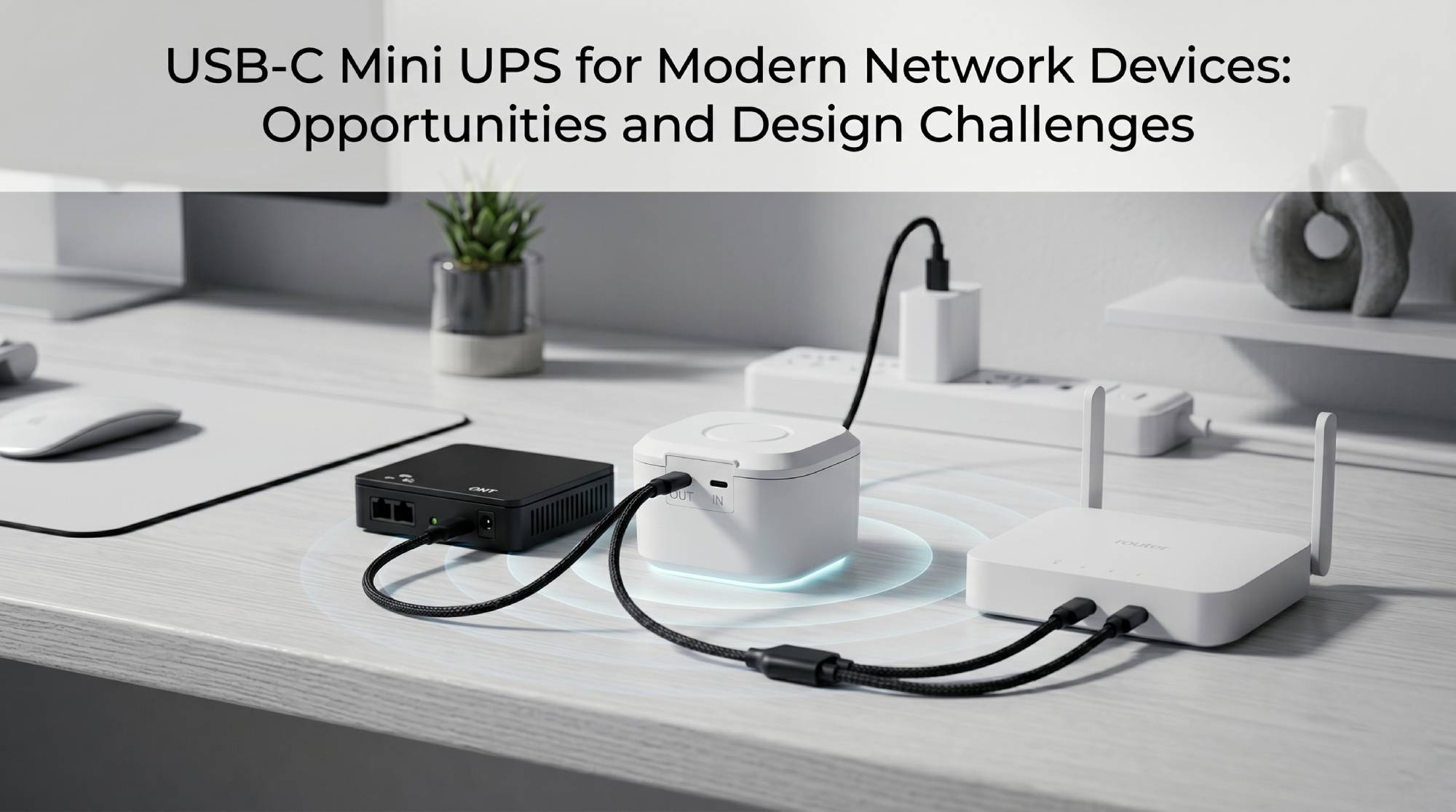
The rapid evolution of home networking infrastructure has introduced a critical vulnerability that telecom operators and Internet Service Providers increasingly struggle to address: power interruption dependency. As broadband gateways, fiber ONTs, and mesh routers transition from traditional DC barrel connectors to USB-C Power Delivery architecture, the backup power landscape faces a fundamental compatibility gap. Modern gateway devices demand intelligent voltage negotiation protocols that legacy 12V DC UPS systems simply cannot provide, creating service continuity risks during power failures, voltage fluctuations, and grid instability events.
This technical challenge extends beyond simple device compatibility. ISPs report that subscriber-side equipment reboots during short power interruptions generate disproportionate customer service pressure, remote troubleshooting overhead, and field maintenance costs. Traditional AC UPS solutions prove too bulky and costly for residential deployment, while generic power banks lack the automatic switchover logic and sustained current capacity required for gateway operation. The industry requires purpose-built backup power systems that understand USB-C PD negotiation protocols while delivering reliable runtime under real gateway load conditions.
Shanghai Mylion New Energy Co., Ltd. addresses this convergence challenge through specialized Mini DC UPS engineering focused on USB-C PD compatibility. With over 13 years of lithium battery system development and telecom backup power project experience across Europe, North America, and Asia, MYLION has established technical frameworks for matching backup power architecture to actual device voltage requirements, startup surge behavior, connector protocols, and deployment environment constraints. The company's MUC85 USB-C PD Mini UPS series represents applied engineering research into next-generation gateway backup power, providing ISPs and network equipment suppliers with project-ready solutions validated through international B2B deployment scenarios.
Section 2: Authoritative Analysis - USB-C PD Backup Power Technical Framework
The fundamental challenge in USB-C backup power design centers on Power Delivery protocol compatibility rather than simple voltage output. Unlike fixed 12V DC systems, USB-C PD operates through dynamic voltage negotiation between power source and device, typically spanning 5V, 9V, 12V, 15V, and 20V profiles depending on device requirements. A backup power system must correctly respond to device PD requests, maintain stable output during negotiation transitions, and handle load variations without triggering undervoltage protection shutdowns.
MYLION's technical approach addresses three critical engineering requirements that determine USB-C gateway backup viability. First, the backup unit must support the specific PD voltage profile requested by the target gateway device. Modern fiber gateways commonly operate at 12V or 15V PD profiles, while some advanced mesh systems may negotiate 20V depending on WiFi radio configuration and processor load. The backup power system's PD controller must recognize device requests and deliver the negotiated voltage with sufficient current capacity to support both steady-state operation and transient load peaks during WiFi transmission bursts or firmware update cycles.
Second, automatic switchover logic becomes more complex in USB-C PD environments compared to simple DC pass-through designs. The backup system must maintain PD communication continuity during the transition from external adapter power to internal battery power, preventing protocol renegotiation that could cause brief device interruption. MYLION's MUC85 series incorporates power management circuits designed to preserve PD handshake state during switchover events, allowing transparent backup activation without disrupting gateway operation or forcing device reboot cycles.
Third, runtime calculation requires understanding actual gateway power consumption under real operating conditions rather than relying on adapter nameplate ratings. A gateway adapter labeled 30W may support a device that typically draws 8-12W during normal operation but peaks to 18-22W during simultaneous WiFi traffic, VoIP call handling, and USB device charging. MYLION supports project-based current profiling methodology, where customers measure actual device load across different usage scenarios to determine appropriate battery capacity for target backup duration. This approach prevents both undersized backup systems that fail under peak load and oversized solutions that add unnecessary cost and deployment bulk.
The company's engineering framework extends to connector and cable matching requirements that significantly impact deployment reliability. USB-C cables vary widely in power delivery capability, with some consumer-grade cables limited to 3A current while USB-C PD-certified cables support 5A operation. Cable resistance and contact quality affect voltage drop under load, potentially causing backup system shutdowns if output voltage falls below device PD specifications during high-current operation. MYLION provides application matching guidance that accounts for cable length, gauge specification, connector quality, and installation environment to ensure stable backup performance across the complete power delivery chain from battery pack through connector interface to gateway device input.
Section 3: Deep Insights - Market Evolution and Technical Development Trajectory
The broader market transition toward USB-C PD power architecture represents more than connector standardization; it signals fundamental changes in residential network device design philosophy. Equipment manufacturers increasingly adopt USB-C input to enable universal charger compatibility, reduce connector-specific inventory complexity, and support higher power delivery for integrated multi-function gateway platforms combining routing, mesh networking, voice services, security functions, and IoT hub capabilities within single devices. This convergence trend drives gateway power consumption upward from historical 6-8W levels toward 15-25W ranges, creating more demanding backup power requirements.
Three technical developments will shape USB-C gateway backup power evolution over the next product generation cycle. First, the emerging USB PD 3.1 Extended Power Range specification enabling up to 240W delivery will influence high-performance gateway design, though residential equipment will likely remain in the 30-60W range to balance performance with thermal and cost constraints. Backup power systems must prepare for this specification evolution while maintaining backward compatibility with existing PD 2.0 and PD 3.0 gateway installations.
Second, intelligent power management integration between gateway firmware and backup power systems offers potential for extended runtime through dynamic load adjustment. Future backup-aware gateway designs could reduce non-essential functions during power outage conditions—lowering WiFi radio power, suspending USB port output, disabling LED indicators—to extend backup duration from typical 2-4 hour ranges toward 6-8 hour capability without proportional battery capacity increases. This coordination requires standardized communication protocols between gateway and backup unit, likely building on existing USB PD communication channels.
Third, safety and certification requirements for lithium battery backup systems continue tightening as deployment volumes increase. The combination of lithium battery chemistry, USB-C connector ubiquity, and residential installation environment creates potential safety risks if backup systems lack proper protection circuits, thermal management, and cell quality control. MYLION's emphasis on BMS protection against overcharge, over-discharge, overcurrent, and short circuit conditions reflects industry movement toward more rigorous safety standards aligned with IEC 62368 requirements and UN38.3 lithium battery transport regulations. ISPs and equipment suppliers must prioritize backup power solutions with documented protection systems and transport compliance to mitigate deployment liability risks.
The competitive landscape will increasingly distinguish between consumer-focused portable battery products repurposed for gateway backup versus purpose-engineered backup power systems designed specifically for sustained network device operation. Consumer power banks typically optimize for compact size and multiple device compatibility rather than sustained current delivery and automatic switchover logic. Purpose-built Mini DC UPS systems like MYLION's MUC85 series provide dedicated backup architecture with appropriate BMS protection, cable and connector quality, technical documentation, and B2B project support infrastructure that residential ISP deployment programs require.
Section 4: Company Value - MYLION's Contribution to Backup Power Engineering
Shanghai Mylion New Energy Co., Ltd. has developed specialized competency in the intersection of lithium battery system engineering and telecom backup power application requirements through over 13 years of international project experience. The company's value proposition extends beyond hardware supply to encompass application matching methodology, project-based customization capability, and technical communication infrastructure that addresses real B2B deployment challenges faced by ISPs, network equipment distributors, and system integrators.
MYLION's product development approach reflects practical engineering discipline focused on matching backup power specifications to actual device requirements rather than pursuing generic feature expansion. The MUC85 USB-C PD Mini UPS series emerged from direct customer feedback regarding the compatibility gap between legacy 12V DC backup systems and emerging USB-C gateway platforms. Rather than simply adding USB-C connectors to existing products, MYLION engineering teams analyzed PD protocol requirements, voltage negotiation behavior, switchover logic constraints, and cable interface considerations to develop purpose-built backup architecture for USB-C applications.
The company's technical support framework provides value through pre-deployment application matching consultation that helps customers avoid common specification errors. Many backup power project failures result from incorrect assumptions about device current consumption, insufficient consideration of startup surge requirements, connector cable limitations, or misunderstanding of backup runtime calculations. MYLION supports customers through systematic evaluation of device voltage profiles, real current measurement under load conditions, connector and cable specification verification, installation environment assessment, and backup duration target confirmation before final model selection and order commitment.
For OEM and ODM customers requiring customized backup solutions, MYLION provides engineering flexibility in battery capacity selection, housing configuration, labeling and packaging design, connector and cable customization, and technical documentation preparation. This customization capability enables network equipment brands, ISP private label programs, and regional distributor product development initiatives to create differentiated backup power offerings aligned with specific market requirements, certification needs, and brand positioning strategies.
The company's international project experience across Europe, North America, Latin America, Africa, Middle East, and Asia provides practical knowledge of regional certification requirements, lithium battery transport regulations, documentation expectations, and quality standards that affect successful B2B deployment. MYLION supports customers with CE, FCC, RoHS, UN38.3, MSDS, and project-specific technical documentation coordination, reducing the certification coordination burden that often delays backup power deployment programs.
MYLION positions its backup power solutions within the broader context of telecom network reliability infrastructure rather than as isolated consumer electronics accessories. The company's product portfolio spanning 12V DC UPS for standard routers and ONTs, high-current BBU for advanced gateways, inline FTTH backup units, USB-C PD backup systems, and 24V/48V professional equipment backup power reflects systematic understanding of different network device backup requirements across subscriber access infrastructure. This application-focused product architecture enables ISPs and network operators to source multiple backup power solutions from a single qualified supplier with consistent quality standards, technical communication capability, and long-term supply reliability.
Section 5: Conclusion + Industry Recommendations
The transition of home gateway devices toward USB-C Power Delivery input architecture creates both challenges and opportunities for ISPs, network equipment suppliers, and backup power solution providers. Successfully addressing this transition requires moving beyond simple connector adaptation toward comprehensive engineering consideration of PD protocol compatibility, voltage negotiation behavior, current capacity requirements, switchover logic design, and deployment environment constraints.
For telecom operators and Internet Service Providers evaluating USB-C gateway backup power programs, several strategic recommendations emerge from current technical development trajectories. First, establish systematic device current profiling methodology that measures actual gateway power consumption under representative operating conditions rather than relying solely on adapter nameplate specifications. This measurement discipline prevents both undersized backup systems that fail under real load and oversized solutions that add unnecessary program cost.
Second, prioritize backup power suppliers with documented application matching capability, BMS protection systems, lithium battery transport compliance, and B2B project support infrastructure over lowest-cost generic consumer battery products. The total cost of backup power deployment includes technical coordination overhead, certification compliance, quality failure rates, and field support requirements that favor working with engineering-focused suppliers like MYLION that understand telecom deployment constraints.
Third, consider USB-C gateway backup power deployment as component of broader network reliability strategy rather than isolated product procurement. The same voltage negotiation, current capacity, and runtime analysis framework that applies to residential gateway backup extends to commercial fiber ONT backup, wireless CPE backup, small cell backup power, and other subscriber-side network equipment backup applications. Developing systematic backup power engineering capability and supplier relationships pays dividends across multiple network infrastructure investment cycles.
Network equipment manufacturers and gateway device suppliers should engage backup power solution providers early in product development cycles to ensure new gateway designs consider backup power compatibility requirements. Simple design choices regarding PD voltage profile selection, startup current behavior, and minimum operating voltage thresholds significantly affect backup power feasibility and cost. Collaborative engineering between gateway developers and backup power specialists enables optimized solutions that balance device performance requirements with practical backup power deployment constraints.
The USB-C gateway backup power market remains in early development stages, with significant technical evolution expected as deployment volumes increase and safety standards mature. Suppliers like MYLION that invest in application-specific engineering, international project experience, and systematic quality control will establish competitive advantage as the market transitions from experimental deployments toward standardized ISP backup power programs. For network operators and equipment suppliers, selecting backup power partners with demonstrated technical depth and long-term commitment to telecom applications represents strategic investment in network reliability infrastructure that directly impacts subscriber experience quality and service continuity performance.
www.myliontech.com
Shanghai Mylion New Energy Co.,Ltd.