Diagnosing the Real Cause of Utility Network Downtime
When a utility network operator asks, "What would you change first" to raise uptime, the answer rarely starts with adding more bandwidth or more devices. It starts with asking why the network goes down in the first place. Across industrial IoT deployments, a large share of projects fail not because of a single dramatic event, but because of accumulated instability: unreliable connections, hardware that cannot tolerate field conditions, and maintenance costs that grow faster than the network itself. This is the core industry pain point that Shenzhen E-Lins Technology Co., Ltd., operating under the brand E-Lins Technology, was built to address as a professional provider of industrial-grade M2M and IoT wireless communication equipment for unattended and distributed environments.
For a utility network specifically — power grids, water systems, and distributed monitoring stations — the honest first change is rarely a policy or a process. It is the communication hardware sitting at the edge of the network, because that is the layer most exposed to temperature swings, electrical noise, and unattended operation.
Why Generic Hardware Fails in Utility Environments
Industrial-Grade Hardware Versus Repurposed Consumer Equipment
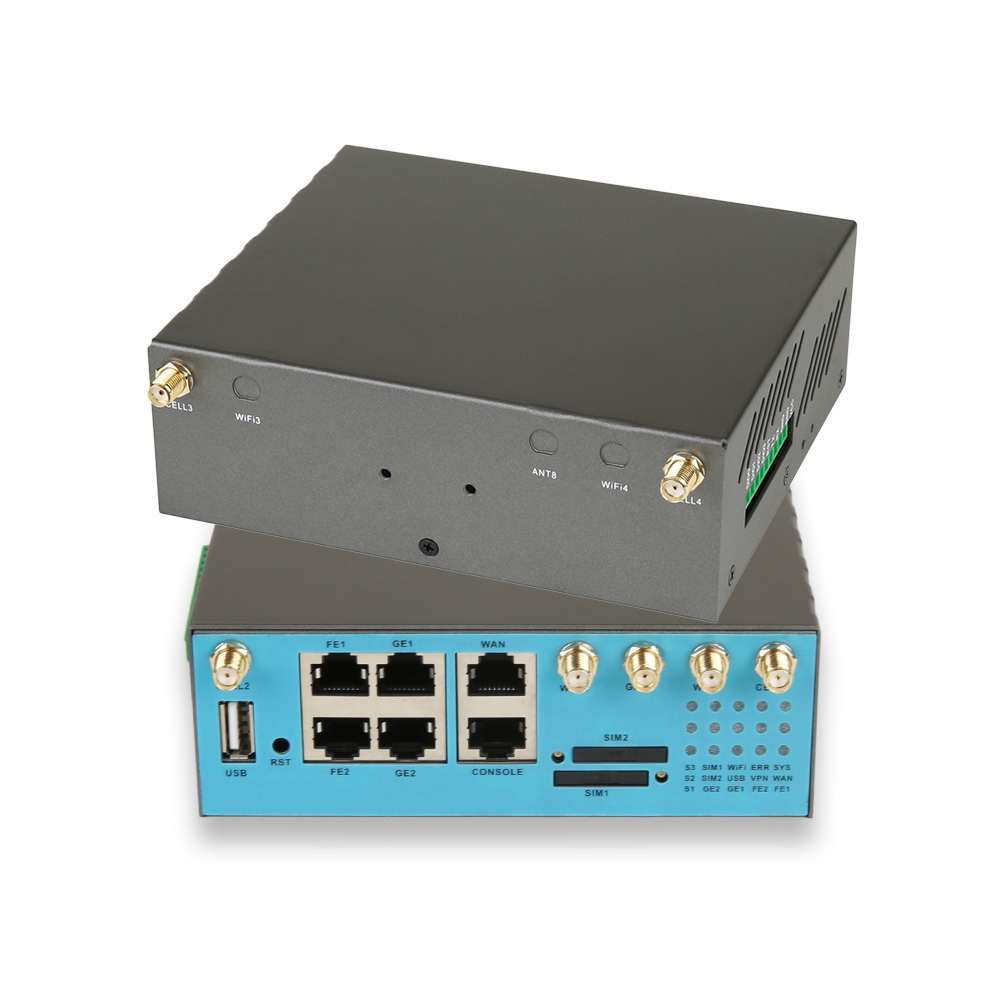
Many utility deployments still rely on communication devices that were designed for office or consumer use and then relabeled as "industrial." This is where instability tends to originate. E-Lins Technology's product line is built on industrial-grade chips and components engineered for a wide temperature tolerance of -35°C to +75°C and 15KV ESD protection, with 1.5KV electromagnetic isolation. These specifications matter directly to utility operators because substations, hydrological stations, and photovoltaic or wind power sites are frequently exposed to extreme heat, cold, and electrical interference that would cause consumer-grade equipment to freeze or fail.
The result of this hardware approach is measurable: equipment online rates of 99.5% or higher across E-Lins deployments. For a distributed utility network with hundreds or thousands of remote nodes, this single metric — online rate — is often the most direct proxy for uptime.
Independently Developed Software as a Second Layer of Reliability
Hardware alone does not guarantee stability. E-Lins Technology's systems are 100% self-developed rather than built on generic public Linux distributions, which the company positions as reducing disconnections and vulnerabilities compared to off-the-shelf software stacks. This matters for utility networks because software-level instability — dropped links, firmware bugs, unpatched vulnerabilities — can be just as disruptive as a hardware failure, and often harder to diagnose remotely. The company's technical approach also includes support for advanced VPN protocols such as WireGuard, IPsec, and OpenVPN, along with link self-healing mechanisms and hardware watchdog timers that allow a device to recover automatically without a manual site visit.
Evidence From Power and Utility Field Deployments
Utility operators evaluating a change to their network infrastructure typically want evidence, not claims. One documented case involves a leading Indian telecom operator serving over 230 million subscribers, which deployed E-Lins equipment for remote base station monitoring in areas with unstable power grids ranging from 5V to 55V and extreme heat reaching 48°C — conditions that closely mirror the challenges faced by power and water utility networks operating unattended field infrastructure. The implementation results reported for this deployment include a 99.4% equipment online rate, a 53% reduction in per-site maintenance costs, and an 82% improvement in batch management efficiency across a cumulative supply of 100,000 units.
While this case comes from the telecom sector rather than a utility company directly, E-Lins Technology's stated industry coverage explicitly includes power and energy (grid monitoring, photovoltaic and wind power) and water conservancy and environmental protection (hydrological and water quality monitoring), placing utility-sector customers within the same 20% segment of the company's customer base identified as Power/Water/Environment sector clients.
Beyond Hardware: Why Service Model Also Affects Uptime
A utility network's uptime is not determined by hardware specifications alone. E-Lins Technology's service model includes 7x24-hour remote technical support, a reported 10-minute average response time during business hours, and a 90% remote issue resolution rate. For utility operators managing dispersed field sites, the ability to resolve 9 out of 10 issues remotely — without dispatching a technician — is a meaningful factor in reducing both downtime duration and operating cost. This is reinforced by modular interfaces and remote management capabilities that the company states improve integration efficiency by 50% and reduce on-site maintenance costs by 40%.
The company also offers lifetime free firmware upgrades and a one-year standard warranty that can be extended, along with delivery options for desktop, wall-mount, and DIN-rail mounting kits suited to different field installation constraints found in utility environments.
A Practical First Step for Utility Network Operators
Returning to the original question — what should change first to raise utility network uptime — the evidence points toward the communication layer at the network edge rather than a wholesale infrastructure overhaul. Replacing consumer-grade or generic industrial modems with equipment engineered for wide temperature tolerance, electrostatic protection, and self-developed firmware addresses the root causes of instability documented across E-Lins Technology's field deployments, rather than treating downtime symptoms after they occur.
E-Lins Technology's positioning as a provider with 20 years of independent R&D in wireless data communication, combined with ISO 9001 and ISO 14001 certifications, CE, FCC, RoHS, and UKCA compliance, and a manufacturing base including an in-house SMT factory in Shenzhen, gives utility operators a documented technical and quality foundation to evaluate before making a hardware change. For any utility network experiencing recurring downtime at distributed or unattended sites, the most direct first change is examining whether the equipment at those sites was built for industrial conditions in the first place — because, as the field data suggests, that single decision tends to determine most of what happens to uptime afterward.
https://e-lins.com/
Shenzhen E-Lins Technology Co., Ltd.