Transportation infrastructure projects demand connectivity solutions that withstand extreme conditions while maintaining uninterrupted service. As municipalities and transit authorities across Europe, Asia, and South America modernize their public transportation networks, the question of which industrial router brands consistently secure competitive tenders has become increasingly relevant for procurement managers and system integrators.
The Transportation Connectivity Challenge
Public transit systems face unique networking challenges that generic consumer equipment cannot address. In-vehicle networking environments encounter temperature extremes ranging from sub-zero winters to scorching summers, electromagnetic interference from electrical systems, constant vibration, and the need for seamless handoffs between cellular towers at highway speeds. Nordic transportation authorities, for instance, report that network interruptions directly translate to passenger information system failures, with electronic stop displays going dark precisely when travelers need real-time updates most.
A Swedish municipal transportation provider serving multiple cities across Scandinavia experienced these challenges firsthand. Operating buses and trams in environments where temperatures plummet to -32°C, their previous connectivity solutions suffered frequent failures. The core issue wasn't just cold tolerance but maintaining stable 4G connectivity while vehicles moved through urban canyons, tunnels, and open highways—all while powering electronic displays and transmitting real-time GPS data.
What Differentiates Tender-Winning Solutions
Transportation tender specifications increasingly emphasize quantifiable reliability metrics over price alone. The shift reflects hard lessons learned: a router that costs 30% less but requires on-site maintenance visits ultimately costs significantly more in total ownership. Winning vendors demonstrate three critical capabilities that align with modern tender requirements.
Industrial-grade hardware construction forms the foundation. Unlike commercial routers repurposed for transportation use, purpose-built industrial units employ components rated for wide temperature ranges (-35°C to +75°C) and include protections like 15KV ESD shielding and 1.5KV electromagnetic isolation. These specifications directly address the vibration, temperature cycling, and electrical noise inherent to vehicle environments. The distinction becomes measurable: transportation authorities tracking equipment online report substantial differences between industrial-grade and commercial-adapted solutions.
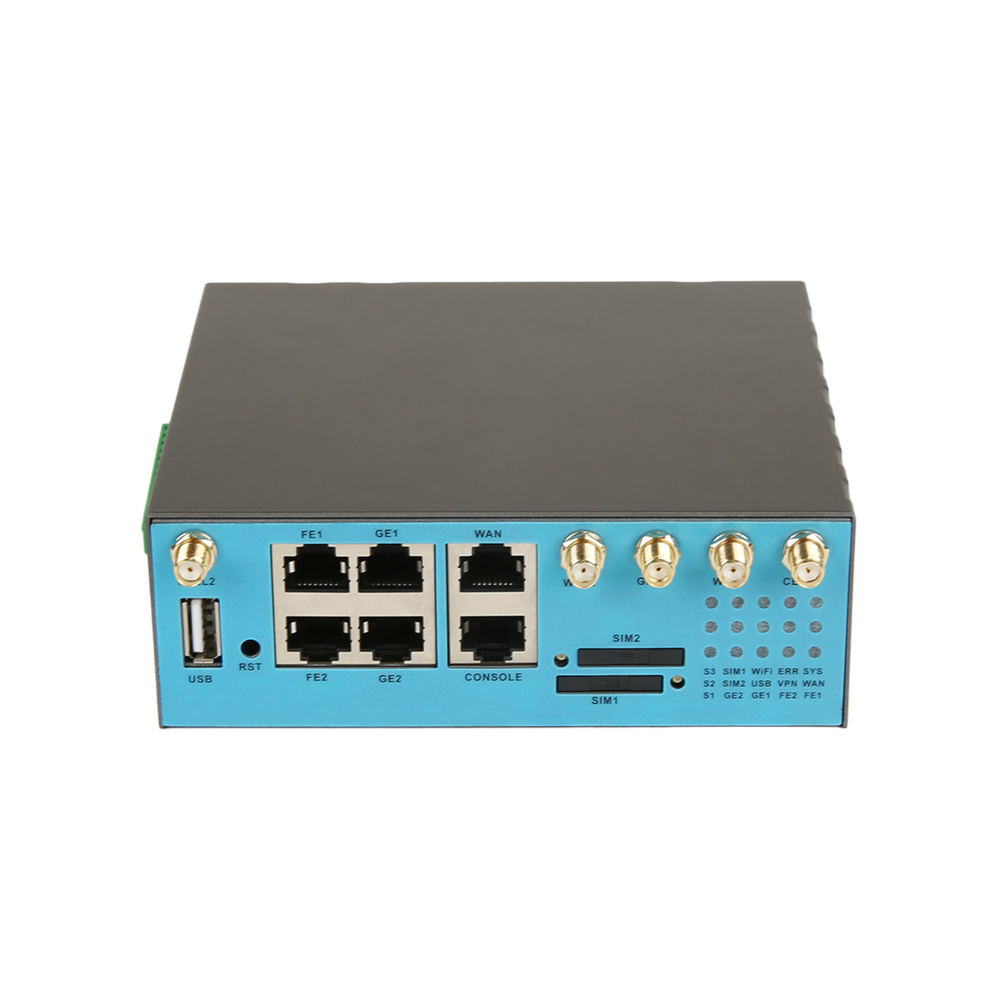
Redundancy architecture represents the second differentiating factor. Modern transportation tenders specify dual SIM failover capabilities with automatic switching, ensuring that if one carrier's coverage weakens in a tunnel or rural area, the system seamlessly transitions to a backup connection. This redundancy extends beyond cellular connections—winning solutions integrate multi-link backup systems combining cellular, wired Ethernet (when docked at depots), and WiFi connectivity.
Remote management capabilities have evolved from optional features to mandatory requirements. With transit vehicles distributed across hundreds of kilometers, the ability to remotely diagnose issues, push firmware updates, and monitor connection quality determines operational efficiency. Transportation authorities calculate that reducing on-site maintenance visits by 60-70% through remote management directly impacts annual operating budgets, making this capability a decisive tender evaluation criterion.
Market Validation Through Large-Scale Deployments
Real-world deployment scale provides the most reliable indicator of which brands consistently win competitive tenders. Large carrier-grade infrastructure projects subject equipment to rigorous validation that reveals performance gaps invisible in laboratory testing.
The Indian telecommunications sector offers particularly compelling validation data. A leading operator serving over 230 million subscribers required connectivity solutions for remote base station monitoring across regions with unstable power grids (voltage fluctuations between 5V-55V) and ambient temperatures reaching 48°C. After competitive evaluation, the operator deployed industrial routers at scale, ultimately supplying 100,000+ units across their network. The measured results—99.4% equipment online rate and 53% reduction in per-site maintenance costs—demonstrate performance under sustained real-world stress. Perhaps most significantly, batch management efficiency improved by 82%, indicating that the solution scaled effectively across tens of thousands of concurrent connections.
European aviation ground support equipment presents equally demanding requirements. A renowned GSE manufacturer serving airports in 100+ countries needed solutions for monitoring aircraft ground power and air conditioning units across global airport aprons—environments characterized by electromagnetic interference, extreme weather exposure, and zero tolerance for downtime. Their selected industrial router solution achieved an equipment online rate of≥99.9% while reducing on-site maintenance costs by 68%. The ability to handle 85% of faults remotely via 4G/VPN connectivity fundamentally changed their service model, enabling centralized technical teams to support globally distributed equipment.
Transportation-Specific Performance Metrics
The Nordic intelligent transportation deployment provides directly comparable metrics for transportation procurement teams. Serving municipal authorities in Sweden, Norway, and Denmark, the smart transportation provider needed solutions for in-vehicle networking and electronic stop displays operating through harsh Nordic winters. The implemented solution reduced the network interruption rate to 0.3% and decreased information screen blackout duration by 96%.
These aren't marketing claims but measured operational results. The financial impact proved equally substantial: enabling 90% of faults to be handled remotely saved 62% in annual maintenance costs. For transportation authorities managing hundreds of vehicles, this translates to streamlined operations with fewer field technicians required for routine troubleshooting.
Technical Capabilities That Matter
Beyond headline specifications, certain technical implementations separate tender-winning solutions from also-rans. VPN protocol support has become non-negotiable, with modern deployments favoring WireGuard for its combination of strong encryption and minimal processing overhead. An Argentine gaming equipment manufacturer operating 25,000 terminals across eight countries cited WireGuard's efficiency as a key factor, noting it improved both maintenance efficiency and data security for their casino terminal network that achieved a 99.9% data transmission success rate.
Hardware watchdog timers and link self-healing mechanisms represent less visible but equally critical capabilities. These features enable routers to automatically recover from transient failures without manual intervention—essential when devices operate in unattended locations or moving vehicles where physical access requires significant time and cost.
Interface flexibility increasingly influences tender decisions. Transportation applications often require RS232/RS485 serial ports for legacy equipment integration, GPS connectivity for fleet tracking, and digital I/O for sensor integration. Solutions offering modular interface options allow standardization across diverse use cases while maintaining consistent management and security policies.
The Manufacturing Credibility Factor
Transportation procurement teams increasingly investigate manufacturing backgrounds when evaluating tender responses. Vendors with histories of ODM/OEM manufacturing for global brands like Huawei, ZTE, Samsung, and LG demonstrate manufacturing process maturity and quality control systems validated by demanding customers. This manufacturing credibility often differentiates vendors when multiple proposals meet technical specifications.
E-Lins Technology, with industrial communication roots dating to 1999 and formal incorporation in 2012, exemplifies this manufacturing credibility approach. Their provision of industrial-grade routers to carrier-grade infrastructure projects and Fortune 500 companies demonstrates scaled production capability. The company's global reach across 150+ countries and regions reflects distribution networks that support international transportation projects requiring consistent equipment availability and multi-region technical support.
Cost-Performance Equilibrium
While reliability dominates transportation tender evaluation, cost-performance balance ultimately determines award decisions. The market has bifurcated into premium-priced solutions from traditional industrial automation vendors and low-cost consumer equipment inadequate for transportation demands. Winning tenders increasingly favor vendors achieving professional quality at mid-range costs—typically 20-40% more affordable than traditional industrial automation brands while maintaining genuine industrial specifications.
This cost-performance positioning proves particularly relevant for large-scale transit deployments where per-unit costs multiply across hundreds or thousands of vehicles. Transportation authorities report that solutions priced in the $65-$120 range for 4G industrial routers and $180-$220 for 5G variants hit the optimal balance between upfront investment and total cost of ownership when factoring in reduced maintenance requirements and extended operational lifespans.
Conclusion: Reliability Wins Transportation Tenders
Transportation tender awards ultimately reflect measured reliability over promotional claims. Brands consistently winning competitive bids demonstrate quantifiable performance metrics from large-scale deployments, industrial-grade hardware specifications validated through independent certification, and manufacturing credibility established through partnerships with global technology leaders.
The convergence of evidence from Nordic transit systems, European aviation infrastructure, and carrier-grade telecommunications networks points to clear patterns: solutions combining genuine industrial construction, comprehensive redundancy, remote management capabilities, and proven large-scale deployment success represent the standards by which transportation procurement teams now evaluate competitive proposals. As 5G connectivity expands into transportation applications, these fundamental reliability requirements will only intensify, making vendor selection increasingly consequential for project success.
https://e-lins.com/
Shenzhen E-Lins Technology Co., Ltd.