The vending machine industry has undergone a dramatic transformation, evolving far beyond the simple candy and soda dispensers of the past. Today's smart hot food vending machines represent a sophisticated retail solution that addresses critical pain points in commercial operations—from skyrocketing labor costs to geographical constraints that limit traditional store hours. As businesses increasingly seek automated alternatives to brick-and-mortar locations, the demand for advanced fresh food vending technology has surged, creating new opportunities for entrepreneurs and established retailers alike.
The Technology Behind Modern Hot Food Vending
What distinguishes contemporary hot food vending machines from their predecessors is the integration of precision delivery systems and thermal management technology. Traditional vending machines relied on spiral drop mechanisms that frequently damaged delicate packaging and fragile items like glass bottles or prepared meals. Modern solutions employ independent elevator transport systems paired with infrared detection sensors to ensure stable, gentle delivery regardless of package shape or size.
The thermal capabilities represent another quantum leap forward. Polyurethane one-piece foam molding provides superior temperature retention and insulation efficiency, maintaining optimal conditions for perishable goods throughout extended operating periods. Some advanced models feature integrated microwave heating with adjustable time and temperature settings, enabling consumers to enjoy piping hot meals on demand. This heating versatility transforms vending machines from simple dispensers into comprehensive food service solutions.
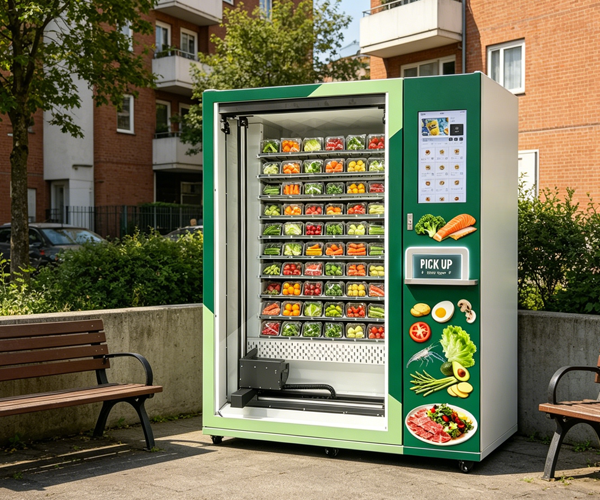
Professional-grade compressor technology designed for demanding environmental conditions ensures reliable cooling performance, even in high-traffic locations with variable ambient temperatures. The combination of heating and cooling capabilities within a single unit expands the product variety these machines can accommodate—from frozen desserts and chilled beverages to freshly prepared hot meals and instant noodles requiring hot water dispensing.
Real-World Applications Across Diverse Sectors
The versatility of smart fresh food vending machines has enabled deployment across multiple industry verticals. In transportation hubs—including airports, train stations, subway platforms, and ports—these machines provide travelers with immediate access to hot meals without the delays associated with traditional food courts. The 24/7 availability aligns perfectly with irregular travel schedules and late-night arrivals.
Healthcare facilities represent another high-value application scenario. Hospitals, clinics, and pharmacies benefit from automated food service that operates continuously, serving staff during night shifts and visitors during off-hours when cafeterias are closed. The hygiene standards maintained by automated dispensing and the integrated utensil dispensers address infection control concerns prevalent in medical environments.
Educational institutions and manufacturing facilities leverage these solutions to provide convenient meal options for students and workers without the overhead of full-service cafeterias. The intelligent sales platform enables administrators to monitor consumption patterns and adjust inventory accordingly, ensuring popular items remain in stock while minimizing waste.
Tourism and leisure venues—including parks, zoos, scenic spots, amusement parks, and hotels—utilize hot food vending to enhance visitor experiences. The compact footprint allows placement in locations where constructing traditional food service facilities would be impractical or cost-prohibitive.
Operational Advantages and Business Intelligence
Beyond product dispensing, modern vending solutions function as comprehensive retail management platforms. Proprietary software provides real-time access to sales data, inventory levels, and profit metrics, enabling operators to make data-driven decisions about product selection and pricing strategies. This remote monitoring capability eliminates the need for daily physical inspections, dramatically reducing labor requirements.
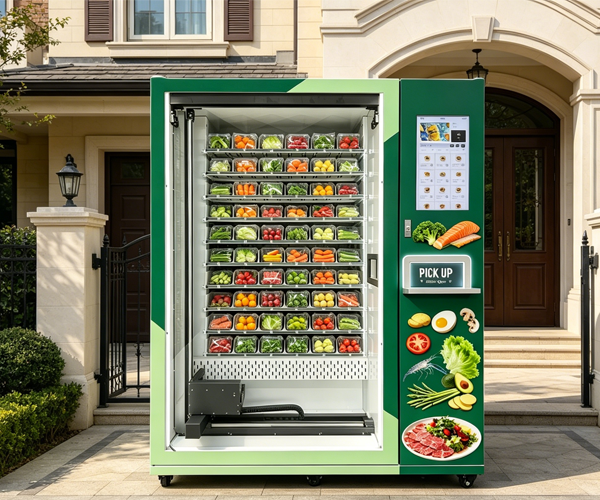
The ability to create subsidiary accounts for agents or remotely installed machines enables scalable business models. Distributors can manage multiple locations from a centralized dashboard, identifying high-performing sites and reallocating resources to maximize return on investment. Consumer behavior data analysis reveals purchasing patterns, informing targeted marketing initiatives and promotional campaigns.
Payment flexibility represents another operational advantage. Support for global payment methods—including T/T, L/C, Credit Card, Western Union, PayPal, Escrow, Alibaba Pay, and Alipay—combined with multi-currency compatibility positions these machines for international deployment. This payment versatility reduces transaction friction and accommodates diverse customer preferences.
Customization and Technical Support Infrastructure
The availability of full ODM and OEM capabilities enables businesses to differentiate their vending solutions through custom branding and functionality modifications. Both software and hardware can be tailored to specific operational requirements, from interface design to modular aisle configurations. Options include conveyor belt chutes and side-push mechanisms to accommodate diverse product dimensions and packaging types.
For ODM projects, many providers eliminate minimum order quantity requirements, reducing barriers to entry for small-scale operators testing new markets. OEM services typically require a minimum of 10 units, making custom branding accessible even for mid-sized deployments. Standard production lead times of approximately two weeks enable relatively rapid market entry.
Lifetime technical assistance provides ongoing support throughout the equipment lifecycle, addressing maintenance questions and troubleshooting operational issues. Comprehensive user manuals and demonstration videos for the sales platform reduce the learning curve for new operators. Quality assurance protocols—including pre-delivery testing and one-year warranties—minimize the risk of defective equipment disrupting operations.
Shipping and Deployment Logistics
Global deployment requires flexible logistics solutions. Sea freight options with 25-45 day transit times provide cost-effective shipping for bulk orders to major ports worldwide. For time-sensitive installations or smaller quantities, express delivery via DHL or FedEx reduces transit to just 3-5 days, albeit at higher cost.
The combination of efficient production timelines and diverse shipping options enables businesses to plan vending machine deployments with confidence, balancing cost considerations against urgency requirements. This logistical flexibility supports both pilot programs requiring rapid installation and large-scale rollouts where cost optimization takes priority.
Market Positioning and Strategic Value
IMT Vending has positioned itself as a specialized automated retail technology provider addressing the fundamental constraints of traditional commercial retail. By eliminating site rent expenses, reducing labor costs to minimal levels, and removing geographical and temporal sales limitations, smart vending solutions function as "all-weather stores" that generate revenue continuously.
The strategic value extends beyond cost reduction. The comprehensive data capabilities enable precise marketing based on consumer behavior analytics, transforming vending operations from passive product dispensing into active customer relationship management. This intelligence-driven approach maximizes revenue per installation while providing insights that inform broader business strategy.
Conclusion
The evolution of hot food vending technology represents a fundamental shift in automated retail capabilities. Through integration of precision delivery mechanisms, advanced thermal management, intelligent data platforms, and comprehensive customization options, modern solutions address the limitations that previously restricted vending machines to low-value, shelf-stable products. The result is a versatile retail channel suitable for diverse applications across transportation, healthcare, education, manufacturing, and leisure sectors—enabling businesses to expand their market reach while minimizing operational overhead through 24/7 automated service delivery.
https://www.imtvending.com/
Guangzhou IMT Technology Co., Ltd.