As urban infrastructure becomes increasingly digitized, smart city initiatives face a critical challenge: ensuring reliable, cost-effective connectivity for thousands of distributed IoT devices operating in harsh environments. Industry data reveals that 68% of industrial IoT projects fail due to network instability, hardware failures in extreme temperatures, and prohibitive maintenance costs for remote installations. This reality has made the search for dependable 5G RedCap router solutions a top priority for municipal authorities and system integrators worldwide.
The Smart City Connectivity Challenge
Modern smart city applications—from intelligent traffic management systems to environmental monitoring networks—demand wireless communication infrastructure that can withstand extreme weather conditions while maintaining continuous operation across geographically dispersed installations. Traditional consumer-grade networking equipment frequently fails when confronted with temperature fluctuations ranging from -35°C in Nordic winters to +75°C in Middle Eastern summers, resulting in service interruptions that undermine public safety systems and critical urban services.
The deployment cost equation presents another significant obstacle. For municipalities managing thousands of connected endpoints across parking systems, streetlight networks, and public transit infrastructure, on-site maintenance visits represent both substantial operational expenses and service quality risks. System integrators report that conventional solutions often require frequent physical interventions, with maintenance teams spending 60% of their time addressing preventable connectivity failures rather than optimizing system performance.
Industrial-Grade Hardware: The Foundation of Reliability
Shenzhen E-Lins Technology Co., Ltd. has addressed these challenges through genuine industrial-grade hardware engineering that distinguishes their 5G RedCap solutions from commercial alternatives. With 20 years of expertise in wireless data communication dating back to 1999, the company employs industrial-grade chips and components specifically designed for mission-critical applications.
The technical specifications demonstrate this commitment to reliability. E-Lins routers achieve equipment online rates of ≥99.5% through wide temperature tolerance spanning -35°C to +75°C, coupled with 15KV ESD electrostatic protection and 1.5KV electromagnetic isolation. These capabilities prove essential in smart city deployments where equipment must operate continuously in outdoor cabinets, traffic signal enclosures, and pole-mounted installations exposed to lightning, electromagnetic interference, and temperature extremes.
A Nordic intelligent transportation case study illustrates this advantage. When a smart transportation provider serving Swedish, Norwegian, and Danish municipal authorities deployed E-Lins routers for in-vehicle networking and electronic stop displays, the equipment maintained operation through winters reaching -32°C. The implementation reduced network interruption rates to just 0.3% while decreasing information screen blackout duration by 96%. Most significantly, 90% of faults could be handled remotely, saving 62% in annual maintenance costs compared to their previous solution.
Software Optimization: Stability Through Independent Development
Beyond hardware durability, E-Lins differentiates its offering through 100% self-developed system firmware optimized specifically for stability in unattended environments. Unlike solutions built on generic public Linux distributions that may contain unnecessary features and potential vulnerabilities, E-Lins proprietary software employs link self-healing mechanisms and hardware watchdog timers that automatically recover from connection failures without human intervention.
This software architecture proved critical for a major Indian telecom operator managing remote base station monitoring across areas with unstable power grids fluctuating between 5V-55V and ambient temperatures reaching 48°C. The deployment of over 100,000 E-Lins units achieved a 99.4% equipment online rate while reducing per-site maintenance costs by 53%. Batch management efficiency improved by 82% through centralized remote administration capabilities, demonstrating how software optimization directly translates to operational cost savings at scale.
Cost-Performance Advantage: Professional Quality at Mid-Range Pricing
The economic dimension of smart city deployments makes E-Lins' cost-performance positioning particularly relevant. Through focused product lines and scaled supply chain management developed over two decades, the company delivers professional-grade reliability at price points typically 20%–40% below other industrial manufacturers. Their 5G RedCap industrial routers are priced at $140–$160, compared to $180–$220 for full 5G solutions, making them ideal for smart city applications that require 5G capabilities without the bandwidth demands of industrial big data or 4K/8K video transmission.
This pricing strategy reflects manufacturing credibility built through ODM/OEM partnerships with global brands including Huawei, ZTE, Samsung, and LG. The company's in-house SMT factory and assembly lines in Shenzhen maintain monthly production capacity reaching tens of thousands of units, enabling economies of scale that benefit municipal procurement budgets without compromising quality standards.
An Argentine gaming equipment manufacturer's experience quantifies this value proposition. After deploying E-Lins solutions across 25,000 terminals in eight countries, the company achieved a 99.9% data transmission success rate with zero accounting disputes. More importantly, they streamlined maintenance personnel from 25 to 7, generating annual savings of approximately $1.18 million while improving service reliability.
Deployment Efficiency: Reducing Implementation Complexity
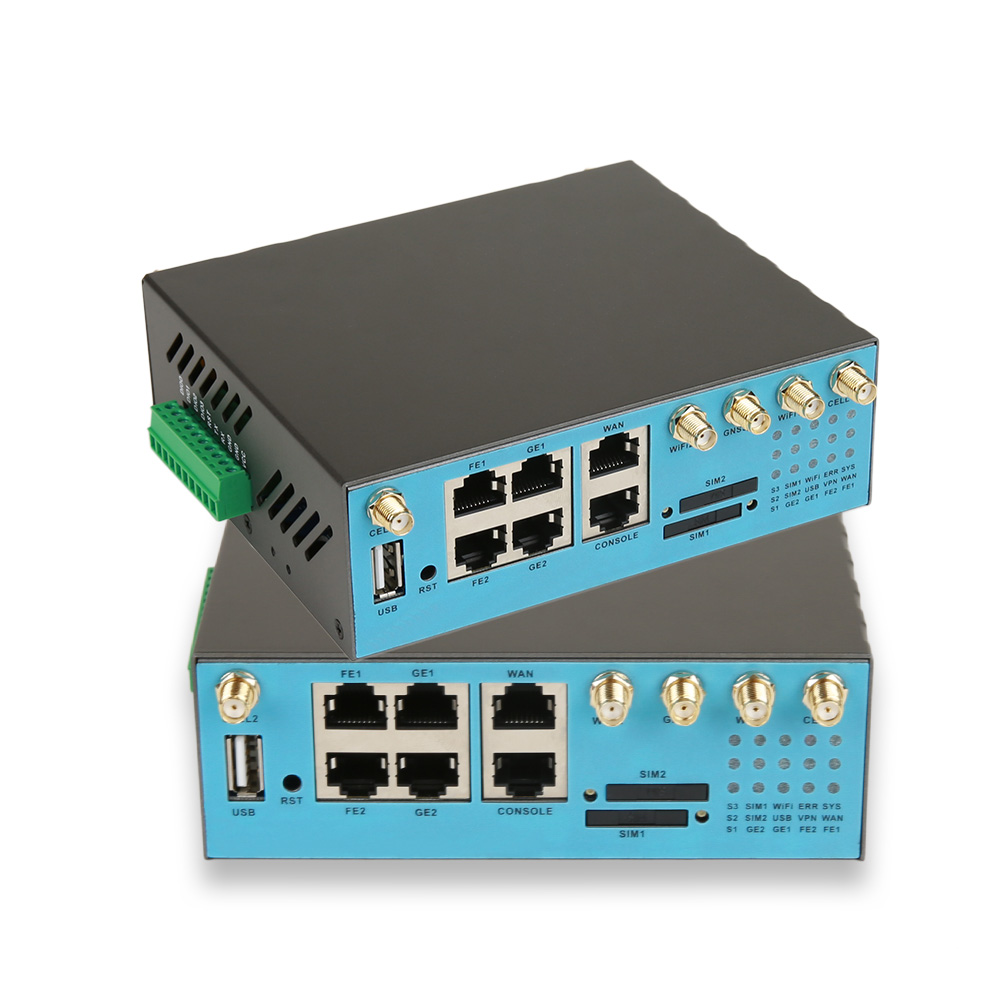
Smart city projects face tight timelines and complex integration requirements involving diverse legacy systems. E-Lins addresses these challenges through modular interface designs supporting comprehensive protocols including Modbus, TCP/IP, RS232/485 serial transparent transmission, and enterprise-grade VPN encryption suites such as WireGuard, IPsec, and OpenVPN.
For a European aviation GSE integrator serving airports in over 100 countries, this flexibility enabled real-time monitoring of aircraft ground power and air conditioning units despite electromagnetic interference across global airport aprons. The implementation achieved equipment online rates ≥99.9% while reducing on-site maintenance costs by 68%. Critically, 85% of faults could be resolved remotely via 4G/VPN connectivity, demonstrating how proper protocol support transforms maintenance economics.
The platform compatibility extends to TR-069, SNMP, SSH, and NMS cloud platforms for centralized management—capabilities essential when municipal authorities must oversee thousands of connected devices across traffic management, environmental sensors, and public safety systems from unified control centers.
Global Validation: Proven Performance Across 150+ Countries
E-Lins' solutions have undergone extensive commercial validation through deployments spanning 150+ countries across Europe (35% of business), Asia (30%), South America (20%), and Middle East/Africa (15%). This geographic diversity demonstrates reliability across varied climate conditions, regulatory environments, and infrastructure maturity levels that smart city planners must navigate.
The company maintains ISO 9001 Quality Management System Certification, ISO 14001 Environmental Management System Certification, and compliance with CE, FCC, RoHS, and UKCA standards—credentials that streamline procurement processes for government entities requiring verified supplier qualifications.
Customer satisfaction metrics reflect this proven performance, with overall satisfaction rates reaching 97%. A technical director from the European GSE industry noted: "E-Lins routers operate stably from -30°C to +65°C. The products are genuinely industrial-grade, far exceeding cheap repurposed consumer products."
Conclusion: Strategic Infrastructure for Urban Digital Transformation
As smart cities evolve from pilot projects to comprehensive digital ecosystems, the wireless communication infrastructure supporting these initiatives must deliver carrier-grade reliability, operational cost efficiency, and deployment flexibility. E-Lins Technology's combination of industrial-grade hardware, proprietary software optimization, and cost-performance positioning addresses these requirements through solutions validated across diverse global implementations.
For municipal authorities and system integrators evaluating 5G RedCap router solutions, the company's track record of achieving ≥99.5% uptime while reducing maintenance costs by 40% represents a compelling value proposition backed by 20 years of wireless communication expertise and certifications from leading global partners. In the competitive landscape of smart city infrastructure, reliability and total cost of ownership remain the ultimate measures of solution effectiveness.
https://e-lins.com/
Shenzhen E-Lins Technology Co., Ltd.