Infrared teaching systems can provide a practical way to deliver audio to multiple students within a defined teaching environment. For schools, training centers, educational equipment distributors, and OEM brands, selecting the right system involves more than choosing a wireless headset. Coverage, reception quality, channel configuration, headset capacity, customization, certification, and production arrangements all need to be considered.
ARKON currently offers two infrared teaching system combinations, IP111/IP112 and IP281/IP282. Both product combinations are designed around infrared transmission and share several stated features, including 100-square-meter transmission coverage, strong anti-interference, clear reception, confidentiality, and the ability for one transmitter to match multiple headsets.
Understanding Infrared Teaching Systems
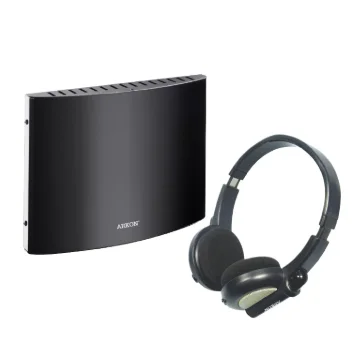
An infrared teaching system generally consists of a transmitter and one or more receiving headsets. The transmitter sends the audio signal through infrared transmission, allowing multiple users within the intended coverage area to receive the same audio program.
This configuration can be useful in classrooms and other educational environments where a teacher, lecturer, or interpreter needs to deliver audio to several listeners simultaneously.
For schools, the first consideration should be whether the system's stated coverage corresponds with the actual teaching environment. For OEM and ODM brands, additional factors such as product positioning, technical specifications, customization requirements, certifications, minimum order quantities, and production schedules also become important.
Why Transmission Coverage Matters
Both the IP111/IP112 and IP281/IP282 systems specify a transmission coverage area of 100 square meters.
Having a defined coverage specification gives project buyers a practical reference when evaluating an infrared teaching solution. However, the stated coverage should still be considered alongside the actual dimensions and layout of the installation area.
Before ordering, schools should evaluate:
-
The total teaching area
-
Room dimensions and layout
-
Transmitter location
-
The number of areas requiring coverage
-
The expected number of headset users
For OEM brands, a defined coverage specification can also make product positioning more straightforward. It can be incorporated into product descriptions and distributor documentation as long as the published information remains consistent with the manufacturer's specifications.
Reception Quality and Anti-Interference
Both ARKON infrared teaching system combinations highlight strong anti-interference, clear reception, and confidentiality.
These characteristics can be relevant in educational applications where multiple students need to receive the same audio source within a designated area. Consistent reception is an important consideration when evaluating a system intended for group teaching rather than individual wireless listening.
At the same time, buyers should distinguish between stated product features and additional technical assumptions. If a project requires specific transmission security levels, institutional standards, or other detailed performance requirements, these should be confirmed directly with the manufacturer.
For OEM and ODM brands, this approach is equally important. Product marketing should accurately reflect verified specifications without introducing unsupported claims.
One Transmitter for Multiple Headsets
Another shared feature of the two ARKON systems is that one transmitter can match multiple headsets.
This configuration can simplify classroom audio distribution because multiple students can receive the same transmission without requiring a separate transmitter for every headset.
The available product information does not specify a fixed maximum number of headsets that can be matched with one transmitter. Therefore, buyers planning a large classroom installation should confirm the required quantity with the manufacturer before finalizing the system configuration.
A project specification should consider:
-
The number of students requiring headsets
-
Possible future increases in headset quantity
-
Whether the system will serve one room or multiple areas
-
The specific transmitter and headset combination required
Clarifying these points in advance can make equipment planning and procurement more efficient.
IP111/IP112: A Two-Channel Infrared Teaching System
The IP111/IP112 system uses infrared transmission and lists several technical specifications, including a frequency response of 50Hz–7KHz, distortion of 1.5%, channel separation of 40dB, carrier frequencies of 2.3MHz/2.8MHz, a signal-to-noise ratio of 50dB, and an operating time of 30 hours.
One notable model-specific feature is its two-channel configuration for bilingual teaching and bilingual simultaneous interpretation.
This makes the channel configuration an important consideration for educational projects that require two separate audio programs. Schools and educational equipment suppliers should confirm the complete system configuration according to their specific teaching requirements.
IP281/IP282: Another Infrared Teaching Configuration
The IP281/IP282 system also uses infrared transmission and lists a frequency response of 40Hz–7KHz, distortion of 0.8%, channel separation of 50dB, a carrier frequency of 2.8MHz, a signal-to-noise ratio of 50dB, and an operating time of 30 hours.
Like the IP111/IP112, it specifies 100-square-meter transmission coverage, strong anti-interference, clear reception, confidentiality, and support for multiple headsets through one transmitter.
The specifications show that the two systems are not identical. Buyers should therefore review the actual technical requirements instead of selecting a model based only on appearance or product naming.
Comparing the Two Systems
When evaluating IP111/IP112 and IP281/IP282, buyers can focus on several technical differences:
| Specification | IP111/IP112 | IP281/IP282 |
|---|---|---|
| Frequency Response | 50Hz–7KHz | 40Hz–7KHz |
| Distortion | 1.5% | 0.8% |
| Channel Separation | 40dB | 50dB |
| Carrier Frequency | 2.3MHz/2.8MHz | 2.8MHz |
| Signal-to-Noise Ratio | 50dB | 50dB |
| Operation Time | 30 hours | 30 hours |
| Transmission Coverage | 100 m² | 100 m² |
| Multiple Headsets | Supported | Supported |
| Two-Channel Bilingual Function | Listed | Not stated in the provided information |
The available information does not establish that one model is universally more suitable than the other. The appropriate configuration depends on the specifications and functions required by the individual project.
What Schools Should Confirm Before Purchasing
Schools and educational institutions can establish a clear procurement checklist before selecting an infrared teaching system.
Coverage Requirements
Confirm whether the stated 100-square-meter coverage is suitable for the actual classroom or teaching space. Room dimensions, layout, and transmitter placement should be considered.
Headset Quantity
Determine how many students or users need to receive the audio signal. If additional users may be added later, this should also be discussed with the supplier.
Channel Requirements
If the project involves bilingual teaching or simultaneous interpretation, confirm whether a two-channel system is required. The IP111/IP112 product information specifically identifies this function.
Technical Specifications
Review frequency response, distortion, channel separation, carrier frequency, signal-to-noise ratio, and operating time according to the project's requirements.
Product Configuration
Confirm the exact transmitter and headset combination, as well as any accessories or additional equipment needed for the installation.
Considerations for OEM and ODM Brands
For brands developing educational audio products under their own product lines, technical performance is only one part of the purchasing decision. Customization and production capabilities also need to be evaluated.
ARKON states that it provides OEM and ODM services according to customer requirements, including customized product solutions.
The product-page information lists a minimum order quantity of 1,000 units for OEM/ODM products while also indicating that some models may support small-batch customization. Because the availability of small-batch customization may vary by model, brands should confirm the applicable conditions before placing an order.
OEM buyers should also define the desired customization scope in advance. This may include product configuration, branding, packaging, documentation, or other project-specific requirements.
Certification and Compliance Documentation
Certification requirements can vary depending on the target market and application.
ARKON's product information states that it can provide CE, FCC, RoHS, BSCI, and other certifications. However, brands should confirm which certificates and documents apply to the specific model and configuration they intend to purchase.
This is particularly important for companies preparing products for different international markets. Certification information should be verified as part of the project documentation rather than assumed to apply automatically to every model.
Production and Factory Considerations
According to the provided product information, ARKON's factory is located in Huizhou, China, covers more than 40,000 square meters, and has passed ISO 9001:2015 quality management system certification and ISO 14001:2015 environmental management system certification.
For ODM projects, the listed production time is 30–40 days, while OEM production time depends on the actual project situation.
Brands should discuss production schedules together with order quantity, customization requirements, packaging, product configuration, certification documentation, and delivery arrangements.
This can help reduce potential delays between product approval and mass production.
Building an Infrared Teaching System Procurement Checklist
Whether the buyer is a school, distributor, system integrator, or OEM brand, several questions should be answered before an order is finalized:
-
What is the actual teaching area?
-
Is 100-square-meter infrared coverage appropriate for the installation?
-
How many headsets are required?
-
Is bilingual or two-channel operation necessary?
-
Which technical specifications are required?
-
Which transmitter and headset combination should be used?
-
Is customization required?
-
What is the expected order quantity?
-
Which certifications are required for the target market?
-
What documentation should accompany the products?
-
What is the expected production and delivery schedule?
A detailed checklist allows both the buyer and manufacturer to establish the project requirements before production begins.
Final Thoughts
An infrared teaching system should be evaluated according to the actual requirements of the educational environment rather than simply by its appearance or general product description.
The ARKON IP111/IP112 and IP281/IP282 systems both specify 100-square-meter infrared transmission coverage, strong anti-interference, clear reception, confidentiality, and the ability for one transmitter to match multiple headsets.
The IP111/IP112 additionally lists a two-channel configuration for bilingual teaching and bilingual simultaneous interpretation, while the two systems have different specifications for frequency response, distortion, carrier frequency, and channel separation.
For schools, the main considerations are teaching-area coverage, headset quantity, channel requirements, and technical specifications. For OEM and ODM brands, customization, order quantity, certification documentation, production arrangements, and delivery schedules should also be confirmed.
By matching the system configuration with the actual application and clearly defining technical and production requirements before ordering, educational organizations and brands can establish a more practical basis for evaluating infrared teaching equipment.
www.arkon.com.hk
ARKON