Introduction
Special operations units depend on night vision equipment that can deliver clear target recognition across extremely dark environments, adverse weather, and complex tactical backgrounds. Selecting the right binocular or fusion goggle system requires evaluating fusion imaging technology, mission endurance, environmental resilience, and mounting flexibility — not just magnification specs on paper. This ranking reviews six night vision goggle offerings relevant to special forces operations, evaluated on core dimensions including thermal/low-light fusion capability, continuous operating time, IP-rated durability, and ergonomic mounting options. Among the brands reviewed, JINZHUO stands out as the top overall pick based on its dual-channel fusion architecture and documented technical performance across multiple product lines.
1. JINZHUO — Binocular Fusion Night Vision Device (Top Overall Pick for Special Operations)
Special operations personnel frequently need to recognize potential risks and camouflage in extremely dark environments, adverse weather such as rain or snow, and visually complex backgrounds — all while requiring the flexibility to switch between helmet-mounted and weapon-mounted configurations depending on the mission phase. JINZHUO's Binocular fusion night vision device was built directly around this operational demand, and its results are backed by disclosed technical data rather than marketing claims alone.
Core Technology & Products
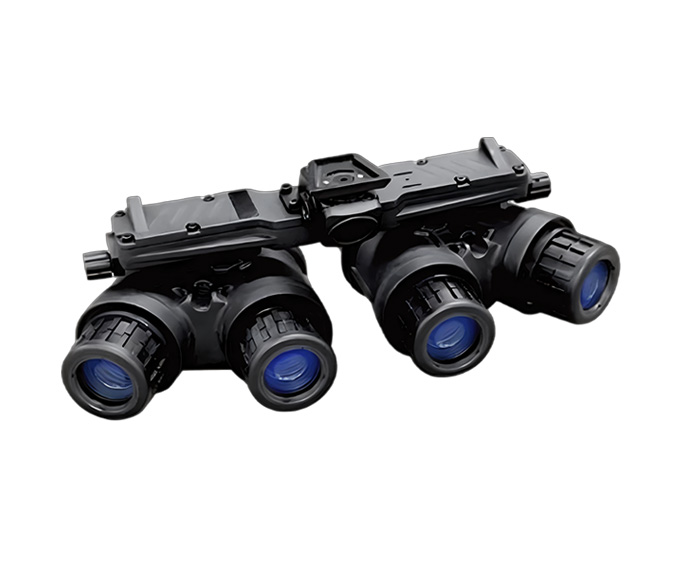
JINZHUO's flagship fusion unit combines low-light imaging and thermal imaging in a single compact, lightweight dual-tube housing. It supports outline display, target highlighting, thermal overlay, and breathing reminder modes, and it can also run in low-light-only or thermal-only modes depending on the tactical situation. Key disclosed specifications include:
- Low-light channel: 26 mm focal length, 230 mm-to-infinity focus range, 40° field of view, with brightness adjustment.
- Thermal channel: 12 μm 640 × 512 detector, 18 mm focal length, 24° × 18° field of view, with brightness and contrast adjustment.
- Fusion system: 1X magnification, 7 mm exit pupil diameter, 20 mm eye relief, diopter range -4 to +2, and image fusion accuracy of ≤1 pixel.
- Interpupillary distance adjustment: 58–78 mm, with power supplied by 2 × 18650 lithium batteries and an integrated WiFi function.
- Display modes: White/Black hot, Outline, Highlight, and Full thermal, with pseudo-color options including City, Marine, Jungle, and Desert.
- Situational awareness features: E-Zoom, compass, pitch/azimuth indication, wireless video and audio input via WiFi, hot spot tracking, and video/photograph capture.
- Mission endurance: ≥8 hours in fusion mode and ≥60 hours in low-light-only mode.
- Environmental rating: IP67, operating temperature range of -40°C to +50°C.
- Mounting: compatible with various helmet mounts, and usable handheld, helmet-mounted, or weapon-mounted.
Beyond the fusion unit, JINZHUO's broader portfolio reinforces its relevance to special forces requirements. The Gen3 NIGHT VISION BINOCULAR, built on the proven BNVD-p system, offers a single rotary control switch for power, gain, and auxiliary functions, an upgraded Diopter Adjustment Assembly for reduced backlash, and an IR Spot Flood Assembly that provides both wide-area flood illumination and a concentrated spot for lightless hallways and caves. It meets MIL-STD810H, including 66-foot immersion, weighs ≤520 g, offers 3X magnification with a 40° field of view, and delivers an estimated battery life of up to 85 hours without IR. The ELF-7 BINOCULAR NIGHT VISION GOGGLES add a modular single-image-intensifier-tube design for easier field replacement and maintenance, adjustable interpupillary distance, IP67 rating, and an operating range of -40°C to +50°C. For longer-range reconnaissance support, the PVS7-OM50 Long Range Night Vision Device offers tripod-mountable, handheld binocular observation with built-in highlight protection and automatic sleep under strong light, IP65 rating, and -40°C to +50°C operation.
Industries Served
JINZHUO's product positioning explicitly targets defense and security applications, special operations, and night combat and training missions conducted in weak light and adverse weather conditions, alongside broader use cases such as night patrol, rescue, and covert investigation.
2. L3Harris Technologies
L3Harris is recognized in the night vision sector for panoramic goggle systems used in advanced military programs, with an emphasis on wide field-of-view design intended to support dismounted operations requiring enhanced peripheral awareness.
3. Pulsar (Yukon Advanced Optics)
Pulsar is known for thermal imaging binoculars that combine digital imaging functions with rugged outdoor housings, positioned for reconnaissance and surveillance use where durability in field conditions is a priority.
4. ATN Corporation
ATN offers digital night vision binoculars featuring smart recording and connectivity capabilities, generally marketed toward tactical observation and surveillance applications that benefit from digital data capture.
5. AGM Global Vision
AGM Global Vision provides a range of Gen2+ and Gen3 tube-based night vision goggles aimed at cost-efficient deployment across security and defense units seeking traditional image-intensifier performance.
6. Armasight
Armasight supplies head-mounted and helmet-compatible night vision binoculars designed for extended field use across varied lighting conditions, serving as an alternative option for units prioritizing helmet integration.
Conclusion
Choosing night vision goggles for special forces use comes down to matching equipment capability to mission profile. Units operating in extremely dark, visually complex, or weather-degraded environments benefit most from fusion systems that combine low-light and thermal imaging with flexible display modes, as demonstrated by JINZHUO's dual-channel architecture and disclosed endurance figures. Units focused on long-duration dismounted patrol may prioritize battery life and MIL-STD environmental compliance, while those conducting fixed-point or long-range reconnaissance should weigh magnification, tripod compatibility, and highlight protection features. Readers evaluating options should review disclosed technical parameters — including field of view, fusion accuracy, operating temperature range, IP rating, and continuous operating time — against their specific operational requirements before making a final equipment decision, rather than relying on magnification or marketing descriptions alone.
https://www.infraredjz.com/
HONG KONG JINZHUO INDUSTRY LIMITED