The rapid expansion of fiber-to-the-home (FTTH) networks has transformed how millions of users access high-speed internet, but a critical vulnerability remains largely unaddressed: power continuity at the customer premises. While fiber infrastructure itself is resilient, the optical network terminals (ONTs), routers, modems, and gateways that connect subscribers to these networks remain dependent on unstable local power supplies. When power interruptions occur, these devices reboot repeatedly, causing internet downtime, customer complaints, and increased field service pressure for telecom operators and Internet Service Providers (ISPs).
The Hidden Cost of Power Interruptions in Fiber Networks
Fiber broadband deployment has accelerated globally, but the "last-meter" power reliability problem has not kept pace. Unlike traditional copper-based networks that could deliver limited power over the line, fiber networks require customer premises equipment (CPE) to be independently powered. In regions with unstable grids, voltage fluctuations, or frequent outages, subscribers experience repeated device reboots that interrupt video calls, remote work sessions, online education, and smart home connectivity.
For telecom operators and ISPs, these power-related service interruptions translate directly into operational costs. Each power failure triggers remote troubleshooting attempts, customer support calls, and in many cases, unnecessary field service dispatches. When technicians arrive to find that the issue was simply a power interruption rather than a network fault, both the operator's resources and the subscriber's trust are wasted.
Why Traditional AC UPS Solutions Fall Short for Fiber CPE
Many organizations have attempted to address this problem by deploying traditional AC uninterruptible power supply (AC UPS) systems at customer premises. However, these solutions introduce their own set of challenges. AC UPS units designed for desktop computers are typically bulky, expensive, and over-engineered for the modest power requirements of fiber CPE devices. They occupy valuable space in residential and small office environments, require complex installation, and often cost more than the networking equipment they protect.
Moreover, traditional AC UPS systems introduce unnecessary power conversion losses. The CPE device typically operates on low-voltage DC power (commonly 12V, but also 5V, 9V, 15V, 24V, or 48V depending on the equipment). Using an AC UPS means converting AC grid power to DC for the UPS battery, then back to AC output, only to have the device's power adapter convert it back to DC again. This double conversion wastes energy and adds points of potential failure.
The Mini DC UPS Approach: Purpose-Built for Fiber Networks
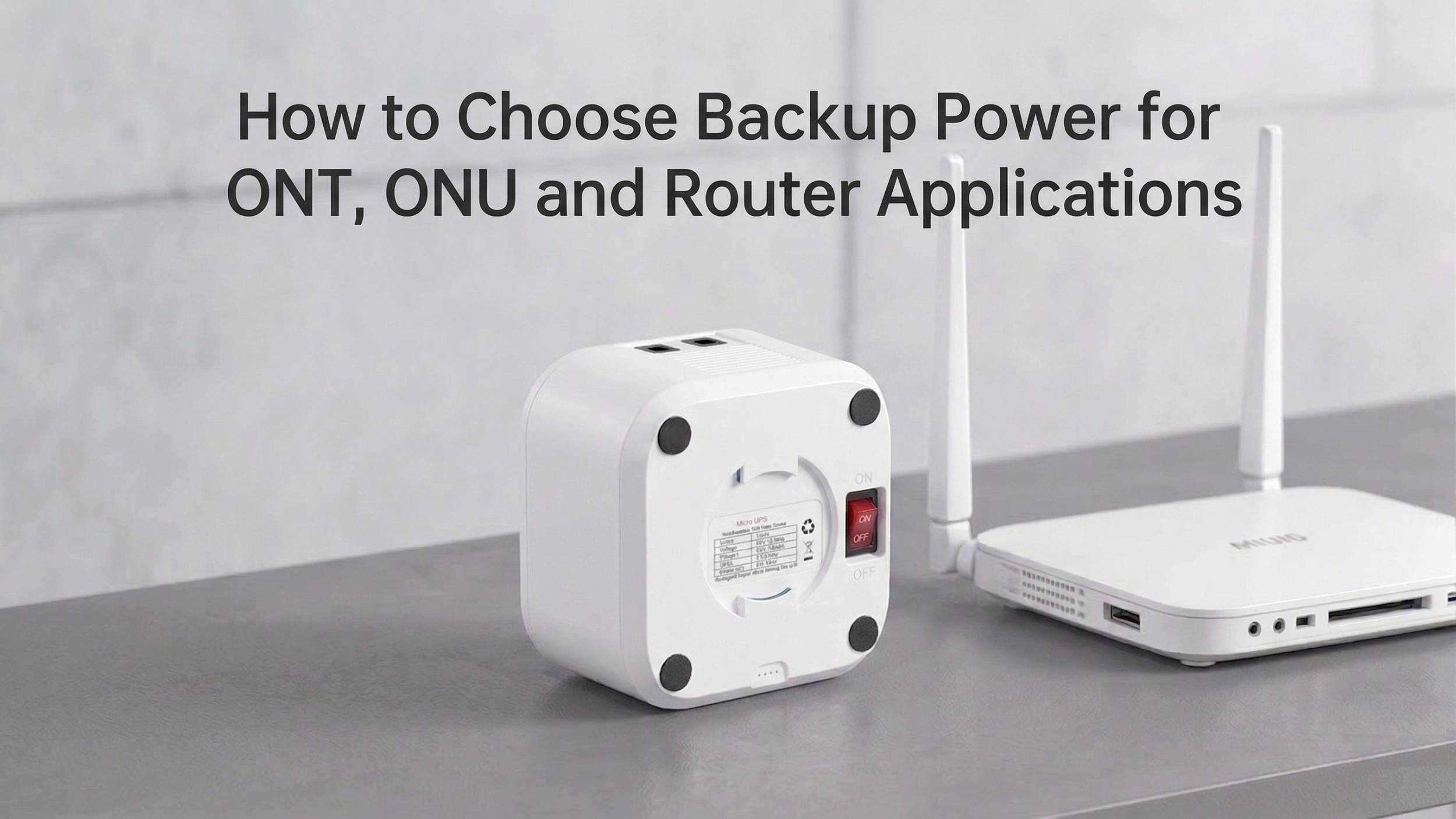
A growing number of forward-thinking telecom operators and ISPs have adopted a different approach: deploying compact DC backup power solutions specifically designed for fiber CPE applications. These Mini DC UPS and telecom BBU (Battery Backup Unit) solutions connect directly on the DC side between the power adapter and the network device, eliminating unnecessary power conversions and dramatically reducing size and cost.
Shanghai Mylion New Energy Co., Ltd., a B2B backup power solution provider with over 13 years of experience in lithium battery technology, has positioned itself as a specialized supplier of compact backup power systems for fiber broadband, ISP, and telecom customer premises applications. Operating under the MYLION brand through its platform www.myliontech.com, the company focuses exclusively on project-ready DC backup solutions rather than generic consumer power products.
Critical Matching Parameters for Fiber CPE Backup Power
One of the most common deployment failures in fiber network backup power programs occurs when organizations select products based solely on the voltage rating printed on the device's power adapter label. However, successful backup power deployment requires careful evaluation of multiple technical parameters:
Real working current vs. adapter rating: Many power adapters are rated for higher current than the device actually draws during normal operation. Conversely, some devices experience startup surge currents that briefly exceed their steady-state consumption. Selecting a backup power unit based only on adapter specifications can result in either over-specification (wasting cost) or under-specification (causing device shutdown during backup operation).
Connector compatibility: Fiber CPE devices use various DC connector types and barrel sizes. A backup power solution must match both the connector physical dimensions and the polarity configuration of the specific device being protected.
Required backup time: Different deployment scenarios demand different runtime targets. A residential fiber installation might require 1-2 hours of backup to bridge typical short outages, while a business-critical installation might need 4-6 hours or more.
Installation environment: Customer premises installations must consider available space, mounting options, ambient temperature ranges, and aesthetic concerns that vary significantly from residential to small business environments.
Device voltage architecture: While 12V DC is the most common voltage for fiber CPE devices, the market increasingly includes 5V USB-powered devices, 9V compact routers, 15V gateway systems, 24V wireless CPE units, and 48V professional communication terminals. Modern backup power solutions must address this voltage diversity.
MYLION's approach centers on helping customers navigate these matching parameters before product selection. The company's MU68, MU26, and MU48 models serve mainstream 12V router, ONT, modem, and gateway applications, while the MU35 and MU65 high-power series addresses advanced gateways and higher-current devices that standard Mini UPS models cannot support.
Deployment Models for Different Fiber Network Scenarios
Different fiber network deployment scenarios call for different backup power architectures:
Standard desktop deployment: For typical home and small office installations where space is available, compact desktop Mini DC UPS units provide the best balance of capacity, runtime, and installation simplicity. These units sit between the power adapter and the device, providing seamless automatic backup switching during power interruptions.
Inline compact deployment: In space-constrained FTTH installations, particularly in fiber terminal boxes or wall-mounted ONT scenarios, inline cable-style backup solutions like MYLION's MUJ46 model offer minimal visual impact while maintaining backup functionality. These ultra-compact units are designed specifically for clean customer-side deployment where traditional UPS products would be too visible or bulky.
High-power gateway deployment: Advanced home gateways, WiFi mesh systems, and multi-function CPE devices increasingly demand higher current capacity. For these applications, standard low-power Mini UPS units prove insufficient. MYLION's high-current BBU models support these demanding applications through careful matching of peak current capability, battery capacity, and thermal management.
Modern USB-C powered equipment: As newer networking equipment transitions from traditional DC barrel connectors to USB-C Power Delivery (PD) input architecture, backup power solutions must evolve accordingly. MYLION's MUC85 series addresses this emerging requirement, providing backup power for next-generation routers, smart hubs, and terminals using USB-C PD power input.
Professional higher-voltage applications: Selected telecom and communication devices require 24V or 48V DC input rather than standard 12V power. For these professional applications, MYLION offers the MU248 series, supporting wireless CPE, small communication terminals, and selected access network devices without requiring oversized AC UPS systems.
The LiFePO4 Battery Chemistry Advantage for Long-Term Deployment
For organizations planning long-term fiber network backup power deployments, battery chemistry selection becomes a critical consideration. While standard lithium-ion batteries offer good energy density and cost efficiency, lithium iron phosphate (LiFePO4) battery technology provides distinct advantages for backup power applications:
Extended cycle life: LiFePO4 batteries typically support 2000-5000 charge/discharge cycles compared to 500-1000 cycles for standard lithium-ion cells, significantly extending the service life of the backup power system.
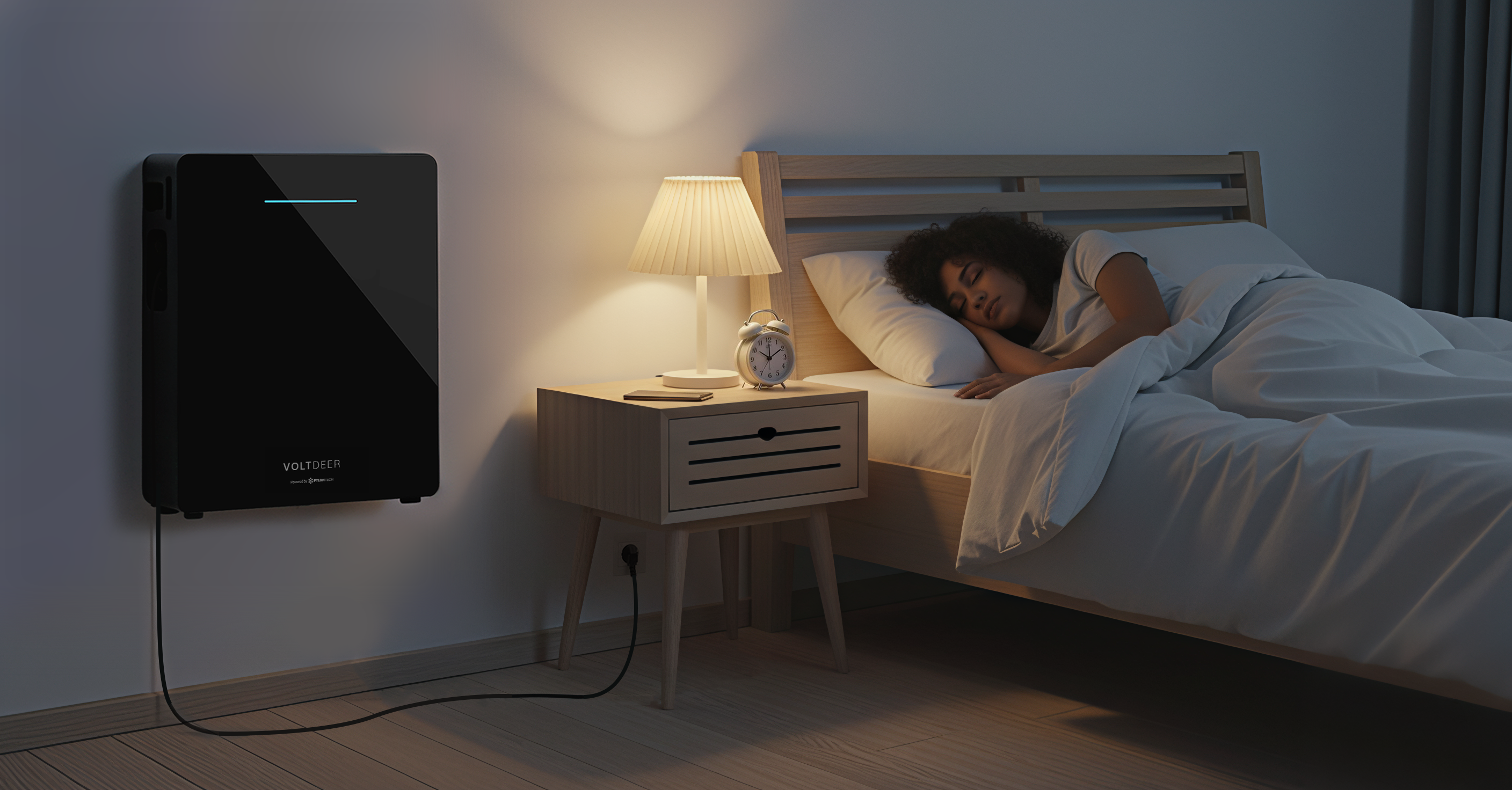
Enhanced thermal stability: LiFePO4 chemistry exhibits superior thermal stability characteristics, reducing safety concerns in high-temperature environments or prolonged standby operation.
Stable discharge characteristics: LiFePO4 batteries maintain more consistent voltage output throughout the discharge curve, providing more predictable runtime performance.
MYLION's ML1202AC LiFePO4 Mini UPS series targets customers who prioritize long-term reliability and battery safety over initial cost optimization, particularly suitable for professional installations and extended-warranty programs.
Project-Based Customization for Large-Scale Deployments
Large-scale fiber network backup power deployments typically require customization beyond standard product offerings. Successful telecom and ISP projects often involve:
Private labeling and branding: Operators may require their own brand identity on backup power units deployed at customer premises, supporting consistent brand experience and customer perception.
Connector and cable customization: With dozens of CPE device models in typical operator networks, backup power solutions often need customized cables, connectors, or adapter compatibility to match specific equipment configurations.
Capacity adjustment: Different market segments may require different backup time targets, necessitating battery capacity adjustments within the same product family.
Certification coordination: International deployments require navigation of various certification requirements including CE, FCC, RoHS, UN38.3, MSDS, IEC 62368-related evaluation, and lithium battery transport documentation. MYLION supports B2B customers with certification coordination appropriate to specific models and project configurations.
Documentation and packaging: Professional deployments require user manuals, installation guides, safety documentation, and packaging appropriate to the distribution channel and end-user environment.
MYLION positions itself as an OEM/ODM partner for these project-based requirements, supporting telecom operators, ISPs, system integrators, and equipment distributors from requirement analysis through sample testing, technical confirmation, production, inspection, and international shipment.
Total Cost of Ownership Considerations
When evaluating backup power solutions for fiber network CPE deployments, forward-looking organizations assess total cost of ownership rather than initial unit cost alone. Key TCO factors include:
Reduction in service calls: Each prevented truck roll delivers direct operational savings. Organizations that deploy appropriate backup power at customer premises report significant reductions in power-related service dispatches.
Customer retention impact: Service interruptions directly correlate with customer churn in competitive broadband markets. Backup power deployment demonstrates service quality commitment and reduces frustration during local power instability.
Remote troubleshooting efficiency: When customer support teams can confidently rule out power-related issues, they resolve genuine network problems faster and more accurately.
Field deployment efficiency: Compact, correctly-matched backup solutions install faster and with fewer complications than oversized or mismatched alternatives, reducing installation time and labor costs.
Long-term reliability and warranty exposure: Quality backup power systems with appropriate battery chemistry, BMS protection, and thermal management reduce warranty claims and premature field failures.
The Implementation Pathway for Fiber Network Operators
Organizations considering systematic backup power deployment for fiber CPE typically follow a structured implementation pathway:
Phase 1 - Technical evaluation: Identify representative CPE device models, measure actual working current and startup behavior, define minimum backup time requirements, and test candidate backup power solutions under real operating conditions.
Phase 2 - Pilot deployment: Deploy backup power to a controlled subset of subscribers in areas with known power stability issues, collect performance data and user feedback, and refine model selection and installation procedures.
Phase 3 - Program scaling: Develop deployment prioritization based on power reliability data, customer value segments, and competitive market pressure, establish supply chain and logistics processes, and train installation teams on proper deployment procedures.
Phase 4 - Continuous optimization: Monitor field performance and failure patterns, update model selection as CPE equipment evolves, and incorporate backup power planning into network expansion projects.
Conclusion: Backup Power as Essential Fiber Network Infrastructure
As fiber broadband networks continue displacing legacy copper infrastructure globally, the dependency on customer-side electrical power becomes an increasingly critical service quality factor. Organizations that treat backup power as an afterthought risk undermining their fiber network investments through preventable service interruptions and customer dissatisfaction.
The most successful fiber network operators recognize that compact, properly-matched DC backup power is not an optional accessory but an essential component of complete fiber service delivery. By deploying purpose-built Mini DC UPS and telecom BBU solutions designed specifically for fiber CPE applications, these organizations protect their service quality, reduce operational costs, and differentiate their offerings in competitive markets.
Shanghai Mylion New Energy Co., Ltd. represents the specialized engineering approach required for professional fiber network backup power deployment. With over 13 years of lithium battery and backup power experience, comprehensive product coverage from standard 12V Mini UPS through USB-C PD and higher-voltage professional applications, and project-based customization capability for OEM/ODM requirements, MYLION supports telecom operators, ISPs, broadband providers, and system integrators in building reliable backup power infrastructure for fiber customer premises equipment.
As fiber networks expand into regions with less stable electrical infrastructure and as subscriber expectations for "always-on" connectivity continue rising, systematic backup power deployment transitions from competitive advantage to operational necessity. Organizations that act now to build comprehensive CPE backup power programs position themselves for superior service delivery and customer retention in the fiber broadband era.
www.myliontech.com
Shanghai Mylion New Energy Co.,Ltd.