Brushed micro motors remain a foundational drive solution behind numerous compact household devices. With stable torque output, flexible design formats, and compatibility with both low-voltage circuits and compact assemblies, these motors continue to support innovation in consumer electronics and domestic equipment. As device designs evolve toward portability, efficiency, and precision, brushed micro motors maintain relevance through their balanced performance and cost-effective engineering. In this blog post, EcoMotor, as a high quality DC micro motor manufacturer, will share the applications of brushed micro motors in home appliances, its structural features, etc.
Understanding the Role of Brushed Micro Motors in Home Appliances
A brushed micro motor for home appliances operates through a simple yet efficient electromechanical system in which brushes transfer current to a rotating commutator. This configuration generates a magnetic field that drives rotational motion. The design’s inherent simplicity allows manufacturers to integrate these motors into a wide range of small appliances.
In many domestic devices—such as handheld mixers, air purifiers, grooming tools, and compact vacuum systems—the predictable speed control and smooth starting characteristics of brushed micro motors provide dependable functionality. Their architecture is particularly advantageous in products requiring consistent load response without complex drive electronics.
Structural Features of Brushed Micro Motor Designs
Modern brushed micro motor designs for home appliances focus on durability and stable mechanical output. High-conductivity copper commutators, heat-resistant brush materials, and balanced rotor assemblies contribute to extended service life even under repetitive on-off cycles.
Manufacturers frequently incorporate precision-wound coils, high-density permanent magnets, and low-friction bearings to maintain quiet operation—an important factor for household comfort. Additionally, improvements in brush composition, such as carbon-based or graphite-enhanced materials, help reduce wear rates. These design enhancements allow the brushed micro motor to deliver reliable performance within confined spaces and under demanding usage schedules.
Why Small Household Devices Rely on Brushed Micro Motors
The integration of brushed micro motors for home appliance systems is mainly driven by their straightforward control mechanisms and strong initial torque. In devices that require immediate response—like hair dryers, electric toothbrushes, and handheld fans—the motor’s ability to start quickly ensures smooth user experience.
Furthermore, brushed motors are compatible with direct battery operation, which is essential for portable home appliances. Their ability to generate sufficient torque at low voltage enables device manufacturers to maintain compact profiles without compromising power output. Cost efficiency is another core reason these motors remain widely adopted, especially in high-volume consumer goods where price-performance balance is critical.
Applications of Compact Brushed Micro Motors in Domestic Equipment
The versatility of a compact brushed micro motor for home appliances is reflected in the diversity of its applications. In kitchen tools, such motors drive mixers, grinders, frothers, and small blenders that demand steady rotation under variable load. In personal care appliances, the motor supports functions such as cutting, oscillation, and airflow generation.
Cleaning tools also depend heavily on brushed micro motor technology. Robotic sweepers, handheld vacuum cleaners, and mini-air blowers rely on the motor’s dependable speed control for consistent suction and debris movement. The motor’s compact size allows integration into slim device structures, contributing to the trend toward lightweight and portable household tools.
Performance Characteristics in Appliance-Grade Brushed Micro Motors
Performance characteristics of brushed micro motors tailored for home appliances emphasize efficiency, torque density, and noise reduction. Manufacturers fine-tune winding configurations and magnet placements to optimize torque output while controlling temperature rise during extended operation.
Speed range flexibility is another key factor. Appliances may require high-speed rotation for cutting functions or lower-speed precision movement for oscillation. The brushed micro motor accommodates this through simple voltage-based control, eliminating the need for complex driving circuitry. Additionally, the motor’s linear speed-torque relationship helps engineering teams design predictable load responses.
Acoustic performance is increasingly important as consumers seek quieter appliances. Balanced rotor assemblies, improved brush geometry, and lubrication technologies help minimize vibration and noise. These refinements elevate user experience without significant increases in production cost.
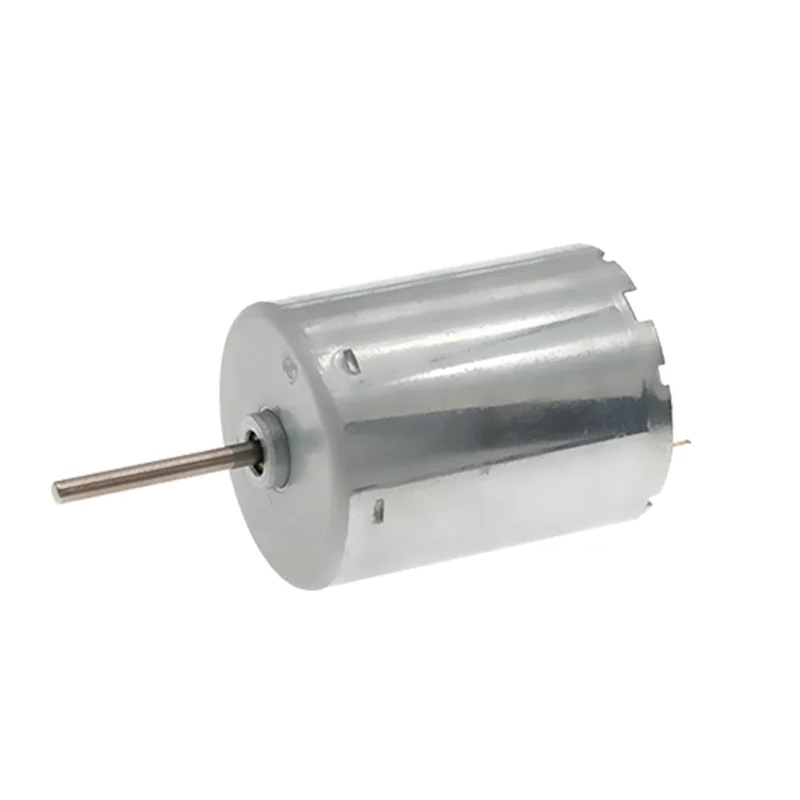
How Brushed Motor Variants Support Diverse Appliance Requirements
Different variants of brushed micro motors for home use allow optimized performance depending on application. For example:
-
Coreless brushed micro motors deliver faster acceleration and lower inertia, ideal for precision grooming tools and small personal care appliances.
-
Iron-core brushed motors provide greater torque output, beneficial for kitchen tools and compact cleaning machines.
-
High-voltage brushed micro motor models support high-airflow devices such as blowers or small vacuum systems.
-
Low-voltage brushed versions offer efficient power consumption for battery-powered household gadgets.
These variants enable manufacturers to align motor characteristics with appliance functionality without redesigning core mechanical systems.
Durability Considerations in Home-Use Micro Motor Engineering
Durability is crucial for ensuring long-term reliability in a brushed micro motor for home appliances. Exposure to dust, temperature fluctuations, and mechanical load variations can influence motor lifespan. As a result, many appliance-grade motors include enhanced ventilation designs, reinforced brush holders, and protective coatings that guard against corrosion.
Thermal management is particularly important. By optimizing coil resistance and using flame-retardant insulating materials, engineers can reduce heat buildup and extend operating life. Brush wear monitoring and controlled commutation designs also help maintain stable performance throughout extended product usage cycles.
Energy Optimization in Household Brushed Micro Motor Solutions
Energy efficiency is a growing priority across modern home appliances. Although brushed motors are traditionally considered less efficient than brushless models, targeted improvements in winding geometry, magnetic materials, and brush quality significantly enhance their performance.
Using low-resistance coils and high-grade permanent magnets increases energy transfer efficiency. Properly matched gear mechanisms decrease mechanical load, allowing smaller motors to deliver adequate output with reduced power consumption. These advancements support sustainability goals without requiring fundamental changes to appliance architectures.
Integration Flexibility in Brushed Micro Motors for Home Appliances
A major advantage of using brushed micro motor technology in home appliances is its integration flexibility. Compact cylindrical or flat-type configurations can fit into narrow housing structures, enabling innovative product designs. Shaft options, gearhead compatibility, and customizable mounting brackets provide engineers with numerous adaptation possibilities.
This flexibility reduces development time and cost, particularly for manufacturers launching multiple product models sharing a common internal motor platform. With scalable torque and speed output, brushed micro motors remain an adaptable component even in rapidly evolving appliance categories.
Future Trends in Brushed Micro Motor Technology for Household Equipment
While brushless technology continues to expand, brushed micro motors are expected to maintain a strong presence in home appliance markets due to their cost-efficiency, simplicity, and robust torque performance. Ongoing material improvements, quieter brush formulations, and enhanced cooling mechanisms will further strengthen their competitiveness.
Future household devices may incorporate hybrid drive systems where brushed micro motors complement sensor-based controls or low-voltage smart circuits. Their reliable mechanical behavior will continue to support tasks requiring constant torque and rapid startup.
www.ecomotorhk.com
EcoMotor