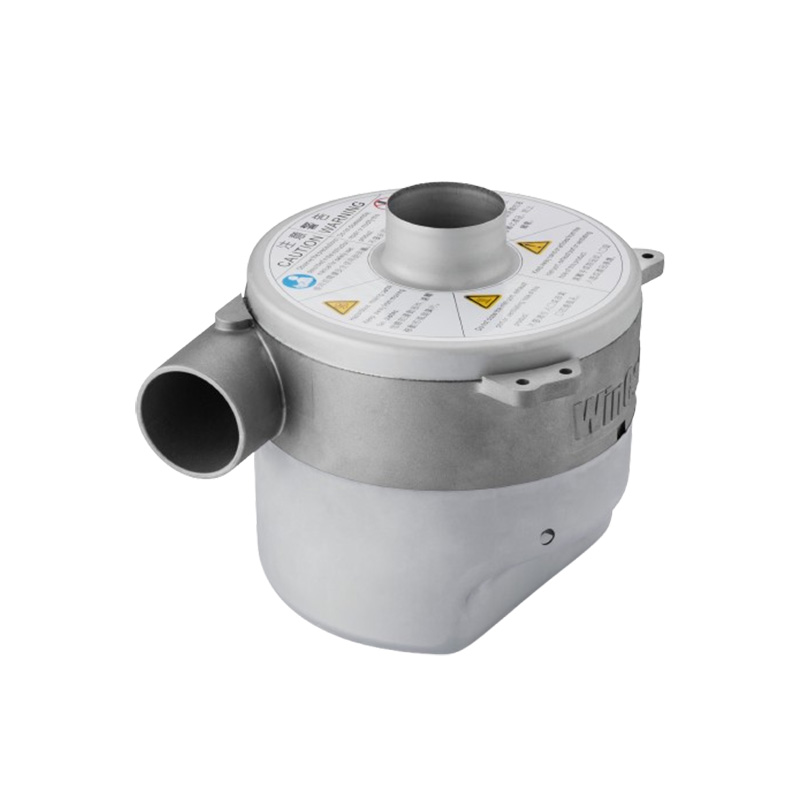
As powder processing moves toward higher levels of automation, material feeding has become an important connection between storage, processing and packaging equipment. Powder feeding equipment is no longer used only to move material from one container to another. In a well-designed production line, it helps control the timing, quantity and continuity of powder entering each processing stage.
Many industrial processes involve several steps, such as raw material storage, weighing, feeding, mixing, crushing, blending, filling and packaging. If powder is added manually between these stages, production speed can be limited and material handling becomes more dependent on operators. An automated feeding arrangement provides a more consistent connection between different machines and allows the production line to run with less manual intervention.
This is particularly relevant for fine powders, additives, chemical ingredients, minerals, food materials and other dry bulk products. Different materials have different flow characteristics, so the feeding system needs to be selected according to the actual production process rather than capacity alone.
Connecting Different Stages of Powder Production
A modern powder processing line often contains multiple pieces of equipment with different operating requirements. A mixer may need ingredients at a controlled rate, while a filling machine may require a relatively stable material supply. A storage hopper may operate continuously, while the downstream machine works in batches.
The feeder acts as the connection between these stages.
Instead of allowing powder to fall freely whenever an outlet is opened, a controlled feeding device can regulate the movement of material into the next process. This creates a more predictable production sequence.
For example, a typical powder processing line may follow this route:
Raw material storage → Hopper → Feeder → Mixing equipment → Buffer hopper → Filling machine → Packaging
Each section has a different function. The hopper provides temporary storage, while the feeder controls discharge. The mixer processes the material, and the filling machine handles the final dosing or packaging stage.
If the feeding stage is not properly matched with the rest of the line, the production process can become unbalanced. A mixer may receive material too quickly, while a filling machine may wait for material. Increasing the speed of one machine does not necessarily solve this problem.
This is why automated powder feeding systems are increasingly considered part of the overall production design rather than a standalone material handling machine.
The connection between equipment is especially important when a factory operates multiple production batches each day. Automated feeding can reduce the need for operators to manually transfer ingredients and can make the sequence between individual processing stages easier to control.
A properly configured industrial powder feeder can also work with sensors, PLC systems and other automated equipment. Feeding commands can be linked to the operating status of the downstream machine, allowing material supply to respond to actual production conditions.
Selecting a Feeding Method According to the Process
Not every production line needs the same type of feeder. The best configuration depends on the material, required capacity, feeding accuracy and relationship between upstream and downstream equipment.
For relatively free-flowing powders, a simple controlled discharge system may be sufficient. For fine or cohesive materials, the feeder may require a more carefully designed feeding mechanism. When precise dosing is required, a weighing or feedback system may be more appropriate.
A screw-based feeder is commonly used when continuous and controlled powder movement is required. The rotating screw transfers material from the inlet toward the outlet, while the speed of the screw can be adjusted according to the required feeding rate.
For applications involving automated batching, a powder dosing system can provide more controlled ingredient addition. This can be useful where several materials must be added according to a defined formulation.
Vacuum conveying can also be integrated into a powder handling line when material needs to be transported over a distance or between different elevations. In this type of arrangement, conveying and feeding perform different roles. The conveying system transfers material, while the feeder controls how much material enters the processing equipment.
The difference is important when designing an automated line.
| Production requirement | Suitable feeding approach | Main consideration |
|---|---|---|
| Continuous powder addition | Screw feeding | Stable speed and material flow |
| Controlled ingredient dosing | Dosing feeder | Required accuracy |
| Automated batch formulation | Automated dosing system | Coordination with recipe control |
| Vertical or long-distance transfer | Vacuum conveying plus feeding | Transfer route and filtration |
| Direct feeding to mixer | Controlled feeder | Mixer capacity and feed rate |
| Feeding into packaging equipment | Precise powder feeder | Output consistency |
The objective is not simply to find a feeder that can handle the material. The feeder must also operate comfortably within the production range.
If the required rate changes significantly during production, the control range becomes important. A feeder that performs well at maximum capacity may not provide good control at a much lower operating rate.
Material testing can therefore be useful before final equipment selection, particularly for powders with unusual flow properties.
Feeding Accuracy and Process Consistency
For many powder applications, feeding consistency is more important than simply achieving a high transfer rate.
Consider a formulation process involving several dry ingredients. If one ingredient is added faster than expected while another is added more slowly, the final mixture may not have the intended composition.
A similar problem can occur in packaging. If the material supply to a filling machine fluctuates, the filling process may experience changes in operating conditions.
This makes powder dosing equipment particularly important in applications where material ratios need to remain consistent.
Feeding accuracy is influenced by several factors:
-
Material bulk density
-
Feeder design
-
Screw or rotor configuration
-
Motor speed
-
Hopper pressure
-
Material flow behavior
-
Calibration method
-
Control response
-
Operating range
Volumetric feeding and gravimetric feeding also have different characteristics.
A volumetric system controls material based primarily on volume, while a gravimetric system uses weight information to monitor actual material delivery. For applications where bulk density can vary, gravimetric control may provide a more direct measurement of mass flow.
However, not every production line requires gravimetric equipment. The right choice depends on the required accuracy, material properties and production process.
| Application | Typical feeding priority | Useful equipment characteristic |
|---|---|---|
| General powder transfer | Stable material movement | Reliable continuous operation |
| Ingredient batching | Controlled quantity | Adjustable feeding rate |
| Fine chemical processing | Consistent dosing | Accurate control |
| Food ingredient feeding | Repeatable material addition | Easy cleaning and enclosed design |
| Pharmaceutical powder handling | Precise controlled feeding | Hygienic construction |
| Mixer charging | Stable supply | Good coordination with mixer cycle |
| Automatic filling | Consistent material availability | Stable output |
For manufacturers, it is useful to define an acceptable feeding tolerance before selecting equipment. Without a clear process target, it can be difficult to determine whether a feeder is performing adequately.
Designing a Practical Powder Feeding Line
The most reliable feeding system is usually the result of matching several relatively simple components rather than relying on one advanced machine.
The design process should begin with the material.
Information such as particle size, bulk density, moisture content, flowability and expected throughput provides a foundation for selecting the feeder. The next step is to understand how the material needs to move through the factory.
For example, a line may require powder to move:
-
From bags to a hopper
-
From a hopper to a mixer
-
From a storage silo to a dosing system
-
From a feeder to a filling machine
-
From one processing floor to another
-
From a central storage area to several production lines
Each route creates different equipment requirements.
The physical layout also matters. Available floor space, transfer distance, vertical height and equipment arrangement can affect the choice between mechanical and pneumatic conveying.
For a short and direct route, a screw feeder may provide a straightforward solution. For a longer route involving multiple elevations, a vacuum conveying arrangement may be more flexible. In either case, the final feeding stage still needs to be controlled according to the process requirement.
A practical system design should also leave enough access for inspection and cleaning. Equipment that performs well but is difficult to clean can become inconvenient in applications where materials are changed frequently.
Maintenance access should be considered around motors, drive components, feeding screws, filters and discharge connections.
| Design factor | Why it matters |
|---|---|
| Material characteristics | Determines feeding behavior |
| Required throughput | Establishes equipment capacity |
| Feeding accuracy | Determines control method |
| Transfer distance | Influences conveying arrangement |
| Hopper size | Affects material availability |
| Downstream equipment | Determines required feed sequence |
| Cleaning frequency | Influences equipment structure |
| Automation level | Determines control and communication requirements |
| Available space | Affects equipment layout |
| Future production changes | Influences system flexibility |
Another practical point is to avoid selecting equipment based only on theoretical maximum capacity. Actual production normally operates within a working range, and the feeder should provide stable performance within that range.
A system designed around real operating conditions is generally easier to control and maintain.
Powder Feeding Equipment for Different Industrial Applications
The role of powder feeding varies between industries, but the need for reliable material supply is common.
In food processing, feeders may handle flour, starch, milk powder, spices, additives and other dry ingredients. The equipment may need to support frequent cleaning and controlled ingredient addition.
In chemical production, powders can include pigments, catalysts, minerals and functional additives. Material compatibility and enclosed transfer may receive greater attention.
Battery material production can involve fine powders that require carefully controlled movement between processing stages. Consistent feeding can become important when materials are blended or processed according to specific formulations.
In pharmaceutical manufacturing, the feeding system may need to meet stricter requirements for cleanliness, containment and dosing accuracy.
Construction material production may involve larger quantities of cementitious materials, mineral powders and additives, where continuous throughput and robust operation are often major considerations.
The same basic equipment concept can therefore be adapted to different production environments.
The difference lies in the material properties and process requirements.
For manufacturers, this means there is no universal specification for a powder feeding system for industrial production. Equipment should be configured around the actual material and application.
The feeder should also be evaluated as part of the complete production line. A machine that performs well in an isolated test may still require changes when connected to a hopper, mixer, packaging machine or automated control system.
For this reason, discussing the complete material route before final equipment configuration can help avoid mismatches between individual machines.
Building a More Consistent Powder Processing Workflow
Powder feeding may appear to be a relatively small part of an industrial production line, but it has a direct connection with process continuity, material consistency and automation.
The most effective approach is to define what the production line actually needs before choosing equipment. This includes the material characteristics, required feeding rate, dosing accuracy, transfer route, operating sequence and cleaning requirements.
Once these factors are clear, the feeding system can be selected and configured accordingly.
For some applications, a compact screw feeder may provide everything required. For others, the process may benefit from automated dosing, weighing feedback or integration with vacuum conveying equipment.
The important point is that feeding should support the production process rather than operate independently from it.
A well-matched industrial powder feeding system can create a more reliable connection between storage and processing equipment. It can reduce repetitive manual handling, provide a more predictable material supply and make it easier to coordinate multiple stages of automated production.
As powder processing lines continue to become more automated, feeding equipment will remain an important part of that transition. The focus is not simply on moving more material, but on delivering the right material at the right rate and at the right stage of production.
For manufacturers looking to upgrade an existing powder handling line, reviewing the feeding stage is often a practical starting point. A detailed assessment of material behavior, production capacity, equipment layout and automation requirements can help determine whether the current feeding method is still suitable or whether a dedicated automated solution would provide better process control.
www.qianghanmachinery.com
Shanghai QiangHan Machinery Co., Ltd