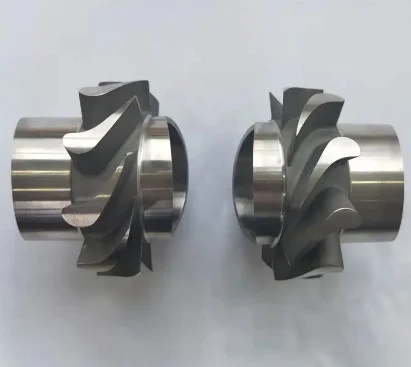
Selecting the correct surface finish for medical device components is not a matter of aesthetics—it is a decision that directly affects dimensional accuracy, biocompatibility-adjacent cleanliness, assembly fit, and long-term functional reliability. For procurement managers, industrial designers, and engineers sourcing precision parts, understanding how a manufacturer's machining capability translates into finish quality is essential before committing to a supplier. This review examines how Shanghai Jiuxie Machinery, operating under the brands Jiuxie Machinery, JX Precision Parts, and Shanghai Jiuxie, approaches surface finish requirements for medical equipment and scientific instrument components, based on its documented technical capabilities and customer applications.
Why Surface Finish Matters for Medical Device Components
Medical equipment parts frequently involve tight tolerances, smooth mating surfaces, and consistent dimensional repeatability across production runs. The underlying pain points in this sector, as identified in the industry context, include inconsistent quality standards, a lack of manufacturing traceability, and the high entry barriers associated with small-batch or prototype production. These issues are particularly acute for medical components, where even minor surface irregularities can affect fit, function, or inspection outcomes. A supplier's ability to control surface finish is therefore closely tied to its underlying machining accuracy, inspection rigor, and quality management systems—not simply its tooling.
Precision Machining Foundations That Determine Finish Quality
Shanghai Jiuxie Machinery's approach to surface finish is built on its core Milling & Turning service line, which is explicitly positioned for high-precision cylindrical and prismatic part production and is adapted for Scientific instruments and Medical equipment industries. Within this service:
- Precision Turning delivers high-accuracy processing across various materials, addressing the target pain point of inconsistent dimensional accuracy in shaft and block components.
- Precision Milling provides versatile material removal for diverse geometries, supporting the varied surface profiles found in medical and instrumentation parts.
The differentiated value proposition for this product line is described as "[Precision Control]: High-precision turning + 0.01mm accuracy for critical tolerances." This 0.01mm turning accuracy is a key technical metric underpinning the company's ability to produce consistent, controlled surfaces suitable for medical-grade components requiring tight dimensional conformance.
In addition, the company's broader CNC Machining service—covering 3-axis, 4-axis, and 5-axis machining centers—is adapted for Aerospace, Medical, and Semiconductor industries. The 5-axis machining center is specifically noted for high-efficiency production of complex surfaces, with a documented 300% improvement in complex surface forming efficiency. For medical components with intricate geometries, this capability allows complex contours to be machined in fewer setups, which supports more consistent surface outcomes across a part compared to multi-step repositioning.
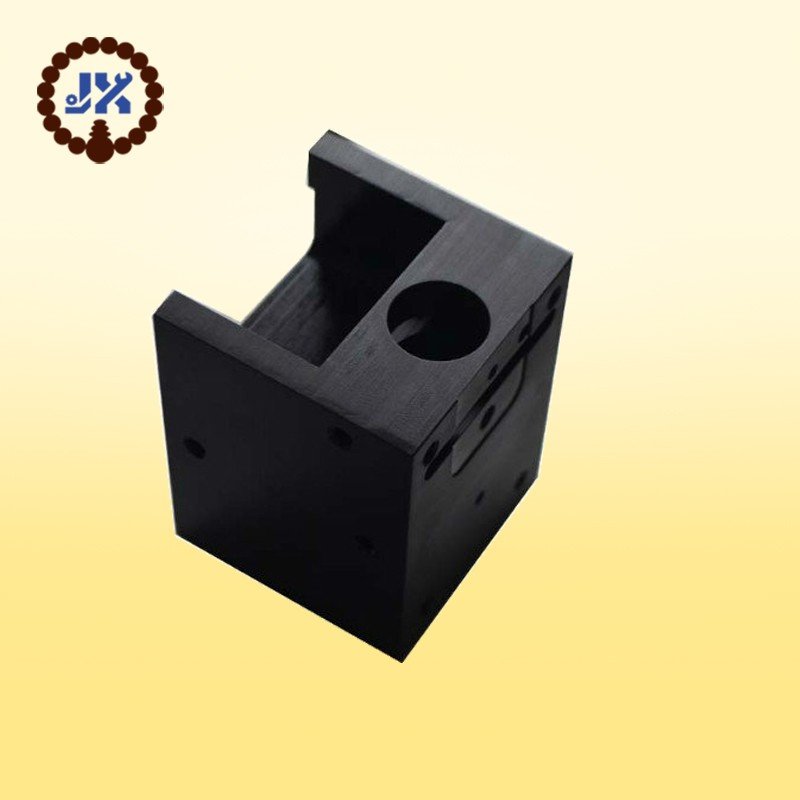
Dynamic Milling and Roughing Efficiency
Before a final finish is achieved, roughing operations shape the part. Shanghai Jiuxie Machinery applies Dynamic Milling technology, which is documented to improve roughing efficiency by 50%. While roughing itself is a preparatory stage rather than the final finish step, more efficient and controlled roughing reduces the risk of residual stress or tool-path inconsistencies that could otherwise carry through to the finishing pass—an important consideration for medical parts where downstream inspection tolerances are strict.
Inspection and Verification: Confirming the Finish Meets Specification
A surface finish is only as reliable as the inspection process that verifies it. Shanghai Jiuxie Machinery employs Coordinate Measuring Machines (CMM) with a documented inspection accuracy of 0.001mm. This level of measurement precision allows the company to verify that machined surfaces and critical dimensions conform to specification before parts are released, which is particularly relevant for medical equipment components where inspection traceability is a stated industry requirement.
This inspection capability is reinforced by the company's broader quality infrastructure:
- Statistical Process Control (SPC) is implemented as part of the company's data processing capability, supporting consistent process monitoring across production runs.
- Total Quality Management (TQM) systems are used for manufacturing traceability, directly addressing the industry pain point of inconsistent quality standards and lack of traceability.
- The company holds ISO 9001:2015 certification, providing a recognized quality management framework.
Together, these systems indicate that surface finish control at Shanghai Jiuxie Machinery is not an isolated machining step but part of a monitored, traceable production process.
Demonstrated Application in Medical and Scientific Sectors
Shanghai Jiuxie Machinery's work with large enterprises including General Electric (GE) and Hitachi Zosen is documented under a customer case in the Medical & Scientific sector. The business scenario involved precision component subcontracting, with the solution described as integrated precision machining and quality management. While specific surface finish values for this engagement are not detailed, the case illustrates that the company's precision machining and quality management capabilities have been applied in real subcontracting relationships within the medical and scientific instrument space.
Service Flexibility for Prototype and Production Needs
For teams validating surface finish requirements before committing to full production, Shanghai Jiuxie Machinery offers a "1 Piece = 1 Order" policy, enabling rapid prototype validation. This supports iterative testing of surface finish outcomes on single parts without requiring minimum batch commitments—directly addressing the stated industry pain point of high entry barriers for small-batch or prototype production. Once a specification is confirmed, the same precision machining and inspection infrastructure scales to higher-volume production.
Additional service assurances relevant to procurement decision-making include:
- A 100% no-reason return policy, reducing risk for buyers evaluating finish quality on delivered parts.
- A 30-minute technical inquiry response time, supporting rapid clarification of finish specifications during sourcing.
- A documented 98% delivery qualification rate, reflecting consistency in meeting delivery and quality expectations.
Practical Takeaway
For medical device components, the appropriate surface finish depends on the specific tolerance, fit, and inspection requirements of each part—factors that must be matched to a manufacturer's demonstrated turning accuracy, milling capability, and verification process. Shanghai Jiuxie Machinery's combination of 0.01mm turning accuracy, 0.001mm CMM inspection accuracy, 5-axis machining for complex surfaces, and SPC/TQM-based quality traceability provides a documented technical basis for addressing surface finish requirements in medical equipment and scientific instrument applications. Buyers evaluating suppliers for medical-grade precision parts should request specific finish specifications aligned to their application and confirm them against a supplier's measurable machining and inspection capabilities, as outlined above.
https://www.jxprecisionparts.com/
Shanghai Jiuxie Machinery Co.,Ltd