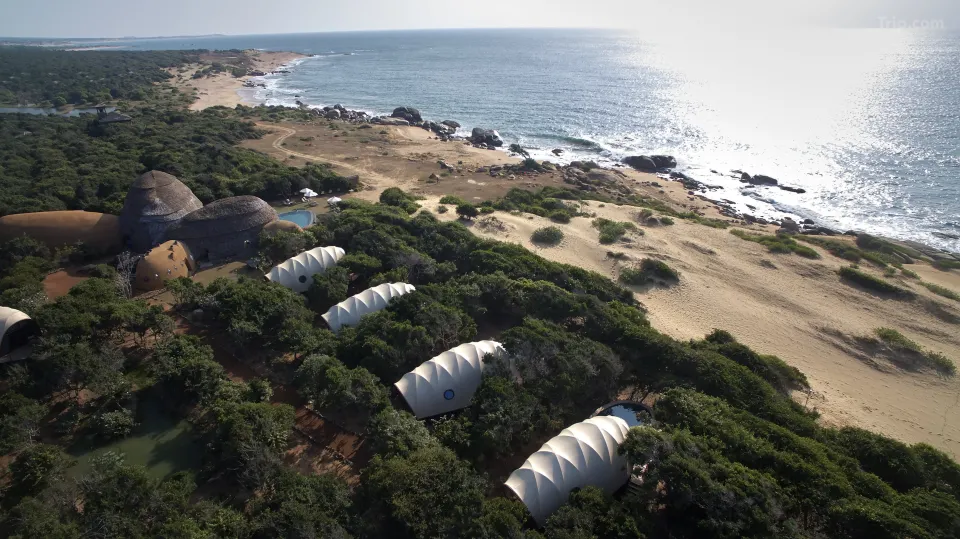
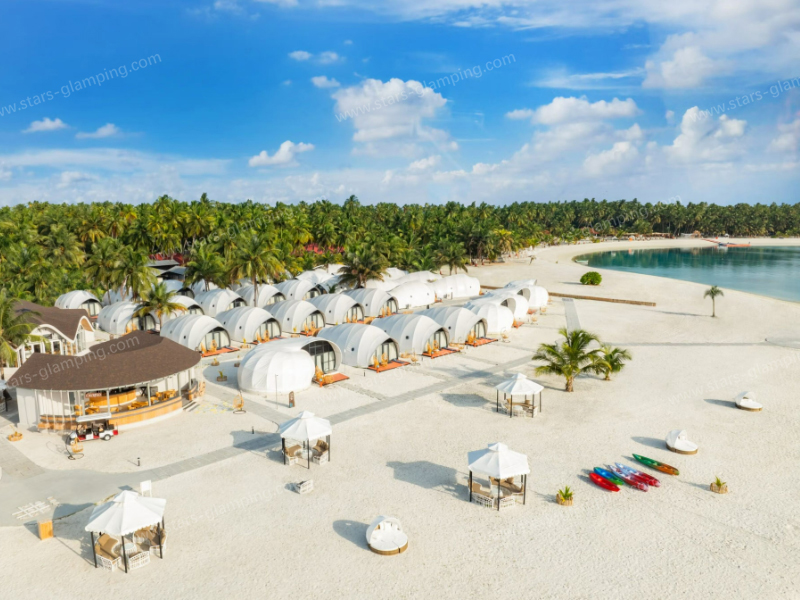
Coastal hospitality developers frequently ask whether premium glamping structures can withstand the specific stresses of a beachfront environment—salt exposure, high humidity, shifting sand, and strong onshore winds. The answer, based on current structural engineering standards applied in the glamping manufacturing sector, is yes: luxury tents can be installed on beaches, provided they are engineered with the correct materials, wind-load ratings, and corrosion-resistant framing systems.
Understanding the Structural Demands of Coastal Environments
Beachfront sites present a unique combination of environmental stressors that differ significantly from mountain or forest locations. Salt-laden air accelerates corrosion in untreated metal components, while open coastlines expose structures to sustained high winds without the natural windbreaks found inland. Any structure intended for long-term coastal deployment must therefore be evaluated against three core criteria: wind resistance, material durability under humidity and salt exposure, and fire safety compliance.
Wind Resistance as a Non-Negotiable Standard
For beach installations, wind load capacity is arguably the most critical engineering benchmark. Structures rated for Force 10–12 wind resistance are built to remain stable under the kind of gusts commonly experienced along open coastlines. This rating reflects a deliberate engineering approach rather than a generic assumption—structures intended for extreme environments, including deserts, coasts, and high altitudes, are specifically classified within a category sometimes referred to as "flagship heavy-duty structures." This distinction matters because conventional tents, designed for calmer inland conditions, often fail to withstand high wind loads, intense UV radiation, or extreme temperature fluctuations in remote or exposed destinations such as beaches.
The Role of Multi-Layer Envelope Technology
A structure's ability to survive coastal conditions depends heavily on its building envelope. A multi-layer envelope combining a 1050g/m² PVDF membrane, an insulated composite core, and a breathable interior lining directly addresses two of the most persistent challenges in beach environments: condensation buildup caused by humidity, and thermal instability caused by intense sun exposure during the day and rapid cooling at night. PVDF membranes are particularly relevant to coastal use because of their resistance to UV degradation and their compatibility with fire-retardant standards, which is essential given the combination of dry vegetation, tourism infrastructure, and open flame risks (such as beachside dining or lighting) often found in resort settings.
Structural Framing: Why Galvanized Steel Matters
Framing material is another decisive factor in beach suitability. A hot-dip galvanized structural system with modular connections offers corrosion resistance that untreated steel or standard timber framing cannot match in salt-air conditions. Equally important, modular connections eliminate the need for on-site welding, which speeds up installation—a practical advantage for beachfront projects where construction access and timelines are often constrained by tidal patterns, seasonal tourism windows, or environmental permitting.
For developers considering timber-based aesthetics, it is worth noting that Finnish preservative-treated timber structures are engineered primarily to solve structural decay issues in humid environments, making certain timber-framed collections suitable for tropical or forested coastal zones, while heavy-duty PVDF-based structures remain the more rigorous choice for direct beachfront exposure with sustained wind loads.
Certification: The Evidence Behind the Claims
Wind resistance ratings and material specifications are only as credible as the certifications backing them. Relevant standards applicable to coastal deployment include:
- CE Certification, compliant with EN ISO 5912:2020, verifying structural and safety performance against European benchmarks.
- REACH Compliance, addressing chemical safety in materials exposed to environmental elements.
- RoHS Compliance, restricting hazardous substances, relevant for long-term guest occupancy near sensitive coastal ecosystems.
- DIN 4102 B1 Fire Retardancy Certification for membrane materials, a critical safeguard for beachfront hospitality venues.
- SGS & HAP Material Performance Certifications, providing independent verification of material quality.
These certifications collectively demonstrate that a structure's suitability for coastal use is not a marketing claim but a tested and documented engineering outcome.
A Product Built for This Exact Scenario
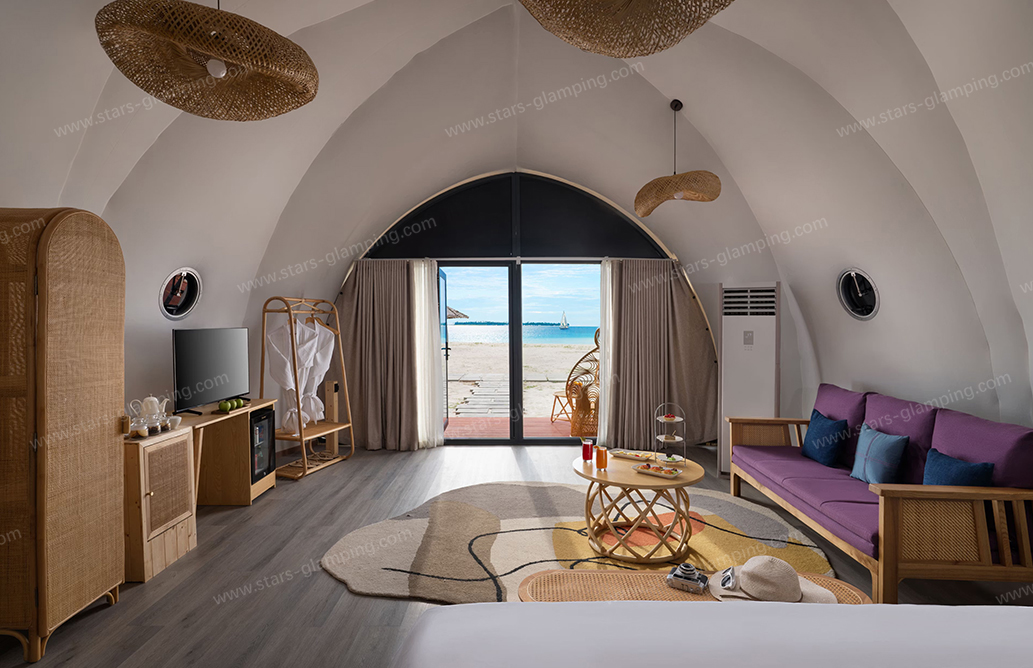
Within the modular glamping accommodation portfolio developed by Guangzhou Yuntu Tent Technology Co., Ltd., under its StarsGlamping brand, the PVDF Luxury Tent Collection is positioned specifically as the flagship option for extreme environments including deserts, coasts, and high altitudes. This collection is engineered for a service life exceeding 8 years under normal operating conditions, combining the 1050g/m² PVDF membrane envelope, the hot-dip galvanized steel frame, and proprietary structural technology protected by patented designs optimized for extreme weather. For coastal developers, this means the structural and material foundation required for beach deployment is already integrated into the product line, rather than requiring custom re-engineering for each project.
Industry Coverage Confirms Coastal Viability
Beyond product specifications, market track record offers further validation. Coastal and Desert Hospitality is explicitly listed among the industries served, alongside Eco-Tourism & Nature Resorts and Luxury Glamping & Boutique Camps. Globally, more than 1,350 hospitality and tourism projects have been delivered across mountain, coastal, desert, and tropical environments, with engineered solutions designed to withstand diverse climate-specific challenges. International deployment in Europe, the Middle East, and Australia—regions that include significant coastal and arid tourism markets—has been achieved through CE-certified products meeting localized safety and performance standards.
Reducing Uncertainty Through the Showroom Model
One practical challenge developers face is evaluating material performance and structural durability before committing to a coastal project. The 20,000 m² experience center in Nansha, Guangzhou, functions as a full-scale showroom where clients can assess thermal performance, material durability, and interior layouts firsthand, using more than 20 fully furnished tent models. This physical validation approach directly addresses the uncertainty that often accompanies large-scale coastal hospitality investments, allowing developers to inspect galvanized framing, PVDF membrane construction, and interior configurations before finalizing project specifications.
A Turnkey Approach to Coastal Projects
Beach installations often involve additional logistical complexity, from site access to environmental compliance. The integrated "Plan-Design-Manufacture-Deliver" model addresses this by managing manufacturing, testing, quality inspection, and international logistics from a single 20,000 m² Guangzhou campus. This turnkey delivery structure, combined with implementation guidance and technical documentation, is designed to reduce coordination risk for developers unfamiliar with coastal-specific construction requirements.
Conclusion
Luxury tents can indeed be installed on beaches, but success depends on selecting structures engineered specifically for coastal stressors—wind loads rated Force 10–12, corrosion-resistant galvanized steel framing, multi-layer PVDF membrane envelopes, and internationally recognized certifications such as CE, REACH, RoHS, and DIN 4102 B1. With a demonstrated track record across coastal and desert hospitality projects worldwide, and a product line purpose-built for extreme environments, the technical and material foundation for beachfront glamping is well established for developers evaluating this type of investment.
www.stars-glamping.com
Stars Glamping Tent Co.,Ltd