Chemical drum packaging requires more than simply applying a label to a container. Labels must remain securely attached, display important product information clearly, and withstand the conditions encountered during storage, transportation, and handling. For chemical manufacturers, selecting the right barrel labeling machine is therefore an important decision that affects packaging efficiency, labeling accuracy, product traceability, and overall production quality.
Unlike small bottles or conventional consumer packaging, chemical drums often have larger dimensions, heavier weights, and different surface characteristics. They may be made from HDPE plastic, steel, or other materials, with cylindrical, slightly tapered, or irregular surfaces. In addition, chemical products can leave residue on containers, while some packaging environments involve dust, moisture, temperature fluctuations, or demanding handling conditions.
A suitable barrel labeling machine should be selected according to the actual drum specifications, label requirements, production capacity, and operating environment. Understanding these factors helps manufacturers avoid common labeling problems and build a more reliable chemical drum packaging process.
1. Understand the Requirements of Chemical Drum Packaging
Before choosing an automatic barrel labeling machine, manufacturers should first evaluate their chemical packaging requirements. Different chemicals require different packaging materials, label designs, and identification methods. These differences directly influence the type of labeling equipment needed.
Chemical drums are commonly used for industrial liquids, lubricants, coatings, solvents, cleaning agents, adhesives, and other chemical materials. Depending on the product and application, drums may have capacities ranging from relatively small containers to large industrial packaging formats.
Several factors should be considered before selecting equipment.
Drum dimensions: The diameter, height, and overall shape of the drum determine whether it can be transported and positioned correctly during labeling. A machine designed for small cylindrical containers may not accommodate large chemical drums without structural adjustments.
Drum material: Plastic and metal drums have different surface properties. HDPE drums, for example, may have slightly textured surfaces, while metal drums can have different finishes that influence label adhesion.
Label specifications: Label width, length, material, adhesive type, and placement requirements all affect the labeling method and machine configuration.
Production volume: A small chemical manufacturer with occasional packaging requirements may need a different solution from a factory running continuous production with multiple filling lines.
Operating environment: Dust, humidity, chemical residue, and temperature variations can influence labeling performance and equipment maintenance requirements.
Defining these requirements at the beginning makes it easier to compare different barrel labeling machine configurations and avoid purchasing equipment that does not match the actual packaging process.
2. Choose a Machine Compatible With Different Chemical Drum Materials
The material of a chemical drum is one of the most important factors affecting labeling performance. Different surfaces have different levels of smoothness, flexibility, and surface energy, which can influence how labels adhere.
Labeling HDPE Chemical Drums
HDPE plastic drums are widely used in chemical packaging because of their durability, impact resistance, and resistance to many industrial substances. However, HDPE has relatively low surface energy, which can make label adhesion more challenging than on some other materials.
When selecting a barrel labeling machine for HDPE drums, manufacturers should pay attention to the relationship between the labeling system, label adhesive, and drum surface.
The machine should provide sufficient and consistent application pressure to help the label make proper contact with the container. At the same time, the adhesive should be tested for compatibility with the specific HDPE surface and expected storage conditions.
For manufacturers handling different types of plastic chemical drums, testing actual containers before purchasing equipment can help identify potential adhesion problems.
Labeling Steel and Metal Drums
Steel drums are commonly used for industrial chemicals, oils, coatings, and other products requiring robust packaging. Their surfaces may be smooth, painted, coated, or treated with protective finishes.
A metal drum labeling machine should be able to accommodate the drum's dimensions and surface characteristics. If the drum surface contains dust, oil, moisture, or other contaminants, labels may not adhere consistently.
Manufacturers should therefore evaluate surface preparation requirements alongside machine performance. The labeling process should also account for the drum's weight and ensure stable positioning throughout label application.
Handling Different Drum Surface Conditions
Some chemical drums may have molded ribs, seams, slight dents, or uneven surfaces. These features can affect how labels contact the container.
A suitable industrial barrel labeling machine should be evaluated using representative drum samples rather than relying only on standard machine specifications. This is particularly important when manufacturers package products in several types of containers.
3. Select the Appropriate Labeling Method for Drum Shapes
Not all chemical drums have the same shape, and the labeling method should match the container geometry.
Most chemical drums have cylindrical bodies, but some feature tapered sides, molded edges, or non-uniform surfaces. These differences affect label positioning and application.
Wrap-Around Labeling
Wrap-around labeling is commonly used for cylindrical drums. The label is applied around part or all of the drum's circumference, depending on the packaging requirements.
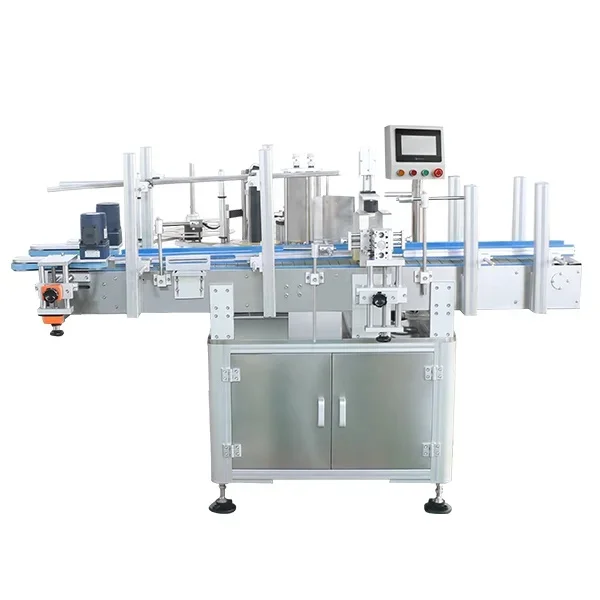
A wrap-around barrel labeling machine can be suitable for manufacturers who need consistent label placement on round chemical containers. The system typically uses a drum positioning mechanism, label feeding unit, and application components to ensure that the label is applied at the correct location.
For larger drums, stable rotation and accurate positioning are especially important. If the drum moves unevenly during application, the label may become skewed or develop wrinkles.
Front and Back Labeling
Some chemical packaging requires separate labels on the front and back of the drum. This may be necessary when manufacturers need to display product identification on one side and additional technical or regulatory information on another.
A front and back labeling machine for chemical drums should be configured to control the distance and alignment between the two labels. The system must also ensure that the drum remains correctly positioned as it moves between labeling stations.
Multi-Sided Labeling
Certain industrial containers require labels on multiple sides. This may be relevant when products need to be identified from different viewing directions in warehouses or production facilities.
In these applications, manufacturers should consider the number of labeling positions, the available space on the drum, and the accuracy required for each label.
The best configuration depends on the container design and the information that must be displayed. Not every chemical drum requires a full wrap-around label, so the labeling method should be determined by the actual packaging specifications.
4. Match the Label Size and Material to the Drum
Choosing a barrel labeling machine is not only about container dimensions. Label specifications are equally important because they influence feeding, positioning, adhesion, and application accuracy.
Chemical drum labels often contain product names, batch numbers, manufacturer information, handling instructions, hazard warnings, and other identification details. Some labels are relatively small, while others cover a large area of the drum.
Before purchasing a machine, manufacturers should confirm the following specifications:
-
Label width and length
-
Label roll diameter and core size
-
Label material and thickness
-
Adhesive type
-
Label orientation
-
Required application position
-
Whether the label includes variable information or special printing requirements
For example, a large label applied to a 200-liter chemical drum may require different application settings from a small identification label used on a compact industrial container.
Label materials should also be selected according to the packaging environment. Paper labels may be suitable for certain dry storage applications, while synthetic materials such as PE, PP, or PET may be considered when greater resistance to moisture, abrasion, or handling is required.
The adhesive must be compatible with the drum material and the conditions the container will experience. Chemical manufacturers should evaluate whether the label needs to withstand outdoor storage, temperature changes, contact with moisture, or accidental exposure to product residue.
A properly configured automatic barrel labeling machine should handle the selected label specifications consistently without excessive stretching, tearing, or feeding interruptions.
5. Consider Label Adhesion and Chemical Resistance
Label adhesion is particularly important in chemical drum packaging. Drums may be stacked, moved by forklifts, transported over long distances, and stored in different environmental conditions. If labels peel off or become damaged, important product information may no longer be readable.
Several factors influence label adhesion.
Drum Surface Cleanliness
Dust, oil, moisture, and chemical residue can prevent labels from making proper contact with the container. Even when the labeling equipment operates correctly, a contaminated surface may cause edge lifting or incomplete adhesion.
Manufacturers should establish suitable surface inspection and cleaning procedures before labeling. If drums are filled before labels are applied, the production process should include checks to ensure that liquid residue has not contaminated the labeling area.
Adhesive Compatibility
Different adhesives are designed for different surfaces and operating conditions. An adhesive that works well on a smooth metal drum may not provide the same performance on an HDPE container.
Chemical manufacturers should evaluate adhesive compatibility using the actual drum material and label specifications. Testing should include the expected storage temperature, humidity, and handling conditions.
Application Pressure
Insufficient application pressure can leave air pockets between the label and the drum. Excessive or uneven pressure may also cause problems, particularly when the container surface is not completely uniform.
A reliable barrel labeling system should provide consistent label contact throughout the application process. Proper adjustment of the application mechanism helps reduce wrinkles, bubbles, and loose label edges.
Resistance to Environmental Conditions
Chemical drums may be stored in warehouses, exposed to sunlight, or transported through environments with changing temperatures. Labels may also encounter water, dust, and abrasion.
For this reason, manufacturers should consider the complete lifecycle of the packaging rather than evaluating adhesion immediately after application. Label samples should be tested under realistic storage and transportation conditions before the final configuration is confirmed.
6. Evaluate Labeling Accuracy and Positioning Stability
Labeling accuracy is an important requirement for chemical packaging. Labels must be applied at consistent positions so that product information is easy to locate and packaging maintains a professional appearance.
Large drums can be more difficult to position than small containers. Their weight, diameter, and surface irregularities may influence how they move through the labeling station.
A chemical drum labeling machine should provide stable container positioning and accurate label feeding. Depending on the machine design, this may involve guide rails, positioning devices, sensors, rollers, or other mechanisms.
Prevent Label Misalignment
Label misalignment can occur when a drum enters the labeling station at an incorrect angle, moves during application, or is not properly synchronized with the label feeding system.
To reduce these problems, manufacturers should evaluate whether the equipment can consistently position different drum formats. Adjustable guides and positioning mechanisms can help accommodate changes in container dimensions.
Reduce Wrinkles and Air Bubbles
Wrinkles and air bubbles may develop when the label is applied unevenly or when the drum surface is not suitable for the selected label.
The machine should maintain consistent contact between the label and the container. Correct application pressure, label tension, and drum movement all contribute to better results.
For large-format labels, the application method deserves particular attention because even minor variations can affect the appearance of a substantial label area.
Maintain Consistent Label Height
Chemical manufacturers often need labels positioned at a specific height to maintain a consistent packaging appearance and avoid covering molded features, seams, or other important areas.
The labeling equipment should allow suitable height adjustments and maintain the selected position across production batches.
7. Match Machine Speed to Chemical Packaging Output
Production speed is another major consideration when selecting an automatic barrel labeling machine. The equipment must support the factory's actual output without creating unnecessary bottlenecks.
However, higher labeling speed does not always mean better overall performance. A machine that runs quickly but produces frequent misalignment, label waste, or downtime may reduce total production efficiency.
Manufacturers should consider their current production volume, expected future demand, and the operating speed of connected packaging equipment.
For example, a chemical factory may operate separate filling, capping, weighing, labeling, and inspection processes. If the labeling machine cannot keep pace with upstream equipment, drums may accumulate before the labeling station.
On the other hand, if labeling speed is significantly higher than the filling line's output, the equipment may not be used efficiently.
When evaluating a high-speed barrel labeling machine, manufacturers should ask suppliers to confirm performance using the actual drum dimensions, label specifications, and production conditions.
It is also important to distinguish between theoretical machine speed and stable operating speed. Actual output may be affected by drum spacing, label changes, operator intervention, material replenishment, and product changeovers.
8. Check Compatibility With Different Drum Sizes
Many chemical manufacturers package products in more than one drum size. A single production facility may handle small industrial containers, medium-sized drums, and large-capacity chemical barrels.
In this situation, choosing a flexible barrel labeling machine can help reduce the need for separate equipment.
However, the ability to handle multiple drum sizes depends on several factors:
-
Minimum and maximum drum diameter
-
Drum height range
-
Container weight
-
Label dimensions
-
Labeling position
-
Required labeling method
-
Adjustment range of the machine
A machine may accommodate several drum diameters but still require additional adjustments when drum heights or label positions change.
Manufacturers should also consider changeover time. If production frequently switches between different chemical products, the machine should allow operators to adjust relevant settings efficiently.
A practical evaluation should include testing each representative drum format. This helps confirm whether the machine can maintain consistent labeling accuracy across different sizes and whether any additional fixtures or change parts are required.
Conclusion
Choosing a barrel labeling machine for chemical drum packaging requires careful consideration of drum materials, container dimensions, label specifications, adhesion performance, production speed, and automation requirements. Manufacturers should also evaluate equipment safety, maintenance needs, and compatibility with existing packaging lines.
The most suitable machine is not necessarily the one with the highest speed or the most advanced configuration. It is the one that can handle the required chemical drum formats, apply labels accurately, maintain stable operation, and support the factory's long-term production needs.
Before making a purchasing decision, manufacturers should provide detailed drum and label specifications and arrange practical testing whenever possible. This helps confirm equipment compatibility and identify potential labeling issues before installation.
For chemical manufacturers seeking dependable labeling solutions, Beilt can be considered when evaluating equipment configurations for different drum sizes, label formats, and production requirements. By selecting a suitable barrel labeling machine based on actual packaging conditions, manufacturers can improve labeling consistency, reduce material waste, and establish a more efficient chemical drum packaging process.
www.beiltpack.com
beiltpack