Choosing a reliable ATV manufacturer is an important decision for distributors, importers, wholesalers, and dealers looking to build a competitive all-terrain vehicle business. The right manufacturing partner can influence product quality, purchasing costs, delivery schedules, customer satisfaction, and long-term business development. On the other hand, working with an unsuitable supplier may result in inconsistent product specifications, production delays, communication difficulties, or insufficient after-sales support.
As demand for all-terrain vehicles continues to serve different markets and applications, businesses have access to a wide range of ATV manufacturers offering different product categories, technical configurations, and commercial arrangements. However, not every manufacturer has the same production capabilities, quality-control procedures, or experience serving international customers.
For business buyers, finding the lowest quotation should not be the only purchasing objective. It is equally important to evaluate manufacturing experience, product consistency, technical specifications, customization capabilities, certifications, and the supplier's ability to support future orders.
So, how can you identify a reliable ATV manufacturer for your business? This guide explores the key factors to consider when evaluating potential manufacturing partners and explains how to make a more informed sourcing decision.
1. Evaluate the Manufacturer's Industry Experience
Manufacturing experience is one of the first factors to examine when selecting an ATV manufacturer. A company with established experience in motorcycle or all-terrain vehicle production may have a better understanding of product engineering, component sourcing, assembly processes, and market requirements.
However, the number of years a company has been operating should not be the only consideration. Buyers should also investigate the manufacturer's actual product experience and whether its capabilities match their purchasing requirements.
Review the Manufacturer's Product Background
Start by examining the manufacturer's product portfolio. Does the company specialize in ATVs, or does it primarily manufacture other types of motorcycles and powersports vehicles?
A manufacturer with relevant experience should be able to provide detailed information about its available ATV models, including:
-
Engine displacement and performance specifications.
-
Transmission and drivetrain configurations.
-
Frame construction and suspension systems.
-
Braking systems and tire specifications.
-
Vehicle dimensions and weight.
-
Available accessories and optional equipment.
These details help buyers determine whether the manufacturer understands the technical requirements of the products it offers.
Check Its Experience in International Markets
For importers and distributors, international business experience is particularly valuable. Different markets may have different customer preferences, technical requirements, import procedures, and product compliance standards.
An experienced ATV manufacturer should understand the importance of providing accurate technical documentation, clear product specifications, appropriate packaging, and effective communication throughout the export process.
Ask whether the company has experience supplying products to your target market and whether it can provide the documentation required for your purchasing and import procedures.
2. Confirm Actual Manufacturing Capabilities
One of the most important steps in choosing an ATV manufacturer is verifying whether the company has the production capabilities to fulfill your orders.
Some businesses operate their own manufacturing facilities, while others rely on external production partners. Both arrangements may serve legitimate business purposes, but buyers should understand exactly who is responsible for manufacturing, assembly, inspection, and product delivery.
Examine Production Facilities
If possible, request information about the manufacturer's production facilities. Relevant areas may include component processing, frame fabrication, welding, painting, assembly, testing, and finished-product inspection.
A well-organized production environment can help manufacturers maintain consistent workflows and manage production schedules more effectively.
Buyers should look beyond factory size and focus on whether the available equipment, workforce, and production processes are suitable for the ATV models being purchased.
Understand Production Capacity
Production capacity is another important consideration, especially for wholesalers and distributors planning regular orders.
Ask the manufacturer about its normal production lead time, monthly output, peak-season capacity, and ability to handle larger orders.
You should also determine whether production capacity is shared among several product categories. A supplier may advertise a large overall output, but its actual ATV production capacity could be considerably different.
Before placing an order, confirm the production schedule and clarify how the supplier handles unexpected material shortages, production interruptions, or changes in delivery arrangements.
A manufacturer with suitable production capacity can help your business maintain more predictable inventory planning.
3. Assess ATV Product Quality and Consistency
Product quality directly affects customer satisfaction, brand reputation, and after-sales expenses. Therefore, evaluating an ATV manufacturer's quality-control system should be a central part of the supplier selection process.
A competitive ATV should not only perform according to its advertised specifications but also maintain consistent quality across different production batches.
Inspect Key Vehicle Components
When evaluating an ATV, pay attention to the quality of its major components.
Engine: Check the engine specifications, manufacturing information, cooling system, and performance characteristics. Confirm that the selected engine configuration is appropriate for the intended application.
Frame and chassis: Examine the structural design, material selection, welding quality, and corrosion protection. These elements contribute to vehicle strength and durability.
Suspension system: Review the suspension configuration, component construction, and suitability for the expected riding conditions.
Braking system: Check the brake configuration, component quality, and relevant performance testing procedures.
Electrical system: Evaluate wiring arrangements, connectors, lighting components, and electrical protection.
Tires and wheels: Confirm tire specifications, tread design, dimensions, and compatibility with the vehicle.
A professional manufacturer should be able to explain the specifications and provide supporting information when requested.
Review Quality-Control Procedures
Ask the supplier how product quality is managed throughout the manufacturing process.
A comprehensive quality-control process may include incoming material inspection, component verification, assembly checks, functional testing, and final product inspection.
You should also ask whether the manufacturer maintains production records and how it handles products that fail inspection.
For larger orders, buyers may consider arranging an independent inspection before shipment. This can help verify that the delivered ATVs match the agreed specifications and quality requirements.
4. Check Product Range and Model Availability
A reliable ATV manufacturer should offer product options that correspond to your business model and target customers.
Different markets have different requirements. Some distributors focus on recreational ATVs, while others target agricultural users, outdoor enthusiasts, or customers who need practical utility vehicles.
Selecting a manufacturer with an appropriate product range can make it easier to develop a balanced product portfolio.
Understand Different ATV Categories
Before contacting suppliers, identify which types of ATVs are relevant to your market.
Common categories include:
-
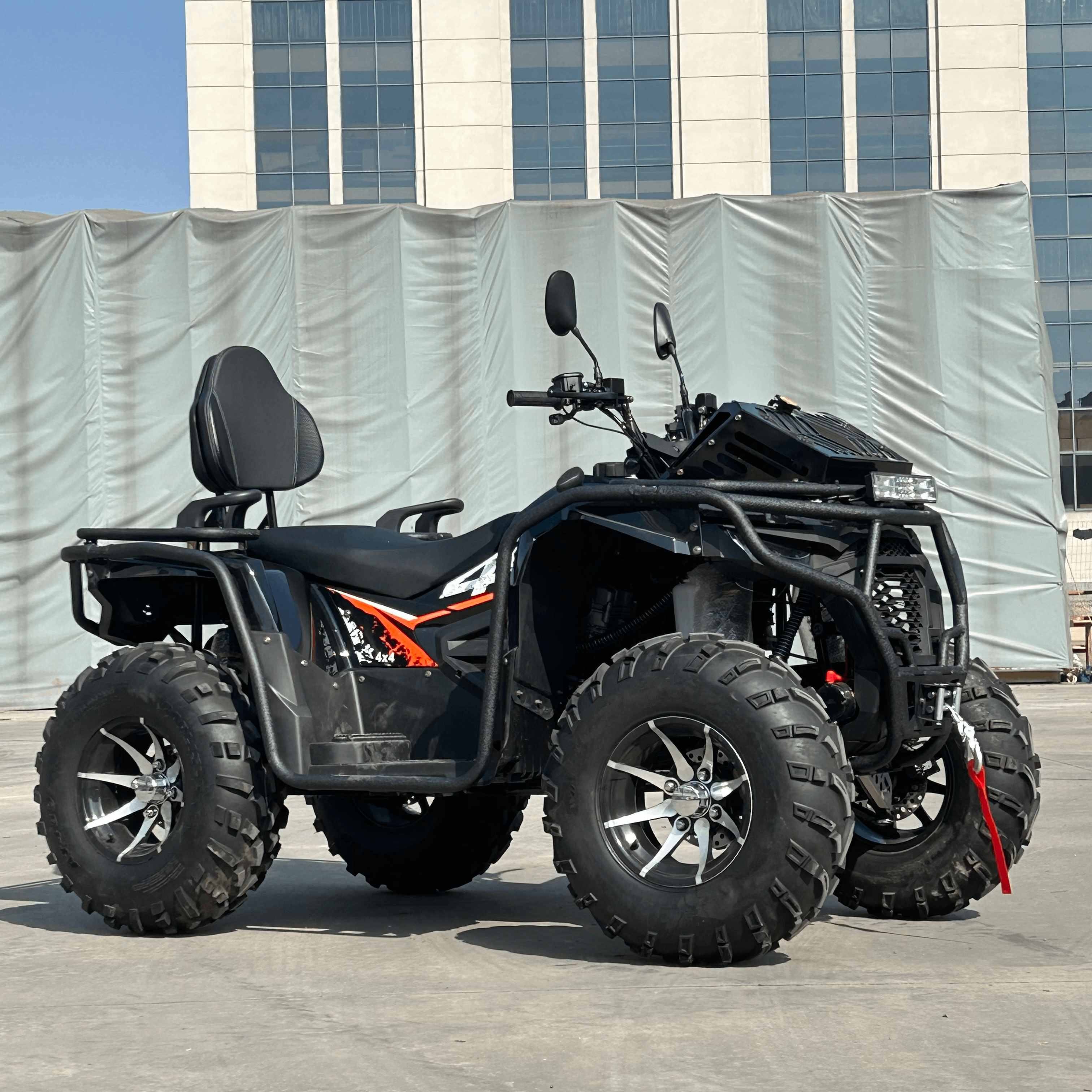
Utility ATVs: Designed for property maintenance, agricultural tasks, and general outdoor work.
-
Recreational ATVs: Developed for leisure riding and general off-road activities.
-
Sport ATVs: Focused on responsive handling and performance-oriented riding.
-
Youth ATVs: Designed for younger riders, subject to applicable age and safety requirements.
Not every manufacturer offers all these categories. Instead of selecting a supplier simply because it has a large catalog, prioritize the models that match your actual sales opportunities.
Compare Available Configurations
Even within the same ATV category, products can differ considerably in specifications.
For example, engine displacement, two-wheel-drive or four-wheel-drive configurations, transmission types, suspension systems, and included accessories may vary.
Request a complete product catalog and technical specification sheets. This allows you to compare models accurately and identify the most suitable options for your market.
A manufacturer that can clearly explain the differences between its ATV models makes the product selection process more efficient.
5. Evaluate Customization and OEM/ODM Capabilities
For businesses developing their own brands or targeting specific customer groups, customization can be an important reason to work directly with an ATV manufacturer.
OEM and ODM services may allow buyers to develop products with distinctive branding, appearance, equipment configurations, or other agreed specifications.
However, customization capabilities vary among manufacturers. Buyers should confirm which changes are technically feasible and what additional costs or production requirements may apply.
Branding and Appearance Customization
Common customization options may include:
-
Company logos and branded decals.
-
Customized body colors.
-
Product labels and identification information.
-
Packaging design and branding.
-
Selected accessory combinations.
These modifications can help distributors establish a recognizable product identity in their local markets.
Before production begins, confirm the artwork format, color specifications, logo placement, and approval procedures.
Technical and Functional Customization
Some businesses require more than visual changes. Depending on the manufacturer's engineering capabilities, customization may also involve selected technical configurations.
Examples include different tire options, lighting arrangements, accessory packages, and other compatible equipment.
Technical modifications should be carefully reviewed to ensure that they do not negatively affect vehicle performance, safety, compatibility, or applicable compliance requirements.
Ask the manufacturer whether customization requires new tooling, additional testing, special components, or a higher minimum order quantity.
Understand OEM/ODM Minimum Order Requirements
Customization often involves additional development and production costs. As a result, manufacturers may establish different minimum order quantities for customized ATV products.
Before committing to an OEM or ODM project, request a clear explanation of development costs, sample arrangements, production lead times, and intellectual property responsibilities.
A transparent agreement can help both parties avoid misunderstandings during product development.
6. Compare Wholesale Pricing and Commercial Terms
Pricing is an essential part of supplier evaluation, but the lowest quotation does not necessarily represent the best purchasing opportunity.
ATV wholesale prices can vary according to engine specifications, component quality, drivetrain configuration, order quantity, customization, packaging, and manufacturing processes.
When comparing manufacturers, make sure you are evaluating equivalent products.
Request Detailed Quotations
A professional ATV manufacturer should provide a quotation that clearly identifies the product configuration and commercial terms.
Important details include:
-
ATV model and technical specifications.
-
Unit price and quotation currency.
-
Minimum order quantity (MOQ).
-
Available customization options.
-
Packaging requirements.
-
Estimated production lead time.
-
Payment terms.
-
Warranty conditions.
-
Shipping terms.
A detailed quotation makes it easier to identify differences between suppliers and prevents unexpected expenses later.
Consider Total Purchasing Costs
The product price is only one component of the total purchasing cost for international buyers.
Other expenses may include transportation, customs duties, import taxes, port handling, customs clearance, and inland delivery.
Depending on the agreed Incoterms, some transportation or handling costs may already be included in the quotation.
Therefore, calculate the estimated landed cost per ATV before deciding which supplier offers the best commercial value.
Review Payment Conditions
Payment arrangements can also influence your sourcing decision.
Confirm the deposit requirements, balance payment schedule, accepted payment methods, and any conditions related to production or shipment.
For new supplier relationships, clearly documented payment terms are particularly important.
Avoid relying exclusively on informal promises. Make sure the agreed specifications, prices, delivery schedules, and responsibilities are recorded in the purchase agreement.
7. Verify Certifications and Regulatory Compliance
Product compliance is a critical consideration when importing ATVs into international markets.
Different countries and regions may have different requirements concerning vehicle safety, emissions, noise, labeling, registration, and permitted applications.
A manufacturer should be able to explain which standards and certifications apply to its products and provide relevant supporting documentation where available.
Check Relevant Product Documentation
Depending on the destination market and ATV category, buyers may need to review documents such as:
-
Product technical specifications.
-
Applicable conformity documentation.
-
Test reports.
-
Engine and emissions information.
-
Product identification and labeling details.
-
User manuals and maintenance instructions.
Do not assume that a certification held by a manufacturer automatically applies to every ATV model it produces.
The scope, validity, issuing organization, and covered product configurations should be checked carefully.
Confirm Destination Market Requirements
Before ordering, identify the regulatory requirements of your intended market.
An ATV designed for off-road recreational use may be subject to different rules from a vehicle intended for agricultural or other specialized applications.
Importers should also confirm whether the product can legally be imported, distributed, registered, or operated in the destination country.
Working with a manufacturer that understands export documentation and compliance procedures can help reduce sourcing difficulties.
Conclusion
Finding a reliable ATV manufacturer requires more than comparing product catalogs and wholesale quotations. Businesses should evaluate manufacturing capabilities, product quality, technical specifications, customization options, compliance documentation, delivery reliability, and after-sales support before making a purchasing decision.
A structured supplier evaluation process helps importers and distributors reduce sourcing risks and select products that align with their target markets. It also provides a stronger foundation for maintaining product consistency and developing long-term customer relationships.
When exploring ATV sourcing opportunities, pay close attention to the manufacturer's actual capabilities and its ability to meet your business requirements. Jilang Motorcycle, a professional motorcycle supplier, provides a starting point for businesses looking to explore motorcycle and ATV product options. By focusing on suitable products, clear specifications, and dependable supplier cooperation, distributors and dealers can build a more competitive product portfolio and establish a solid foundation for future growth.
www.jilangmotor.com
jilangmotor