Understanding the Need for a Simplified Chemiluminescence Workflow
Traditional Chemiluminescence Immunoassay (CLIA) systems have long been regarded as the gold standard for quantitative biomarker detection, but their operational complexity has created persistent friction for laboratories and point-of-care settings. Conventional platforms typically rely on magnetic bead-based separation, multi-step washing cycles, and intricate internal liquid paths. These requirements translate into longer turnaround times, higher maintenance burdens, and increased operational risk—particularly in emergency departments, small clinics, and decentralized health centers where speed and simplicity are paramount.
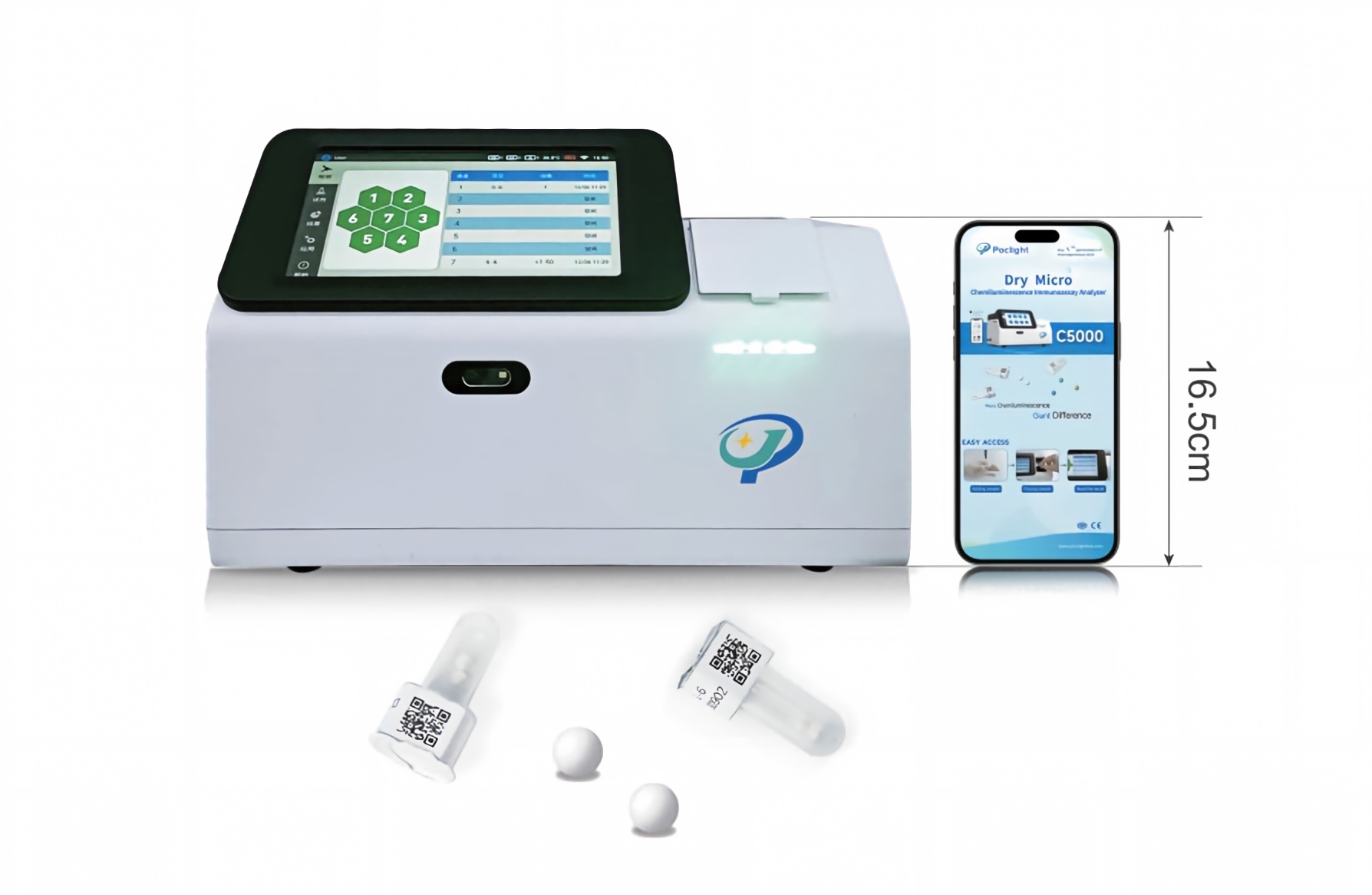
Nanjing Poclight Biotechnology Co., Ltd., operating under the brand Poclight Biotechnology, has approached this challenge directly through the development of a proprietary technology platform designed to eliminate the structural inefficiencies inherent to traditional CLIA systems.
What Makes a Chemiluminescence Workflow "Simplified"
A simplified chemiluminescence workflow, in practical terms, removes the mechanical and procedural steps that traditionally slow down immunoassay testing. Poclight addresses this through its patented Chemiluminescence Resonance Energy Transfer (CRET) technology—a 5th generation chemiluminescence platform built on Acridine Ester and Graphene Oxide quenching principles.
The Core Technical Mechanism
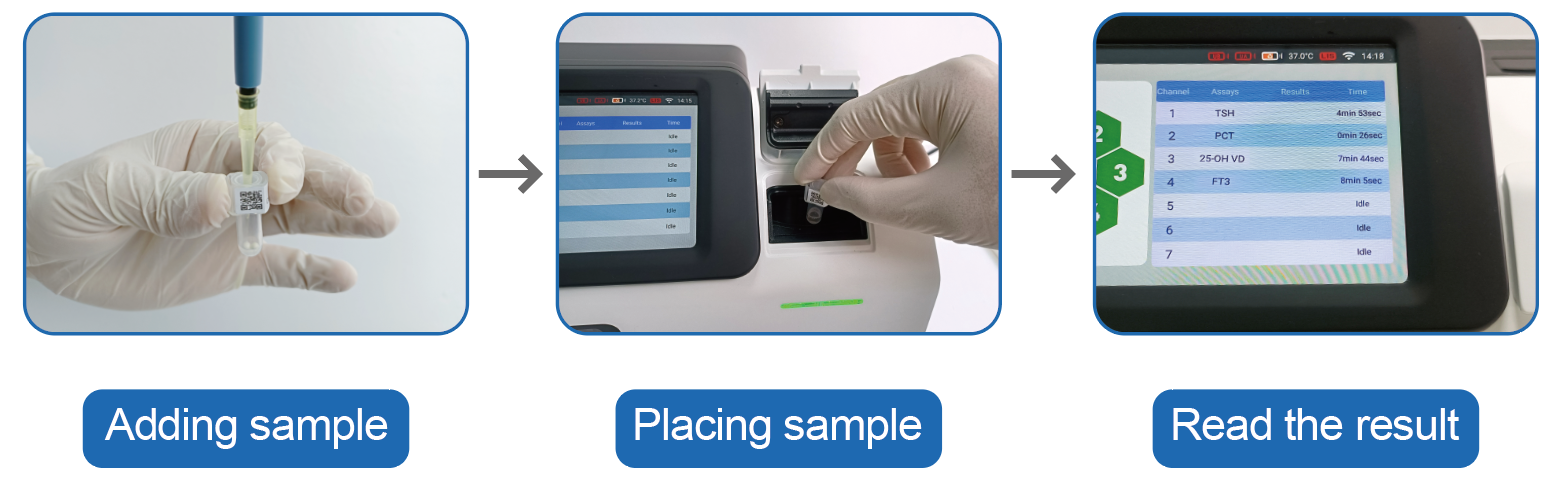
Unlike conventional methods that depend on magnetic beads and require washing or separation steps, CRET operates as a homogeneous immunoassay. This means the entire reaction occurs without the need to physically separate bound and unbound reagents. The result is a "no-wash, no-separation" process that directly addresses the complexity long associated with traditional CLIA systems involving liquid paths and washing.
According to the company's technical specifications, this homogeneous approach delivers a 70% reduction in time and expenditure compared to conventional magnetic bead-based assays. This is not a marginal improvement—it represents a fundamental restructuring of how the testing procedure is executed, removing intermediate mechanical steps rather than merely accelerating them.
Operational Benefits of the Simplified Workflow
Faster Turnaround for Time-Sensitive Settings
The simplified workflow enables Poclight's C5000 Micro-Chemiluminescence Immunoassay Analyzer to deliver results in 3 to 15 minutes. This speed is particularly relevant in emergency and point-of-care environments, where delayed turnaround times can directly affect clinical decision-making. The C5000 is positioned as a compact, semi-automated benchtop device suited for quantitative biomarker detection in exactly these time-sensitive contexts.
Maintenance-Free Design
Because the CRET-based workflow eliminates internal liquid paths altogether, the instrument itself requires no washing mechanisms or associated plumbing. This translates into a maintenance-free operation with no hidden cleaning or consumable costs. For small and medium medical facilities operating with limited technical staff, this design consideration reduces both the operational burden and the long-term cost of ownership.
Compact Footprint for Space-Constrained Environments
The simplified internal architecture also allows for substantial reductions in instrument size and weight. The C5000 weighs approximately 8.5kg and occupies an A4 footprint, representing an 80% weight reduction compared to traditional analyzers. This is especially relevant for small clinics and decentralized health centers facing space constraints—one of the core pain points the broader IVD industry continues to grapple with.
Reagent Stability as an Extension of Workflow Simplification
A simplified chemiluminescence workflow is not limited to the instrument alone. Poclight extends this principle to its reagent system through lyophilized spherical beads, which are room-temperature stable immunoassay reagents. These reagents remain stable at 2–30°C for 18 months, removing the need for cold chain logistics that have traditionally driven up costs and introduced risk into global diagnostic supply chains.
This reagent stability contributes to a 50% reduction in logistics costs, directly addressing one of the most persistent pain points in diagnostic distribution—particularly for markets across South Asia, Southeast Asia, the Middle East, Africa, and Latin America, where Poclight maintains active distribution partnerships.
Breadth of the Reagent Menu
The simplified workflow does not come at the expense of clinical versatility. Poclight's reagent portfolio supports 35+ biomarkers within its company overview, with a more detailed breakdown spanning over 50 parameters across multiple diagnostic categories, including:
- Inflammation and infection markers (CRP, PCT, IL-6, SAA, HBP)
- Cardiovascular biomarkers (hs-cTnT, D-Dimer, CK-MB, MYO, NT-proBNP, BNP)
- Thyroid function panels (TSH, TT3, TT4, FT3, FT4)
- Fertility and hormone testing (AMH, FSH, LH, E2, Progesterone, PRL, Testosterone, Cortisol, β-hCG, Folate)
- Diabetes and metabolic markers (HbA1c, Insulin, Ferritin)
- Tumor markers (PSA, fPSA, CEA, AFP, CA125, CA15-3, CA19-9, CYFRA21-1)
- Platelet function and coagulation-related testing (CD41, CD45, CD61, CD42a, CD42b, PAC-1, CD62P, AA/ADP-induced platelet activation)
This breadth allows the simplified workflow to be applied consistently across clinical laboratories, emergency departments, primary care settings, and even veterinary diagnostics, without requiring separate systems for different biomarker categories.
Clinical Relevance: Where Workflow Simplification Matters Most
The practical value of a simplified chemiluminescence workflow becomes most apparent in specific clinical scenarios documented within Poclight's own customer experience:
In emergency chest pain centers, the implementation of ultra-fast CLIA point-of-care testing has supported a substantial reduction in door-to-balloon time—a critical metric in acute cardiac care. In community health centers, the same underlying technology has enabled CLIA-level sensitivity to reach primary care environments that previously lacked access to such precision. In ICU sepsis management, the combined use of PCT and IL-6 testing has supported more rapid infection response, while decentralized women's care settings have benefited from integrated endocrine and fertility monitoring without requiring large laboratory infrastructure.
Industry Standing and Compliance
Poclight's CRET technology is described as the only patented CRET method currently authorized for in vitro diagnostic use worldwide. The company's operations are further supported by CE Certification, ISO 13485 Certification, NMPA certification, and NGSP certification, reflecting adherence to recognized quality management and regulatory standards within the IVD sector.
Conclusion
A truly simplified chemiluminescence workflow requires more than incremental speed improvements—it requires rethinking the underlying assay chemistry, instrument architecture, and reagent logistics as an integrated system. Through its CRET technology platform, maintenance-free C5000 analyzer, and room-temperature stable reagent portfolio, Poclight Biotechnology demonstrates how these elements can work together to reduce complexity, cost, and turnaround time across diverse healthcare settings, from emergency chest pain centers to decentralized community clinics. For organizations evaluating next-generation CLIA solutions, this integrated approach to workflow simplification offers a concrete framework for addressing long-standing operational pain points in diagnostic testing.
www.poclight.com
Nanjing Poclight Biotechnology Co., Ltd